Meet single mom Shital Shah and her two adopted daughters

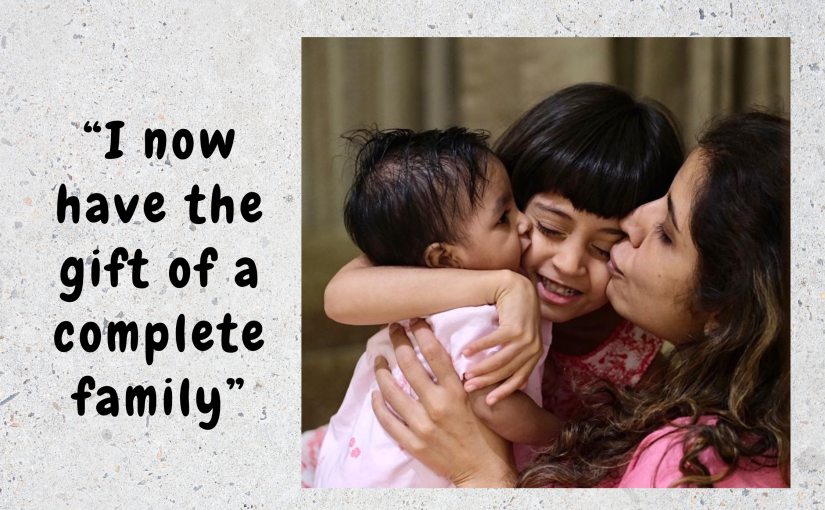
Shital adopted Serena in 2018 and Sara came to her life in 2023. An actress, director and entrepreneur, Shital feels the concept of parenthood in our society is changing now and people are warming up to the idea of having a family based on love and organic connection rather than just birth and DNA

….

Deepika Sahu

Shital Shah, actress, director, and entrepreneur, is relishing her life right now. This 37-year-old single mother can’t stop talking about her younger daughter Sara (nine months old now), whom she adopted in 2023. Earlier, Shital had adopted her older daughter Serena in 2018. Shital is having her time under the sun and enjoying this beautiful phase of her life with her two daughters. 

Talking about her experience, Shital, who has directed Gujarati films like HuTuTu: Aavi Ramat Ni Rutu, Duniyadari and Saatam Atham and acted in Hindi TV shows like Arjun and Bollywood films like My Friend Ganesha, says: “I was always very sure about adopting girls. I feel families are shrinking now. My grandparents had eight siblings, my parents had four and I have a sister. I have experienced the joy of having a sibling. I wanted to give that experience to my daughters. But I must say the process has been very organic. I adopted Serena in 2018 and Sara came to my life in 2023.”

How has been the experience this time? Is it easier for her to navigate now? Shital says: “It’s definitely different now. When I had adopted Serena, I did not have the knowledge about how to manage a two-month-old baby. Right now, I can manage things because I have the experience and that makes a huge difference.” 

She adds: “The adoption process of Sara was much easier and smoother. A lot of credit goes to the Central Adoption Resource Authority (CARA). The whole process is done online. It is the choice of building a family through this agency that really works well.” 
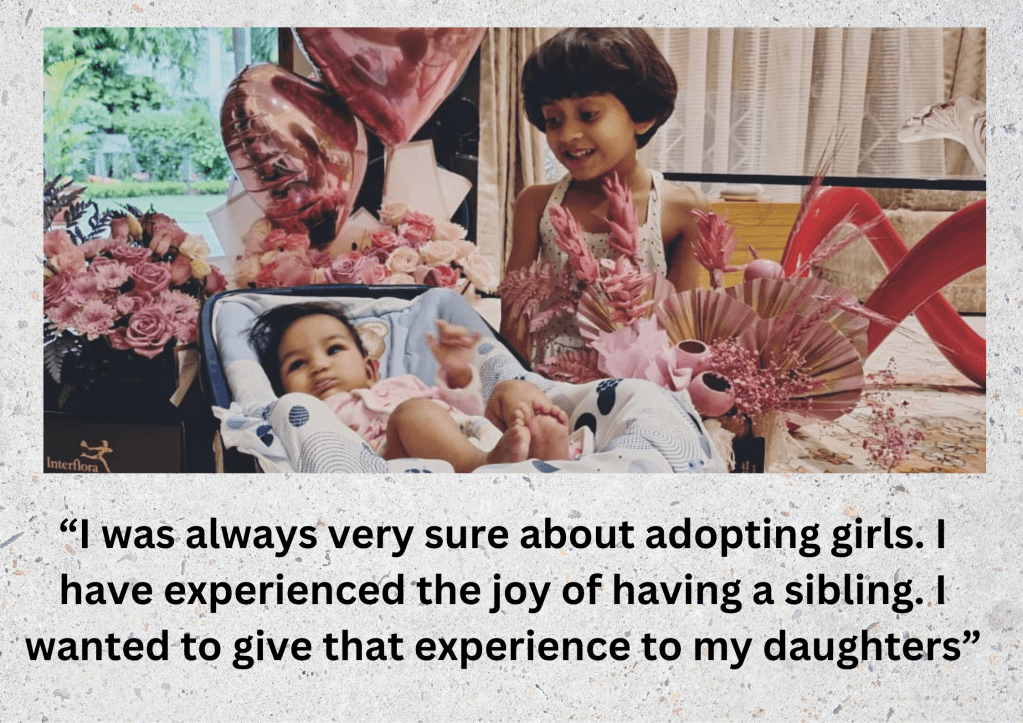
Shital loves being a witness to the sibling bond between her daughters. “Serena is my biggest strength. She takes her role of being a big sister seriously. She is very attentive and loves Sara.” 

Did she ever feel the pressure of doing it as a single woman? Shital shares: “I feel, families are much more than sharing DNA. Adoption is a beautiful way to have a family. In my mind, I never had any links between marriage and having a child. I went ahead with my decision to adopt when I was financially and emotionally ready for it.”

How has motherhood changed her as a person? How does she deal with the changes in her lifestyle too? Shital says: “Last five years have been very fulfilling. Prior to motherhood, I was a single girl and I always took spontaneous decisions to go out. Now, I plan my schedule keeping my daughters’ needs in mind. I really don’t miss going out. I have grown ten years younger just by being with my daughters. I dance at the drop of a hat. I now see many things through the eyes of my daughters. Like before, on many occasions, I did not notice the roses in our garden but now I discover the wonders of the garden with my kids. I have become more aware of myself. Adopting my daughters has changed the goal post of my life.”   

She adds: “I am living more in the present. I used to think a lot about the past and future. My daughters have taught me to live in the moment.”

How hard is it for her to manage as a single mother? “Well, as a single mom, I am 100% responsible for bringing up my children. When you are a couple, bringing up children is a different process. In many households, child rearing is divided between both the husband and wife. That support is invaluable. Yes, it’s true that sometimes I miss that kind of support but I feel this journey is worthwhile. When you are both a primary and secondary care-giver, it can be daunting sometimes. But I am really enjoying this process of growing up with my daughters. My mother Hina Shah and my sister Shaina Shah have always given me rock-solid support.”

She adds: “I am happy that my daughters have chosen me. I firmly believe that I am far more blessed that they have chosen me. When you come from a space of deep love, there’s an element to the purity of connection. When 3.5- month-old Sara looked at me for the first time, she gave me a big toothless grin. And that smile filled my heart with joy and love.” 
How has motherhood helped you to evolve as an artiste? Shital thinks it has. She says: “I have always been a sensitive person. Earlier, when I would hear a child crying and throwing tantrums, I would think what are the parents doing. But now I know. Every child is unique and we can’t put them in one box. That understanding has helped me evolve as an artiste. It has given me a sense of experiencing life in its purest form.” 

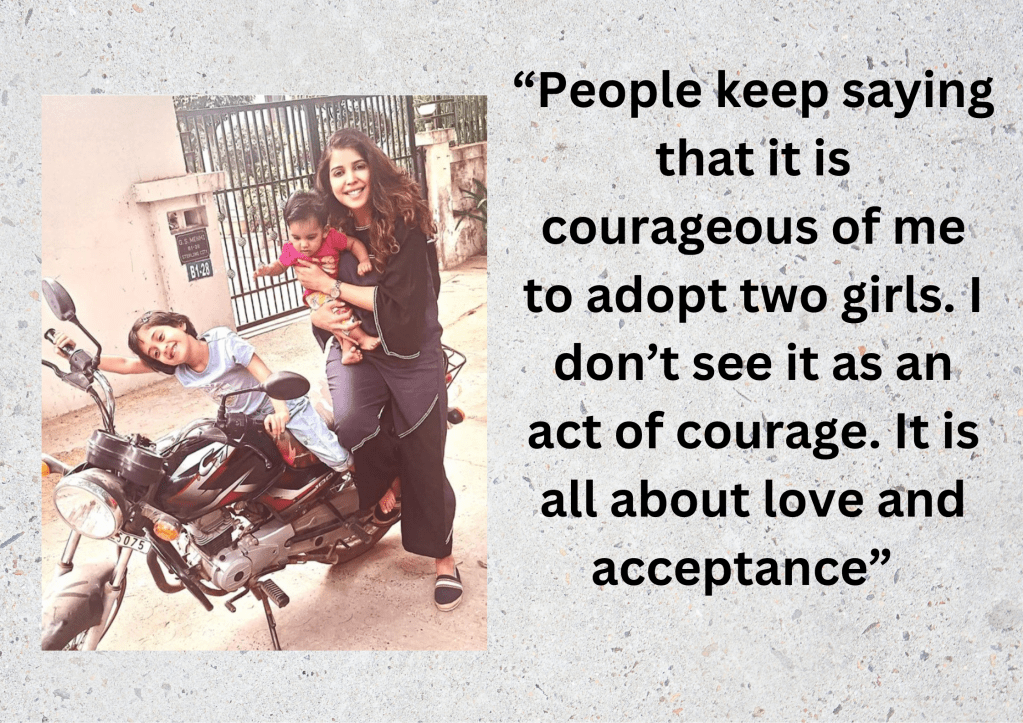
Shital feels the concept of parenthood in our society is changing now and people are warming up to the idea of having a family based on love and organic connection rather than just birth and DNA. “Many of my friends are now exploring the option of adoption. However, still, so many people keep on telling me that it is so courageous of me to adopt two girls. But I don’t see it as an act of courage. It is all about love and acceptance only.”   

Image credit: Shital Shah

Deepika Sahu has been a journalist for 28 years and she has worked with some of India’s leading media houses. Right now, she is independently engaged in content creation and curation.
“One April afternoon, we left to meet our new mom”

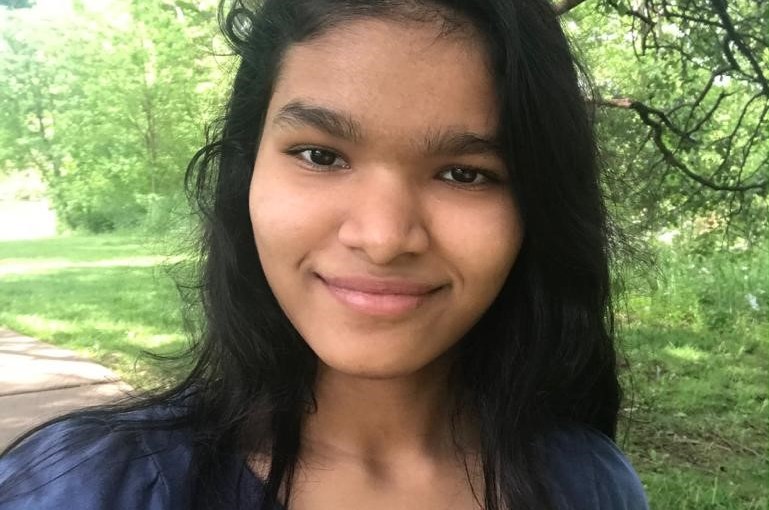
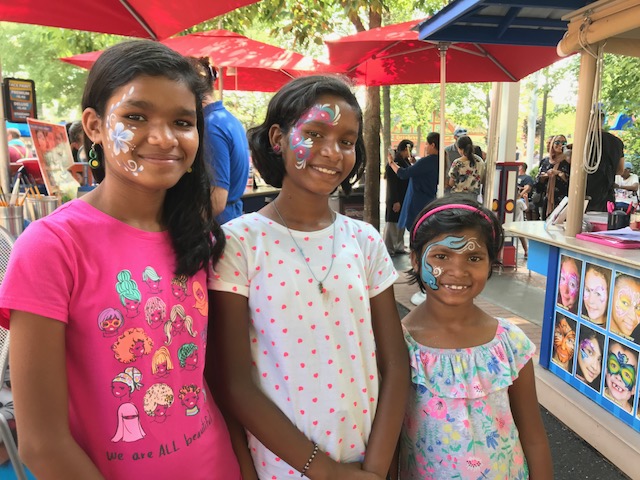
says Anjali Fahnline,14, as she looks back and writes about her adoption journey. Fahnline and her two sisters were adopted in 2017, and she is our youngest ever contributor, bringing in the much-needed perspective as an adoptee, and an honest account of her experiences and feelings

When I found out that I’m getting adopted to another family, I didn’t understand what they meant. Few days later Amma, who was the head of the hostel, said that my sisters and I were going to meet our new mom. I understood then that I was getting a family. I wasn’t excited to meet my new family, but I just pretended to be because I didn’t want them to think that I was not happy to see them.

One April afternoon, we left to meet our new mom. I was nervous. When we arrived, I saw a woman wearing a beautiful saree. She came towards us and I said, “Hi Ma’am.” She smiled. Then I said “Mom?” She said yes. She introduced herself, “Namaste, I am Rama, your new mom.” She sounded friendly. However, because she was wearing glasses and had short hair, I was afraid that she may be strict. She reminded me of a woman I knew who was very mean to everyone in the first hostel we stayed at.

When we went to a separate room to talk, our new mom asked, “What do you like to do?” I said, “I like to play with the kitchen set.” I used to love to pretend play. It was so much fun to cook, pretend to be a parent and send kids to school. Our new mom got a delicious biscuit which we all shared and talked about other things for a while. She asked us about the things we don’t like, and I replied, “I don’t like it when adults fight.” I don’t think any kid likes it when their parents fight. They get scared and sometimes, it becomes traumatic and haunts them for the rest of their lives.

Sometime later, she showed us her husband’s photo. We were shocked! My sisters and I had never ever seen a white man or woman in our lives and there he was in the picture!

I imagined his whole family looking white, it was like he had put so much powder on his face; that’s what some people do in India. I asked our new mom, “When are we going with you?” I wanted to make sure how much time I had with my friends in the hostel. She answered, “As soon as the paperwork is done.”  We had a good time talking and sharing things about our lives. I felt happy because she wanted to know about my life, my likes, and dislikes.

I didn’t feel good about going and living a completely different life and leaving my birth mom. I thought what if she comes to my hostel and looks for us, and we are not there? It was very hard to think of living in a new world. That evening, at the hostel, everybody asked questions: “Are they rich? Are you going to America? Are they nice?” I didn’t answer because I didn’t know if they were rich or if I was going to live in America. America is a big and rich country to live, and I had never even dreamed of living there.

At the same time, there was something that made us happy. My sister and I were excited about getting beautiful dresses, living in a nice neighbourhood, and having things. We had been poor and faced many difficulties. The place we lived was not very safe, my birth dad had been violent, and we were not able to get a good education.  I was kind of excited about the new opportunities. But I still wondered if I was ever going to see my birth mother again. So far, I haven’t, but I know I will one day! I was scared too because some people in my hostel frightened us. “They’re your second parents, so they’ll be mean, and will hit you and your sisters.” I’ve heard a lot that second parents don’t treat you like their own kids. I was anxious about our safety.

From what I have experienced, I don’t think all second families are mean. To be honest, I do feel worried about my family getting rid of us or doing bad things to my sisters. Kids who are adopted have that kind of fear inside them. It takes time to trust everybody again and adjust to the new life. It took me and my sisters a lot of time, and I’m still working on trusting everybody again.

After few months, my new mom and dad came to pick us up; we were going to stay with them until the court hearing. It was so hard to leave my hostel. My sister and I cried. Everyone there kept us safe and happy for three years, and now I was leaving them. I gave a speech saying how much I loved them, I was so sad that I couldn’t even say anything properly. I distributed ladoos to everyone and took a final picture. I didn’t want to leave anyone, especially the woman who took special care of me, like a mother.  Before I left with my parents, she gave me some of her jewellery, and her photo. I still have them with me.

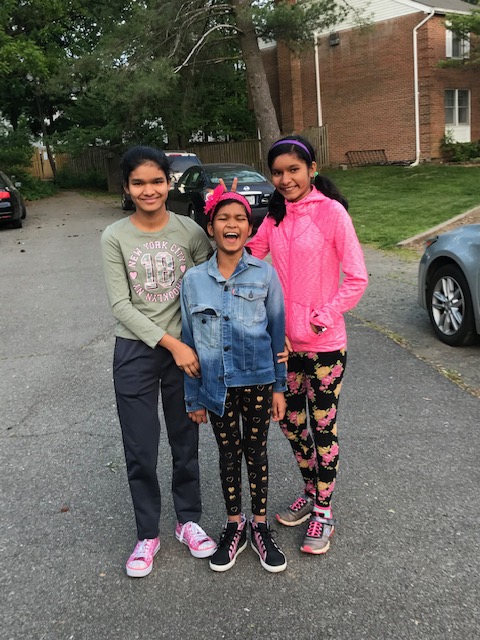
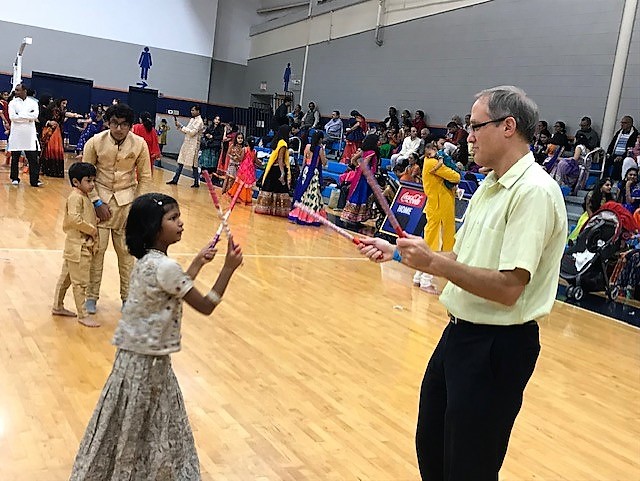
From top left to right: Anjali with her siblings, Anjali and her siblings earning how to drive a bicycle with the help of their father, Anjali’s youngest sister playing garba with their father, and Anjali and her siblings with their mother Rama

It rained heavily as we drove nearly three hours to get to our hotel. My sister and I were so tired that we fell asleep before we went inside the room. My sister wanted to use the toilet, but it was not the Indian style that we were used to. My mom helped her use the bathroom and my sister went back to sleep.

The next morning, my younger sister saw my new mom wearing a short skirt. And she called out to me and said, “Didi (elder sister) look, she’s wearing small skirt, doesn’t she feel shy?” I told her, “Shhh, she will hear you and then she’ll be upset. Be quiet.” But my mom already heard her and said, “It’s ok.” We never saw women wearing anything short. Then we went out for breakfast. There was nothing that we knew or liked except bananas. There were pancakes, waffles, and other things that we had never ever seen, not even in books or on TV!  We had bananas and omelette for breakfast, after which we went shopping for clothes. I was so surprised to see such a big store, then I found out that it was called a ‘mall.’ We bought some pretty dresses and night clothes and went back to the hotel.

We stayed in the hotel for few more days, then moved to an apartment in Thane. For my parents, it was hard because the bathroom was Indian and there was no furniture. We had to get a lot of things. We sisters feared the dark, so we kept the lights on the entire night. We all slept in the same room. One day I woke and didn’t see my mother. I started crying, worried about how to take my sisters back to the hostel. She came out – she was in the other room. After that night, my mom left a note beside me even if she went to the bathroom. We watched Hindi movies on the iPad. It was something familiar. Our parents sent us for classes so that we had a routine. People were friendly to us, and we learnt a lot of new things. My mom bought north Indian food from outside because that’s what we always ate. She didn’t cook north Indian food. Her cousin lived a few houses down, and we spent time with them. I learned to use a library, got pocket money, made choices on how to spend it, and ate out at restaurants.

Soon it was time for the court hearing. I asked my mom what will happen at the court hearing. She said, “They will ask you if you want to live with us or go back to the hostel.” I asked, “What if I said no, I want to go back?” She replied, “The judge will listen to your choice. You will go back to the hostel and I will go home.”

I had to make that decision for me and my sisters. I decided that I will say yes. I wanted to live with them because I liked the few days that I spent with them. I felt safe. I was also happy to give them the responsibility of caring for my sisters. I couldn’t accept her the same as my birth mom, but I felt comfortable with my new mom.

When the judge asked me if I was ready to go with my new parents I said “Yes, my sisters and I will go with our new family.”

(Anjali Fahnline enjoys designing clothes and henna, is an avid photographer and is excited to help other children in similar circumstances. You can read more of her writing at Anjali’s corner at www.forallourkids.com)

You may also want to read Sangitha’s piece on adoption.