A Bagful of kindness

The beginning of a new year is the perfect time to reflect upon the year gone by. When journalist Saurabh Sharma looks back at his last year’s professional journey, one assignment stands out. It wasn’t just a story. It was an experience that touched him personally. When he went to cover the Uttarakhand tunnel tragedy, little did he know that he would come back with a bagful of unexpected episodes of kindness

Swati Subhedar

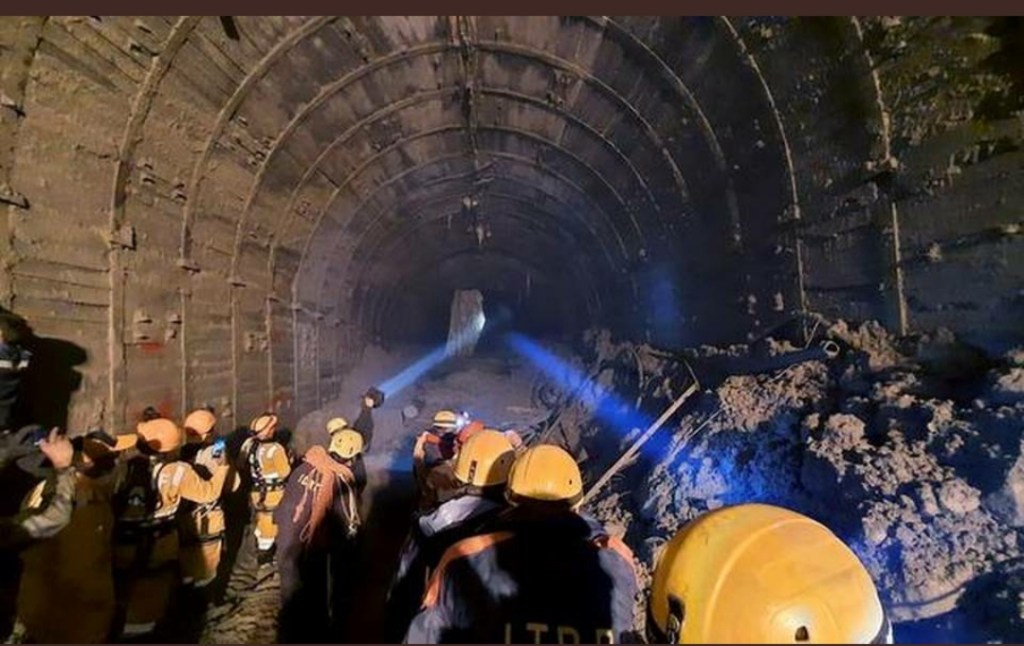
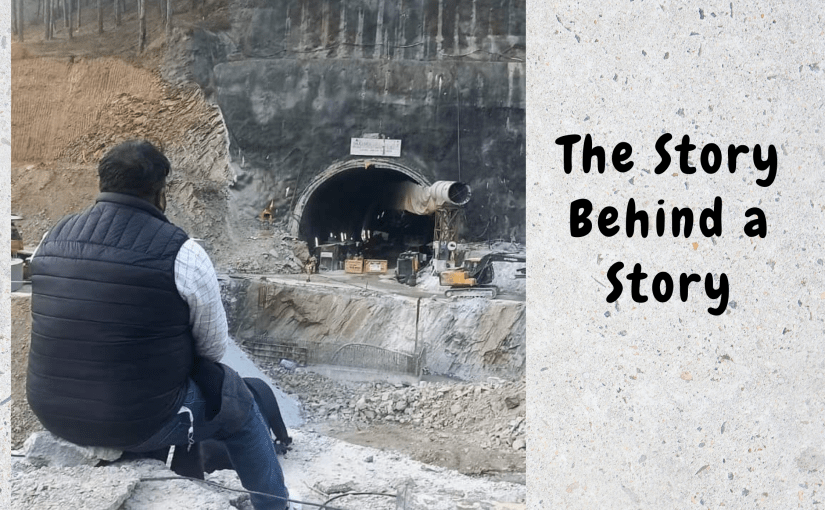
It was a classic tale of tussle between humans and nature. On the morning of November 12 last year, the day the entire nation woke up all set to celebrate Diwali, at 5:30 AM, an under-construction tunnel at Silkyara-Barkot in Uttarakhand collapsed, trapping 41 construction workers inside. The tunnel was being constructed as part of the Char Dham project, intended to connect important Hindu pilgrim sites in Uttarakhand, with two-lane, all-weather paved roads.

Given that the incident happened in the ecologically fragile Himalayan region—prone to such incidents because of the incessant drilling of mountains to construct roads—it was anticipated that tunnel rescue might take longer than initially anticipated. Breaking news soon turned into a constantly developing story. A slew of journalists started arriving at the collapse site. Among them was Saurabh Sharma from Lucknow.

Silkyara is an important connecting point for tourists going to Yamunotri, one of the four destinations of the Char Dham Yatra. The holy shrines of Char Dham open every year with the advent of summers in April-May and close with the starting of winter months of October-November.
So, when the tunnel collapsed, most of the hotels, restaurants, home stays and dharamshalas, that host incoming tourists during the peak season, were closed, or were winding up. Most of the owners had moved to their homes in Dehradun, the state capital, and other cities in the plains as it was the beginning of the off season. The others were packing up.

The journalists, who could not miss even a minute of coverage after the rescue operations began, were facing logistical issues like food, transportation and accommodation. While some stayed at one-two hotels that were still operating, it wasn’t much of a help because these were functioning with less than half the staff strength. Most reporters went back after the initial coverage. Very few, including Saurabh, decided to stay till the end of the rescue operations. At that point in time, no one knew that it would take 17 long days.
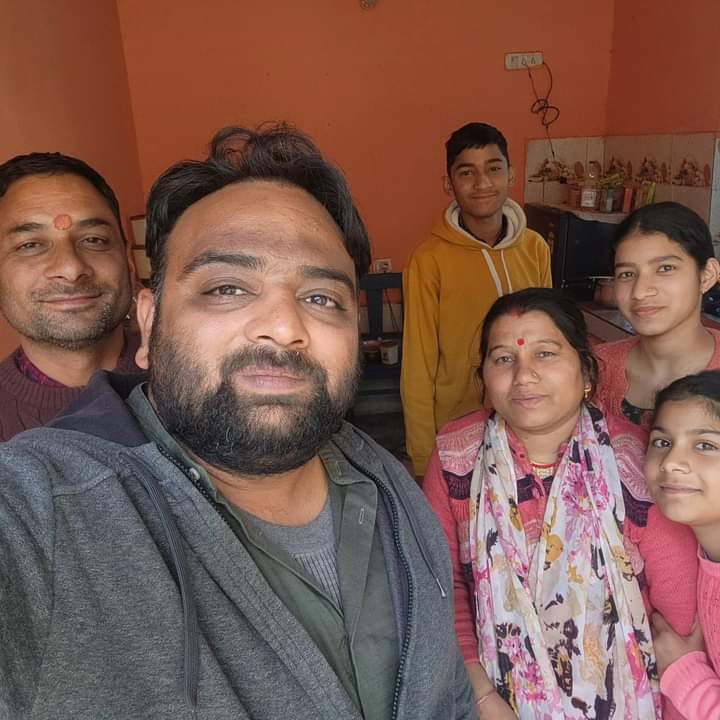
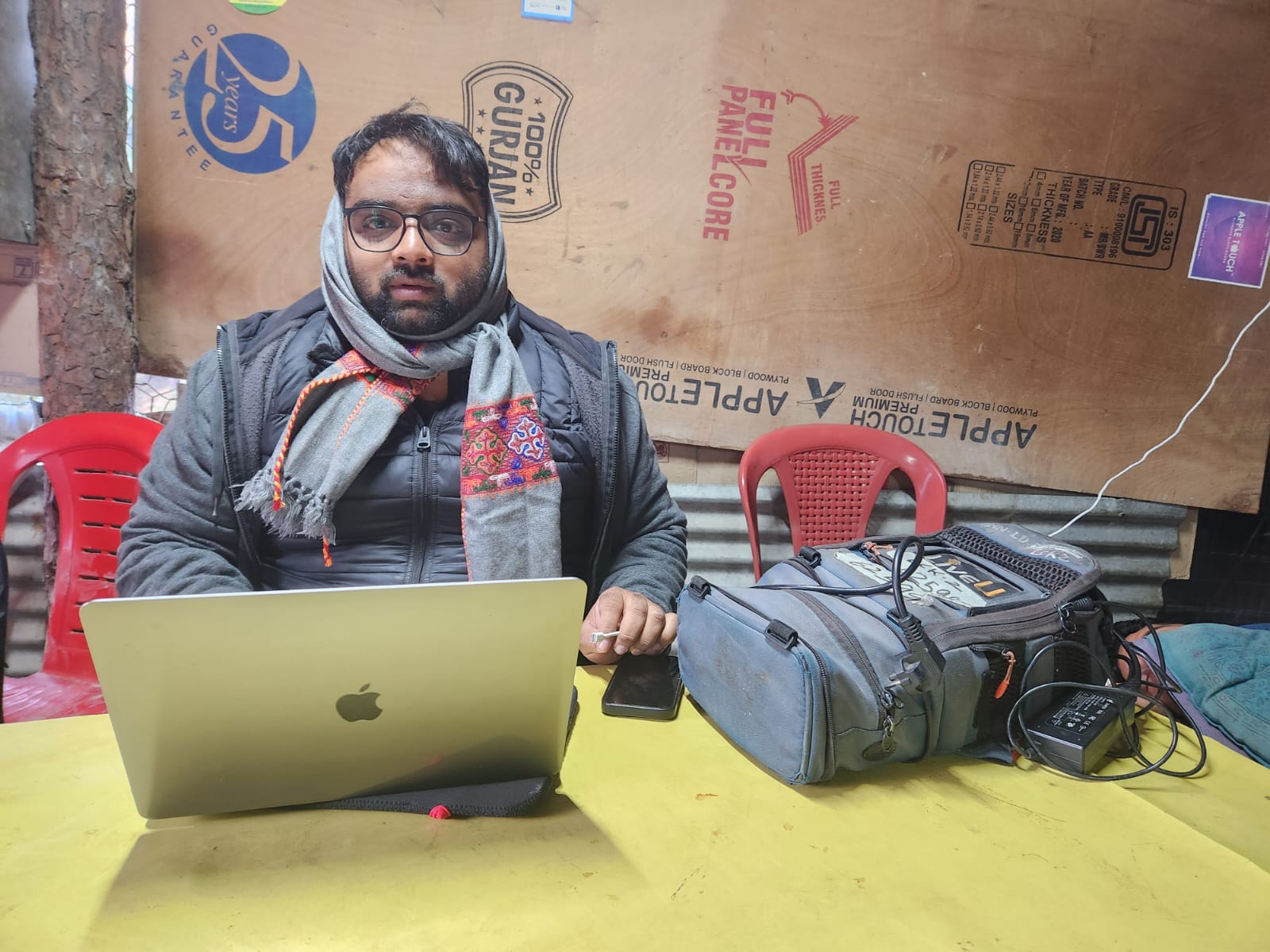
Saurabh Sharma with the Vidhan family

Saurabh was fortunate to meet the Vidhan family when he arrived in Silkyara. The family owns a modest eight-room homestay with minimal facilities and a common washroom. They were also packing up for the season but decided to let him stay. Saurabh, who thought it would be a short trip, wasn’t prepared for a long stay. The very first problem he encountered was that of laundry. The nearest market area was two hours away and it wasn’t possible for him to leave the collapse site even for a few minutes. So, he asked Mrs Vidhan if there were any laundry facilities around—a common practice in the hills where tourists are allowed to wash clothes in public washing machines in exchange for a small amount. Everything was closed. “She told me not to worry and said she would wash all my clothes in their washing machine. I was very hesitant, but since I was carrying limited clothes, there was no option. I was genuinely touched,” says Saurabh.

After the exhausting and physically demanding reporting sessions began, for most meals, he would eat Maggi and parathas, two things that are readily available in hilly areas. “After 3-4 days, I could no longer eat that. When Mrs Vidhan realised that I was facing this issue, she instantly said I could eat meals with the family. Very lovingly, she would prepare kadhi, chicken curry and daal,” recalls Saurabh. The market was quite far, and it would not have been easy for the family to arrange for these things, but they went out of their way to make him feel at home.

“I will never forget the day when Mr Vidhan, who works with the state electricity department, bought fruit cakes for me from the market. Even his children, one son and two daughters, would keep checking on me. Every afternoon and evening, they would give me a call to ask what I preferred for meals. When the family learnt that I don’t drink milk tea and prefer lemon tea instead, they started making lemon tea. All this, of course, came at a price, but just the fact that a family was willing to do so much for a stranger, was very touching for me,” says Saurabh.
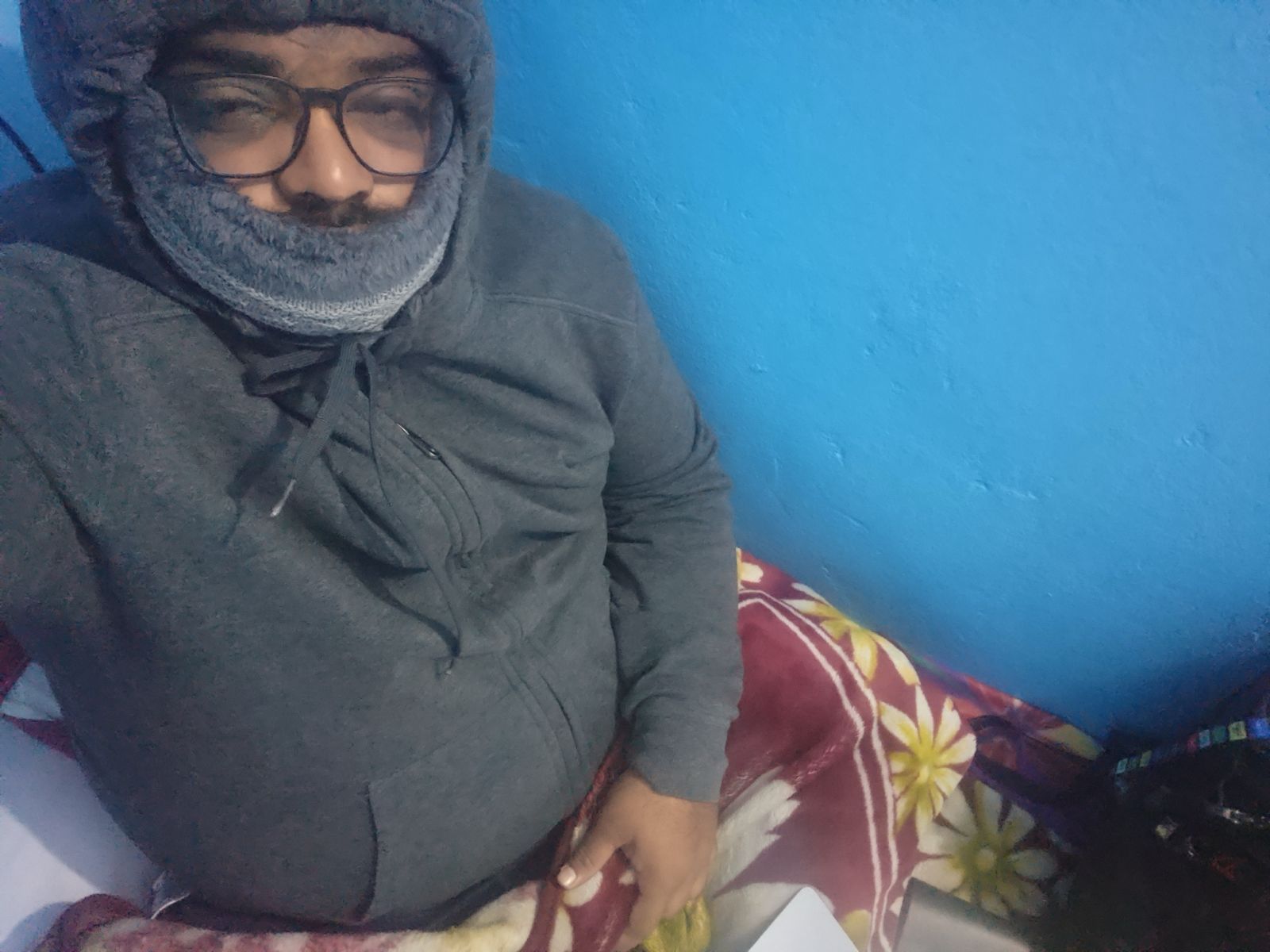
Since it was the beginning of winter, the temperature had started dipping. “One day, the temperature dipped to minus. I wore all the clothes that I had and still I was shivering (top left). Mrs Vidhan went to the market and bought a heater for me. Mr Vidhan came at midnight to check on me and gave me extra blankets,” recalls Saurabh.

It was because of the kind gesture of the family and all the help they provided, Saurabh had the mental bandwidth to focus on the rescue operations that were going on in full swing. All sorts of equipment, like JCBs and Auger machines, were deployed, but it was proving to be extremely challenging because the debris would reclaim at the spot where digging was being done to save the 41 construction workers who mostly hailed from Jharkhand, Bihar and Uttar Pradesh. Their anxious family members, too, had started arriving in Silkyara and were staying at the makeshift labour camp. It was there that he met Chaudhary ji whose son Manjeet was trapped inside the collapsed tunnel.

“He hailed from Lakhimpur Kheri (in Uttar Pradesh). He had to mortgage his wife’s jewellery to come to Silkyara. He had Rs 9,000 on him when he arrived. The rescue went on for a few days, and because of the extreme weather conditions, some of the family members decided to go back. They didn’t have enough money, so Chaudhary ji helped some of them. In the end, he was left with Rs 254,” says Saurabh.

On November 21, nine days after the tunnel collapse, officials managed to insert an endoscopic flexi camera inside the collapse site. It was the first time that live images of the trapped workers came alive. But Chaudhary ji could not spot his son Manjeet. He called home. Some people were from the village, who were following the rescue story on their mobile amid shaky network, informed him that they had seen Manjeet. “He was very happy The way his moist eyes lit up, it was the most touching moment for me,” says Saurabh.
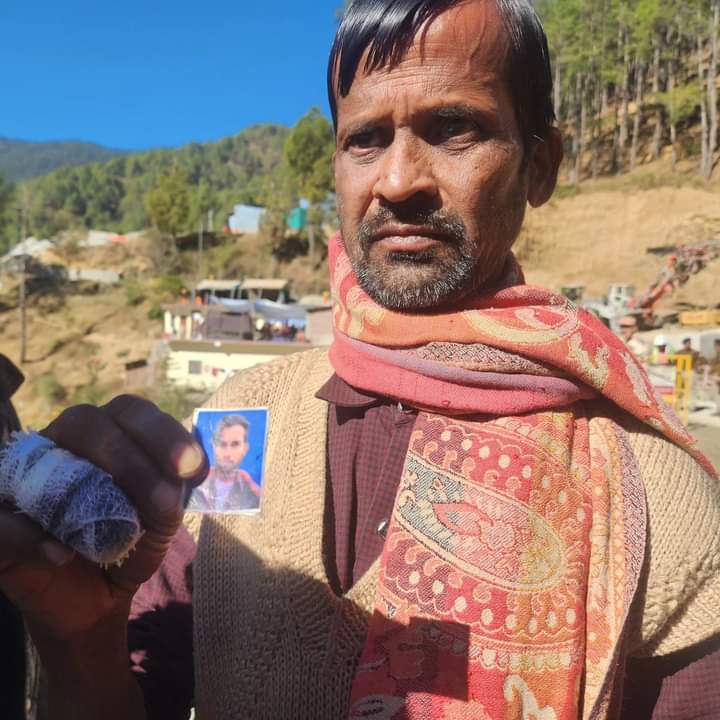
Chaudhary ji showing a photo of his son Manjeet

Finally, after 17 days, Operation Zindagi ended. What machines could not achieve was accomplished by manual diggers, who diligently, for hours, dug through the tunnel manually by adopting rat-hole mining techniques, and rescued all the 41 workers. They were kept in isolation for 24 hours and were later admitted to AIIMS in Rishikesh. The workers and family members found themselves surrounded by journalists who were there for interesting quotes and bytes. “I managed to talk to a few, but realised they should be left alone. They should be allowed to spend with their families,” says Saurabh.

After the rescue, the story was no longer on the front pages or on prime-time slots. Everyone moved on to the next big story. An exhausted Saurabh returned to Lucknow after all the workers, their families and the journalists left from Uttarakhand. When things settled a bit, he realised it wasn’t just a story; it was an experience of a lifetime. “The kindness showered on me by rake strangers is something that I will never forget. I am still in touch with the Vidhan family, and all others who helped me,” says Saurabh.

Image courtesy: Saurabh Sharma

Also read: The ghost villages of Uttarakhand, Collarwali Supermom, Almora diaries
The ghost villages of Uttarakhand

People move their place of habitation because of social, political, or economic reasons. Often, natural disasters lead to sudden displacement of people. However, over the past few decades, large-scale human migration has been happening because of climate change. In India, a rise in extreme weather events like droughts, floods, heatwaves, and hailstorms is fuelling climate migration and it’s the poor who are forced to abandon their homes, land, and livelihoods. The Global Climate Risk Index 2021 puts India among the top 10 countries most affected by climate change. Today, on International Migrants Day, we kick-start a three-part series that will look at various aspects of climate change migration in the country. In the first part, we take you to Uttarakhand, home to several ghost villages, to understand why people, especially farmers, here have been migrating.

Swati Subhedar

On February 7, 2021, a disaster struck Uttarakhand’s Chamoli district. A devastating flash flood ravaged through three valleys — Rishi Ganga, Dhauliganga, and Alaknanda. It swept away the unfinished Tapovan Vishnugad Hydropower Project and severely damaged the Rishi Ganga Hydropower Project.

The state administration requested a geotechnical team’s visit to the site of flash floods for assessment. The team’s finding concluded that the cause of flash floods was the collapse of a hanging glacier — 15 football fields long and five across — breaking off high in the mountains. A hanging glacier is a body of ice that breaks off abruptly.

In the Himalayas, about 10,000 glaciers are receding at a rate of 100 to 200 feet per decade as global temperatures rise. The glaciers in Uttarakhand are very sensitive and susceptible to climate change. Supra-glacial lakes are formed on the surface of glaciers when the snow melts, and the state has 809 such lakes. The Geological Survey of India has found 13 of the 486 glacial lakes in the state to be vulnerable. A glacial lake can breach and cause floods like the one in Chamoli due to avalanche or cloudburst, a major quake, or other geological factors.

A disturbing video of glacier melt in Chamoli.
Video credit: From the Twitter handle of journalist Shiv Aroor

More than 70 people lost their lives in the Chamoli flash flood tragedy and later the government declared 136 persons who were reported to be missing as “presumed dead” so that the affected families could get early compensation. The year 2021 has turned out to be the second-worst in terms of loss of lives in such calamities after 2013 when the Kedarnath flash floods had taken thousands of lives. According to data with the State Operation Emergency Center (SEOC), nearly 300 people died, 66 were reported missing and over 100 people sustained injuries in weather-related calamities this year that include events like flash floods, cloudbursts, avalanches, landslides, and mudflows.

A recent study, titled ‘Locked Houses, Fallow Lands: Climate Change and Migration in Uttarakhand, India’, conducted by the Germany-based Potsdam Institute for Climate Research (PIK) and The Energy and Resources Institute (TERI) mentions that Uttarakhand’s annual average maximum temperature may increase by 1.6-1.9 degrees Celsius between 2021 and 2050. The study focuses on how climate change impacts — like rising temperatures, increasing glacial melt, and changing rainfall patterns — could affect livelihoods and thereby shape migration patterns in Uttarakhand.

The report identifies three main areas of action for policymakers — preparing for demographic changes resulting from migration, creating alternate livelihood options in the hill districts to revitalize the economy and revisiting the state’s climate change action plan as well as the state’s agricultural policies in the wake of out-migration from hill districts.

Rescue workers looking for missing people at one of the hydropower projects after the Chamoli flash floods in February. Image credit: From the Twitter handle of Affinity Magazine

Migration and the ghost villages of Uttarakhand

The state has 6,338 village panchayats and 16,500 villages. However, it’s common to find abandoned villages where no one lives. These villages are known as ghost villages. All one can find here are locked doors and hints of civilization that once existed. The eerie silence makes you wonder what must have led to families leaving lock, stock, and barrel, never to return.

As per the data revealed in 2018 by the Rural Development and Migration Commission set up by the state, the hill state has around 700 ghost villages and more than 3.83 lakh people have left their homes between 2007 and 2017. Most of the migration to the plains in Uttarakhand is of young people. The data shows that 29% are 25 or younger, 42% are between 26 and 35 and 29% are over 35 years.

A Right to Information (RTI) query filed by Hemant Gaunia, an activist based in the Nainital district, revealed in January this year that a total of 1.18 lakh people have migrated out of Uttarakhand permanently, while 3.83 lakh have migrated in search of work and better life but keep visiting their native places in the hills. It also mentions that people living in 3,946 villages have migrated ‘permanently’ which implies that these villages also fit the definition of ghost villages.  

Rakesh Juglal, Kalawati Devi, Anju Devi and Goli Devi … the last four residents of Bhel Dunga village. Image credit: From the Twitter handle of Tanmoy.

These ghost villages can be commonly seen in the Pauri Garhwal district where 186 out of 298 villages have been totally or partially depopulated. For instance, Thalda village in the district once had around 52 houses and a population of 175. However, today, less than 30 families remain in the village and the population has shrunk to lower than 100. There are many villages where the population ranges from eight to 10, and in some places only two-three people are residing.

“I have been to some of these ghost villages. In most villages, all the families have migrated, never to return. In some villages, you can find 3-4 elderly people. It’s common to see locked houses, collapsing structures and farms full of weeds and shrubs,” said Robin Chauhan, a journalist based in Uttarakhand.

He added: “There are many reasons why people here have been migrating. The primary reasons are unemployment, lack of medical facilities and lack of schools and educational institutions. Some people returned during the lockdown, but a majority have gone back. Life is tough on the hills. People don’t want the next generation to suffer. They migrate so that their children have more avenues of earning money. The farmers, however, have been gradually migrating because of things that are beyond their control. Erratic rainfall, drying water bodies and lack of irrigation facilities have turned the land barren at an unprecedented rate.”   

The farmers living in the hills have mountain-sized problems”. Image credit: Aanand Mani, a farmer

Farmers, climate change and migration

“It’s for everyone to see that the climate is changing, and the Himalayas are melting. However, it’s the farmers who are getting impacted and are forced to migrate. If steps are not taken today to stop this large-scale migration, that day is not far when the government will have to give money to farmers to stay back and do farming,” said Aanand Mani, a farmer based in Bhimtal, a town in the Nainital district of Uttarakhand. It is situated at an altitude of 1,370 meters above sea level. “My farm is in the foothill, yet it gets difficult. The farmers living in the hills have mountain-sized problems,” he added.

The PIK-TERI study mentions that climate change in the state will increasingly force farmers to abandon farming at high altitudes and move to the plains over the next 30 years. The state government’s action plan on climate change identified three ways climate change may impact agriculture — increased water stress, increased risk of floods and changes in crop yields. Other factors include changed crop season, shifting cultivation zones for certain crops, and drying up of perennial streams.

“The monsoon pattern has changed for sure. It rained so much in February this year. I have not seen so much rain in February in the past 15-20 years. Yes, our agriculture is monsoon fed, but so much rain damaged our rajma (kidney beans), tamatar (tomato), pahadi kheera (cucumber) and mooli (raddish) crop. We used to cultivate kathal (jackfruit) in March-April. Now, we are cultivating it in October-November,” said Anil Pandey, a farmer based in Nainital district. He has his own farm, but he is also into organic farming and is part of a network of 1,200 farmers who have switched to organic farming as it is economically more feasible.

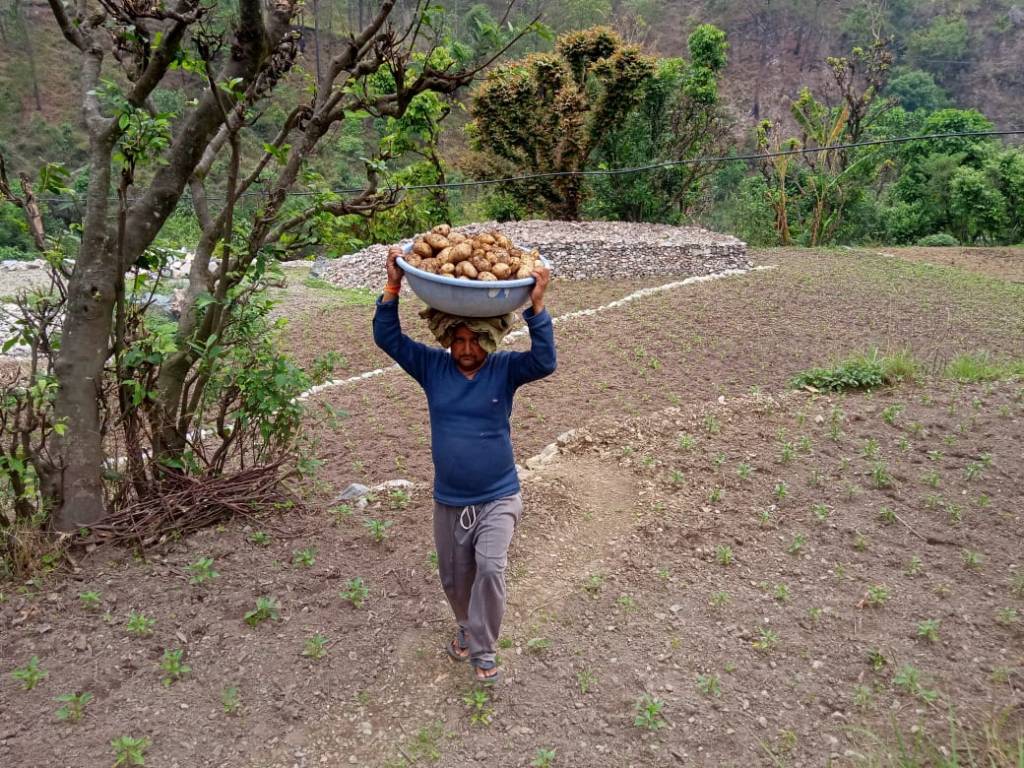
He added: “We are still better placed. Those living in higher altitudes do step farming. Their farms are smaller in size, and the problems manifold. They usually grow potatoes and ginger but could never switch to cash crops. They eat what they grow, so they can’t rely on their farms for a living, and there is nothing else to do on the hills. Water scarcity is a big problem. The spring-fed rivers are drying because trees are being cut to make dams and roads. These rivers used to be a source of irrigation. Rainfall is not sufficient anymore, or it rains a lot. The extraction of groundwater through borewells has impacted the water table. Constant drilling of mountains for tourism is leading to landslides.”

While the previous generation of farmers is not willing to give up yet for emotional or sentimental reasons, the younger generation has made up their minds. “Ninety-eight per cent youngsters want to go out. Their parents are not stopping them. They have suffered enough. They don’t want their children to touch farming. Can you imagine how disastrous that is?” asked Mani, the Bhimtal-based farmer.

Farmers in the hills eat what they grow, so they can’t rely on their farms for a living, and there is nothing else to do on the hills. Image credit: Aanand Mani

As per Narendra Mehra, a farmer based in Haldwani, both central and state governments have launched various schemes for irrigation and are taking steps to contain migration, but the results are not visible. “There is so much corruption that the schemes that look so fancy on paper are not even reaching the beneficiaries. The officials distribute seeds very randomly. They themselves don’t know the crops and their production patterns. Wild boars and monkeys destroy our entire produce. The problems that I am listing are not even related to climate change. The government and the farmers have no control over the climate. But why can’t we focus on manmade problems and find solutions? What about compensation? The October rains ruined paddy worth Rs 100 crore in Udham Singh Nagar district. Last I heard a committee was formed to evaluate losses so that compensation could be given. If you are asking me if the government is taking any concrete steps to stop migration, the answer is no,” he said.

What farmer Mani from Bhimtal said about his brother shows how the problem of migration is altering the social fabric of the state. “My brother is 36. We have not been able to find a girl for him. Likewise, there are many youngsters in the state who are facing similar problems. They are earning well but marriage is still an issue. People from the hills who migrate elsewhere, work in hotels and earn Rs 2,000-3,000 and are all settled. That is the unfortunate truth. This could become a big problem in the state in the coming years,” said Mani.        

(This is Part-1 of our three-part series on climate change and migration) 

Also read: Ladakh is sitting on a ticking time bomb.

We do hope that you enjoy reading our stories. We are a very small team of two; with no funding or resources to back us, and your contributions will help us in keeping this platform free and accessible for everyone. If you wish to contribute, click here.