Stories & Series

“My husband is my spine, and my daughters are the miracle that completes my life”

Rafat Siddiqui’s journey to motherhood began eight years after her life-altering accident in 2010. In this interview, she talks about her supportive family, the special bond that she shares with her husband, embracing motherhood and her daughters who mean the world to her

…..

Swati Subhedar

“It was a miracle. I asked my husband to buy me a pregnancy kit. In my head, I knew the test was going to be negative, but, in my heart, I was hoping for it to be positive. Those few minutes were the longest of my life. The result made me numb,” said Rafat Siddiqui, 35, who has been in a wheelchair for the past 10 years after meeting with an accident in 2010 that seared her spine. 

Given her condition, she knew the pregnancy was going to be tough on her, but her little babies would kick her and they gave her the strength to carry on with the painful nine months. Born prematurely, her twin daughters were too fragile and tiny and were moved to the Neonatal Intensive Care Unit (NICU) even before she could touch them. When she held her daughters, Fatima and Safiya, for the first time after 10 days, she whispered to them: “I am your Amma, and you are my girls.”

Rafat was just 25 when she met with the accident. She had been married for two years then and life was full of love, hope, and dreams. Being confined to a wheelchair was tough. Being dependent on others for basic needs was heart-breaking. However, the incredible support that she got from her family, especially her husband, gave her the strength. “My husband is my spine, and my daughters are the miracle that completes my life,” she said.

The daughters are two-year-olds now. “There was a time when they were so tiny that they would fit in my husband’s palm. Now, it’s difficult to catch hold of them. They say ‘a child gives birth to a mother’. It’s so true. From the time they have entered my life, even before they were actually born, there’s nothing that’s more important than them,” she said. In this story, she talks about these special bonds.

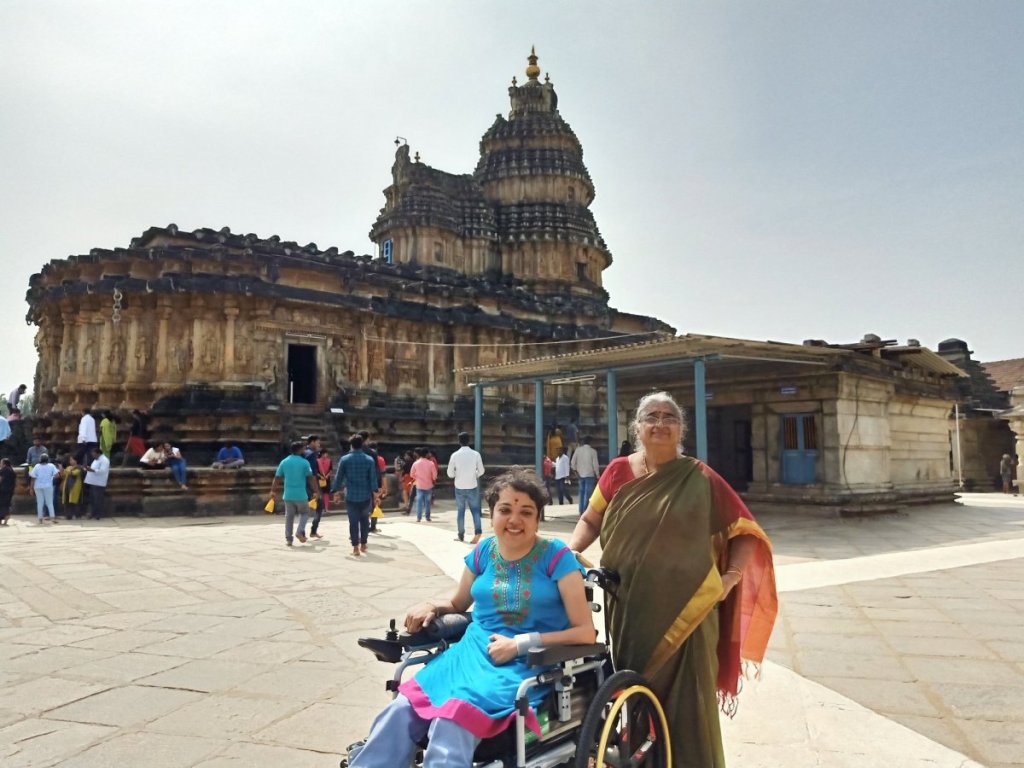
Rafat’s journey to motherhood has been quite incredible. Image: Mrunmaiy.com
When an ill-fated moment changed her life

Rafat, the eldest among the three siblings, was born in Nagpur but grew up in Mumbai. Her parents managed to give them a wonderful life. She got everything that she wanted, except for a Scooty, which she had been asking for since she turned 15. She graduated, took up a part-time job, and even did a computer course, in a hope that her parents would buy her a Scooty, but that did not happen.

At 23, she got married. Like a typical Mumbai girl, she juggled between her job and managing her house. She loved her routine — wake up early, prepare breakfast and lunch for all, finish household work, go to the office in a crowded Mumbai local train, come back in the evening, have a cup of coffee, chit-chat with her in-laws, and then prepare dinner for all. She would happily spend most of her Sundays in the kitchen cooking something special for her family. The accident changed everything.

In 2010, around the time she met with the accident, she had taken a break from her work to make arrangements for her brother-in-law’s wedding. The house was buzzing with activities, there was a lot of shopping lined up and the house was being renovated. The silver lining for her amid all the craziness was that she was given a Scooty to run errands.

One day, she had to accompany her husband to his office. There was a lot of traffic, but it had cleared by the time she was returning. This time, her sister was accompanying her. Suddenly, she fell off her Scooty – just like that. They were driving slowly, carefully, there was no traffic, they didn’t bump into anyone, no one hit them from behind. And yet, she fell off. Strangely, there was not a single scratch on the vehicle, and her sister was unhurt too.

The accident changed her life
Of confined life and strengthening bonds

She was taken to a hospital as she had multiple bruises and concussions. After several tests, scans, and MRIs, the family was informed that she had also suffered a spinal cord injury … “That’s how she is going to be. Neck down, no movement, no sensation.”  

Her family, especially her husband, was very supportive. “When the doctor informed him about my injury, my husband asked him to carry on with the treatment and said he would be by my side all my life irrespective of whether I was going to be in a wheelchair or confined to a bed. After I was discharged, my father arranged for therapists for me,” she said.

The therapy sessions were painful, but after three to four months, she could at least move her neck, fingers, and had trunk control. The family even opted for Stem Cell Therapy treatment. They first went to a private hospital but found the treatment to be too costly. Then they went to Sion Hospital, (a government hospital in Mumbai). “I was only six months into the injury. The doctors tried to accommodate me saying my body may show a good response. It was a difficult process. I spent two days at the hospital and had to do a lot of exercises after returning. I am not in a position to say if the Stem Cell Therapy treatment was 100% effective, but after six months there was a little sensation in my body. I could take baby steps with the help of a calliper and a walker,” she said.

However, there were setbacks. “I got a foot nail ingrowth, which was quite deep. It resulted in my body to fall back. I had to start all over again. Every time my body showed some improvement, I had to stop because of pressure sores or weakness or some other reason. That became my life then,” said Rafat.

She moved back to her in-laws’ place and hired an attendant. She started working as a freelance content writer, which boosted her confidence. She also started meeting others who were dealing with spinal cord injuries, which motivated her further. Life, however, in her own words, had become very monotonous. It was her husband who played a key role in keeping her happy and motivated. He would take her to malls and they would often go out to eat paani puri.

When asked if the bonding between them has strengthened after the accident, she said: “It’s been more than 10 years, but my husband has never mentioned my condition to me. In fact, he shuts all those around me who say hurtful things, or pull me down. We have been married for 13 years, so we have had our share of ups and downs, but one thing I can say with full conviction is that my husband is my spine. Alhamdulillah, he’s one of the choicest blessings from the Almighty.”

She believes that nothing stops persons with disabilities from being good partners. “When someone accepts a person with a disability as a partner, that relationship is very special. Yes, there is love, but there is also a lot of understanding. They are a lot more patient and they care about each other a lot. The whole chemistry between them changes as they know that life is going to be more demanding, and full of sacrifices,” she said.  

Rafat with her daughters Fatima and Safiya
Embracing motherhood

In 2017, Rafat went on a pilgrimage to Mecca along with her family. The trip was special as it was her first long-distance travel after the accident. After returning, the couple came to know about the miracle.

“Frankly, it just happened out of the blue. Considering my physical condition, the amount of pain and spasms, and involuntary movements in my body, my husband would avoid making any close contact with me as he didn’t want me to go through the pain. However, the Almighty was happy with us and wanted us to experience parenthood. When the pregnancy test came positive, we were too shy to disclose it. Also, we wanted to be completely sure before we could reveal it to our families,” she said.

The first visit to the doctor was crucial as they had to weigh all the pros and cons given her condition and the effect the pregnancy was going to have on her mind and body. It was decided that they would “take a call” if it was going to take a toll on her health. But Rafat was not in a mind to take any such call. She had decided she wanted to be a mother.

She was aware that carrying twins was never going to be easy. “I had to stop all my medicines. I couldn’t exercise. I would be sick all day and all night long. I wouldn’t talk much. I couldn’t sit properly. I would feel uncomfortable if I would lie down for too long. I would have severe mood swings. There were typical pregnancy issues like vomiting, dizziness, breathlessness, and BP,” she said, adding: “It worsened as the babies grew. There were days when I couldn’t even take the smell of food. Managing my bowel and bladder was another challenge. It was taking a toll on my body, but my babies kept kicking me, reminding me to be strong and positive.”
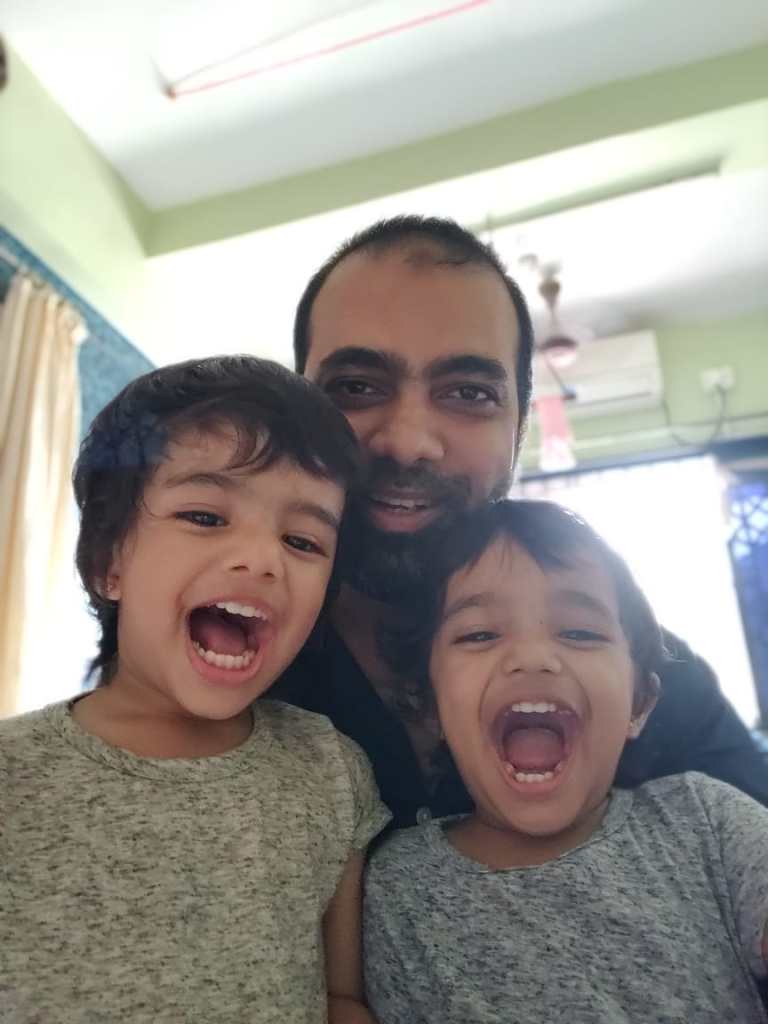
The daughters are two-year-olds now
Being a mother

The babies arrived before the due date and were underweight and quite fragile and were moved to the NICU. “I couldn’t enter the NICU because of the wheelchair and as men are not allowed inside a NICU, my husband couldn’t see them either. They were just 1.4 kgs when they were born. Now they weigh 11 kgs and the credit goes to my parents and siblings. Their feeds, massages, naps, baths, crying and tantrums … my parents handle everything. It does get overwhelming at times with all the sleepless nights and days, anxiety and palpitation, tears and fears, struggle and losses, sacrifices, and compromises. Not just for me, for everyone. But my daughters are the apples of my eyes and my source of energy. They are the miracle that makes my life complete,” said Siddiqui.

This is Part 3 of our series ‘Unbound’ – a spinal cord injury awareness series. Read Mrunmaiy’s story, Ishrat’s story Garima’s story Preethi’s story, Suresh’s story, Kartiki’s story, Ekta’s story.

“It’s a task for me to move from one building to the other. So, I attend just one lecture a week”

Because of infrastructural woes, thousands of students with disabilities are grappling with the challenges of access and inclusion. Garima Vyas, who is in a wheelchair ever since she met with an accident in 2016, is fighting a lone battle as her university says it needs a nod from the government to make alterations in the heritage structure of the building to accommodate her

…..

The usual buzz is missing in colleges and universities across the country as most of the educational institutes have resorted to virtual teaching in the wake of the coronavirus pandemic. However, that was a ‘new normal’ for Garima Vyas, a second-year student of Psychology studying at the prestigious Maharaja Sayajirao University (MSU) in Vadodara, Gujarat, even before the pandemic.  

She would attend just one lecture in a week, but even that would turn out to be an exhausting and frustrating experience for Vyas, who lost her freedom to move around freely just a day before Independence Day in 2016. A freak accident sheared her spine and left her in a wheelchair. Despite the setback, she managed to excel in her 10th and 12th standard exams. She is optimistic to continue the winning streak in her graduation as well, however, the many infrastructural barriers that she must encounter while maneuvering her wheelchair across the university campus are proving to be major roadblocks.

“There is a flight of stairs right at the entrance of my department building. My mother, who accompanies me to the university to help me around, must literally pull the wheelchair up the stairs. This is very dangerous as even a minor slip could lead to a major disaster. My mother has developed a knee problem due to this, so it’s difficult for her to do this every day. Also, it’s a herculean task for me to move from one building to the other in a wheelchair. So, I decided to attend just one lecture in a week,” said Vyas, 19, who is a paraplegic, a condition wherein a spinal cord injury paralyzes the lower limbs.     

She is not fighting this battle alone. Because of infrastructural woes and attitudinal barriers, thousands of students with disabilities across India are grappling with the challenges of access, acceptance, and inclusion.

Garima has always been an outdoor, fun-loving person.
Image: Facebook

The day that changed her life

Talking about the fateful day, she said: “Since childhood, I have been on numerous treks. On August 14, 2016, we went on this trek to Pavagadh (a tourist location 50 kms from Vadodara city). That day we had taken a different path to trek up. It was an easy trek and nothing untoward could have possibly happened. There was a waterfall on the top of the hill, and I decided to bathe under it, like I always did. There was a man in front of me. He slipped and accidentally kicked my abdomen before falling off. There was a rock behind me, so I did not fall, but the kick was so hard that I hit the rock and it sheared my spine.”

With the help of the locals, she was transported down with the help of a makeshift cradle that was made with the help of a bedsheet that the family was luckily carrying and a bamboo stick. They immediately called for an emergency ambulance and managed to reach a government hospital in Halol – 13 kms from Pavagadh — in the nick of time to be able to take a crucial shot that is paramount for persons with spinal cord injuries.

“It was a painful journey. I had broken some ribs as well that were puncturing my lungs so I couldn’t even cry. But at some point in time I did realize that it could be something serious and I needed to be strong,” she said. 

She was moved to a hospital in Vadodara, and the next day, she was operated upon. During the prognosis, the doctors predicted that she may not even be able to sit for the rest of her life. But luck was on her side and she defeated fate. It was, however, a life-altering moment in her life.

Her hobbies include playing the keyboard, stitching, writing and cooking. Image: Facebook

Dealing with challenges

Despite the challenges that life suddenly threw at her and the painful five-six-hour long daily physiotherapy sessions, Vyas scored a CGPA (Cumulative Grade Points Average) of 10/10 in her 10th standard and topped her school in 12th standard in the Humanities stream. Her school, Bright Day, was kind enough to make alterations in the school building to accommodate her, but the MSU university experience has been quite the opposite.

“We have requested the authorities at the university many times to make some changes in the campus to make my life easier. Every time they tell us that being a heritage structure, they would need the government’s permission to make any changes and that would take long,” she said, adding, “As per the Rights of Persons with Disabilities Act, 2016, it’s a prerequisite for a government or public building to have facilities for persons with any kind of disability. If the buildings aren’t accessible, the authorities should be flexible enough to make the necessary changes at the earliest. My faculty is aware that my mother and I struggle every time. In such a scenario, getting permissions shouldn’t take so long.”

She is, however, glad that the university is making some changes in the infrastructure with the help of Vadodara-based non-profit organization Enable Me Access. The progress is slow, but she is glad that the changes are happening.

Undergoing a major pressure sore surgery in 2019

Need to be more inclusive

Vyas, however, said it’s pointless to put the entire blame on the university authorities as even the engineers who design these buildings or have been assigned to make alterations to the infrastructure are clueless about how to make the changes keeping persons with disabilities in mind. She narrated a terrible experience when she used the university washroom this one time.

“I couldn’t even enter the regular washrooms as the doors were too narrow, so I went to the staff washroom in the Psychology department. At that time, I was already dealing with a two-inch deep pressure sore (damaged skin and muscular tissues caused by staying in one position for too long. Those who use a wheelchair are always at risk), which was quite severe. It got exposed to the unclean toilet seat and the infection worsened after a few days. I had to get the pressure sore closed surgically,” said Vyas.

Another area that needs urgent attention, according to Garima, is to sensitize people. “People often stare at persons with disabilities or just jump to help rather than asking them if they need help. I don’t blame them. That’s the way our society is. These things should be taught since childhood. The problem is that we don’t encourage our children to ask questions. As a result of this, when they grow up, they lack the maturity to deal with such situations and hence end up staring at someone who is in a wheelchair. Even if they want to help, they don’t know how to offer help or what to say,” said Vyas.

She often faces this problem, but she has learned the hard way that if you can’t change something, get accustomed to it or ignore it altogether. Another ‘new normal’ that she has gotten used to is that there are limited recreational places like malls, multiplexes, or restaurants that she can visit after the injury as not all are wheelchair-accessible.

When she is going through an intense emotional outbreak, she writes a blog. Image: Facebook

Her coping mechanisms  

Accepting these changes must have been a daunting task for a young Vyas. In her own words, at her age, if not for the injury, she could have bunked lectures, partied, travelled, and even dated freely while never losing sight of her academic goals. She did have to deal with pangs of loneliness immediately after the accident, and even now, sometimes, she goes into a zone. When asked what her coping mechanism is, she said: “If I am going through an intense emotional outbreak, I write my feelings down. Writing helps me get my thoughts together. It’s a good emotional outlet. When I calm down a bit, I listen to music, or eat an ice-cream,” said Vyas, whose hobbies include playing the keyboard, stitching, and cooking. You can read her blogs here.   

She is glad that she has very supportive parents and a close-knit friend circle, who are her emotional outlets. “I have at least 20-25 people in my life who will drop everything to help me out. They will fight for me, if need be. I am extremely grateful that they are a part of my universe,” she said.

When asked what message she would like to give others dealing with similar injuries, she said: “It was only after my accident that I truly understood the kind of challenges that persons with disabilities face. I especially think about those who belong to the lower strata of society, or those who are not financially independent or those who live in small towns and villages. It must be tough for them. There is a problem of awareness. The government does have many schemes and scholarships for them, but I don’t think they reach them. The NGOs, voluntary organizations, and ordinary citizens can play a big role in bridging this gap.”

This is Part 4 of our series ‘Unbound’ – a spinal cord injury awareness series. Read Mrunmaiy’s story, Ishrat’s story, Rafat’s story Preethi’s story, Suresh’s story, Kartiki’s story, Ekta’s story.

“Disrupted adoptions have gone from being very rare to over 1,000 children in the past five years”

Says Sangitha Krishnamurthi, a special educator and adoptive parent. In this essay, she talks about some of the aspects that are often pushed under the carpet when talking about adoption and the need to move beyond a simplistic understanding of adoption to help avoid some of these disruptions.

Photo by Pixabay on Pexels.com

Adoption is everywhere and it is nowhere, at the same time. The fairy tale of a child finding her family results in an ‘aww’ leading into a happily ever after. 

The perception is that once a child is placed with his/her family, the job is done, and everyone lived happily ever after.  In reality, the movie is just starting.

November is Adoption Awareness Month and I write this to talk about the lesser spoken aspects of adoption that we should be aware of. 

And what are these? First, adoption is not charity, it is parenting.  With that, this concept of being the same or different just dissolves.  No two children are the same and that’s the whole point.  Second, different isn’t a bad thing.  Third, children know, and the body remembers, even when the mind is just developing. With these foundational principles, I wish we would all talk more about the following.

Parent preparation – it’s vital and it’s missing

In India, parent preparation is next to nil.  It is not mandated by the government and even when it exists, the material is far from adequate.  The approach usually is one of ‘not scaring away parents’ in order to ensure placement.  Anyone who is going to get scared might not be a good family is a point to be considered. 

Unfortunately, many parents who end up being ambassadors for adoption only speak from one point of view – the one they have seen parenting their one or two children. Many minimize the differences so that parents ‘won’t get scared.’ Professionals who are adoption-informed are few and far in between. 

It would be good for aspiring parents to seek out resources on their own, read books like The Family of Adoption by Dr Joyce Maguire Pavao to learn about the adoption triad and speak to as many adoptive families and adoptees as they can so that they can learn and inform themselves. 

Adoptive parenting has some twists and turns that anyone aspiring to adopt should be aware of.  This starts from when the child comes home, taken away, yet again from everything they know.  Adoption begins with grief and loss. 

A mother and father lost out on parenting and a child was wrenched from his/her biological connection.  The adoptive family stands on this foundation.  This isn’t a question of good or bad, positive or negative. This start comes with several consequences that the adoptive family will have to recognize, accept, and accommodate in their parenting.

Photo by Parij Borgohain on Pexels.com

Other questions to consider include using positive language to talk about adoption, how to tell the child the facts of their adoption, how to handle societal stigma, what to share about the child and where, how to get ourselves to a point that we accept that the child is adopted, how to be secure as a parent so that one can take the teenage years with this added facet on top of expected turbulent times, what it means to not have even one biological relative (those of us who can trace back to our great-grandfathers will never know what this feels like!) and how to put our needs aside with the child in the center, however much that hurts at times.

Understanding birth trauma, attachment, and core issues in adoption

It is important for adoptive parents to be conversant with these concepts. Children born of well fed, middle to upper class families, with access to good health care at all times, start off with the advantage of the birth lottery.  A large number of children who are placed in adoption start off premature and/or with low birth weight or ‘failure to thrive’ written in their medical records.  This may impact parenting, schooling, and independence as an adult.  None of these are likely to be major issues, if supported from a young age. 

Children whose first attachment has been disrupted need that much more support when attaching another time with the adoptive family.  In between, the child is in institutions, sometimes in foster care.  At every point, when a bond is being formed or has formed, something changes, and the child is with a stranger yet again.  A child is likely to be moved three times at a minimum and more times than that, in some cases.  Science now tells us that secure attachment is critical to healthy development.  When attachment is ambivalent, children internalize that change is bad, that they need to be on guard.  This shows up in many ways and needs supportive parenting.

Research has found seven specific core issues that adoptees deal with through life.  These are a sense of rejection, loss, grief, guilt/shame, control, identity, and intimacy.  These are recurring strands through their lives and many adoptees have spoken of how it is only possible to mitigate the impact, never eliminate it.

The good news is that our brains are plastic and any changes that have been caused from traumatic incidents can also be significantly compensated for by a loving, caring and knowledgeable environment. As with everything, that first step of informing ourselves in order to understand and then adapt our parenting is critical.

Managing societal expectations and tackling biases and prejudices

Our society is strange.  At the beginning, parents are idolized as heroes who ‘rescued’ a child who is ‘lucky’ to have found a family.  Then, as issues surface from early childhood nutritional differences, the same family is blamed for not being strict enough or too strict. 

With the whitewashing of the differences comes no understanding and support for the parents at the center.  Our schools and teachers often have no idea and many times, mental health professionals have no clue.

Even very experienced psychiatrists and psychologists push back at adoptive parents, saying there is likely no impact from this aspect.  That there is no need to tell the child about his/her adoption because “he/she is now home and being given all the love”. 

Extended families may ask whether the child is of another religion and what we would do if ‘bad’ genes were to be in our child.

Many quasi-experts try to ‘normalize’ adoption.  Adoption is not and should not be our norm.  Making it normal in any way means accepting that we cannot support our families to stay and parent their kids.  While their intentions are good in trying to destigmatize adoption, their efforts end up doing more harm than good in perpetuating this image of the model adoptee, achiever adoptee, no-step-put-wrong adoptee and this fairy tale family which lives happily ever after.

Schooling and different needs

Schools and society are cut from the same fabric, one influencing the other.  So, we have teachers who will not intervene in bullying that tells an adoptee that his/her mother is probably a prostitute and that he/she was thrown in the garbage for being dark and ugly.  All bullying hurts and then this hurts right to the core of the primal wound, one that formed from the separation from the birth mother.

Nutrition early in life is the foundation to significant parts of a child’s development.  When this is hindered, one cannot know how these gaps in development will show up.  Many children with this background may end up with issues in academics, behaviour, etc. 

Photo by Ivan Bertolazzi on Pexels.com

Children with trauma are overrepresented in several developmental differences including different learning needs.  Many, many adoptees emerge with invisible wounds from schooling.

Our teachers may not know about the impact of trauma. Our attitude to differences in learning and behaviour as a society is judgmental. We need to work on changing this.  

The point?

The point of this article is to say that despite all this, most adoptive parents would adopt again. And do.  The intention is to be more informed in ways that matter in order to support our children. 

We need to evolve beyond a simplistic understanding of adoption.  We have a long line of aspiring parents waiting on lists for their children to be matched.  We also have children being returned, based on policies that aren’t thought through.  Disrupted adoptions have gone from being very rare to over 1,000 children in the past five years. One main reason is ‘adjustment issues’ with older children. 

Experts tell us that we are looking at years to adjust and here, we have parents who entered into adoption thinking everything would sort itself out in weeks. Some children are placed again within a few months in another home, layering trauma upon existing trauma.

Adoption is a wonderful way of building a family.  At one level, the parent needs to know that it is parenting, no more, no less.  With attachment, separation trauma and core issues, the parent needs to embrace the difference and work with it.  When teenage and its angst comes along, the same parent needs to see the ‘sameness’ with all children and recognize the differentness of the adoption strands that twang with hurt.

All children are our children, it is our responsibility as a collective to support everyone who needs it. Adoptive families need a level of informed care and support in order to emerge on the other side of their parenting.

You can read more of Krishnamurthi writing at www.lifeandtimesinbangalore.wordpress.com where she has been blogging at for the past 11 years now.

“A person never commits suicide. He/she dies by suicide”

Shyam Mithiya is a Mumbai-based psychiatrist and sexologist. In this interview to Swati Subhedar, he talks about how the recent death of a Bollywood actor and what followed after that was an opportunity lost, in terms of starting an honest and open conversation on mental health

Was the recent death of a Bollywood actor and what followed after that an opportunity lost, in terms of starting an honest and open conversation on mental health?

Yes. We could have done so much in terms of spreading awareness and educating people. Many people got interested in his case because he was a well-known Bollywood actor. If you try to educate people about mental health issues without any context, it might not interest them. But if a mental health issue is associated with a celebrity, they would be interested in knowing more. In an ideal situation, therapists, counsellors, psychologists, psychiatrists, and mental health professionals should have been invited to various forums, they should have had a nuanced and detailed discussion about mental health issues and busted various myths associated with these illnesses. But what followed after his death in the name of TRP (television rating point) was shocking and shameful. People were already going through a lot because of the pandemic and the lockdown. The media should have been a little empathetic and sensitive. There was no need to cash in on someone’s tragedy during such an emotionally draining phase.

His photos were circulated soon after his demise, which was such an unethical thing to do. Imagine the kind of impact it must have had on emotionally fragile minds. The headlines read “he committed suicide”, which is a wrong way of putting it. A person never commits suicide. He/she dies by suicide. By saying a person committed suicide, it, in a way, glorifies suicide. It may give people the impression that if such a successful, famous and financially stable person could commit suicide then, maybe, that’s the way to end your miseries. By focusing on this case in an unreasonable manner, and without balance and empathy, we are worsening the situation.

Image credit: Ministry of Health Twitter account

When a celebrity opens up about battling depression, people say “how can he/she be depressed?” People often associate depression with extreme sadness. What should be done to bust various myths related to depression?

We tend to use the word depression very casually. Say, if India loses a match, people say, “Oh, we are so depressed that India lost”. People tend to get confused between sadness and depression. Depression is a clinical disorder wherein a person feels extremely sad, with or without a trigger, for 14 days or more. That’s the starting point. Then there are different types of depressions like unipolar, bipolar, mild, moderate, or severe depression.

A person who has everything going for him personally, professionally, financially, and socially, and his/her life is 100% perfect, even this person could be depressed. It is a biological condition wherein there is an imbalance in the neurotransmitters, and it can be treated with medication and by making changes in the lifestyle. However, we must also understand that by making lifestyle changes or by only doing yoga and exercising, or by developing a hobby one can’t beat depression. Yes, these are additional factors that help significantly, but you need to see a counsellor or a therapist and take medication if need be. People around a person who is dealing with depression should not give him/her lame advice like “watch a motivational video” or “listen to music” or “think positively”. These things will suffocate a person with depression even more. Instead, encourage him/her to see a therapist.

Please understand, a depressed person goes through a lot. People going through depression can’t help feeling sad and or crying non-stop. They know the ill-effects of eating junk food, yet they binge. They can’t sleep. They feel like going out, meeting friends, and living a regular life, but they are just not able to pull themselves out of their beds. Also, a depressed person need not necessarily be suicidal and those with mild or moderate depression can still function as normal human beings.

Mental health helpline numbers. (Right) Dr Shyam Mithiya

Often, people categorize those suffering from complicated mental health issues like mental disorder, bipolar disorder, or schizophrenia as “paagal” (mad). How should we address this issue? 

Unfortunately, all mental health disorders like depression, anxiety, obsessive-compulsive disorder, phobia, panic disorder, social anxiety, dyslexia, learning disability, attention deficit disorder, hyperactivity disorder, mental disorder, schizophrenia, or bipolar disorder are categorized as “pagalpan”. People say things like “arey ye to paglo ke doctor ke paas jata hai”. People having schizophrenia or bipolar disorder are often termed as “possessed”, are ill-treated, chained, burnt with match sticks, or taken to faith healers. When nothing works, their families bring them to us. When the families see a considerable improvement in the patients after we prescribe medicines to them, they feel guilty, especially so when they realize that these illnesses are treatable. There are many such misconceptions. We need to spread awareness at the ground level or at the school level. Only then the next generations will be more aware, more accepting, and ready to seek medical help.  

A large section of society has access to the internet. People often google their symptoms and arrive at a conclusion, rather than visiting a therapist. They read about the side effects of medicines and either stop taking the prescribed pills or don’t start the treatment at all. What should be done to change this?

It is dangerous. Let me tell you why. If you Google “headache”, the third option is tumour! Now, imagine a person having anxiety googling his/her symptoms, reading about the medicines and the side effects. That person will get petrified and not even come to a therapist. This worsens the situation. Visit a therapist, talk to him/her, understand your situation, take medication, if need be. That’s the proper way. Don’t try to be a doctor. You are not an expert.

Video credit: Ministry of Health Twitter account

Mental health is still a taboo in Indian society. Even educated families are not willing to accept that their children could be having mental health issues. Very few are open enough to take their children to a therapist. Casual reactions like “oh, it’s nothing” or “it’s all in your head” can do a lot of damage.

Yes. If someone is having a heart problem then we don’t tell that person “heart se nikal do”. So, why tell someone having anxiety or depression that “dimaag se nikal do”. I feel people who recover from mental illnesses should share their success stories on social media so that more and more people read about their experiences. This will help others. This way, those dealing with mental health issues will not feel awkward about their situation. This will give them the courage to open up and discuss their options with their families or friends. But, it’s a vicious cycle. People don’t share their stories because they fear that others will brand them as “pagal”.

The pandemic is having an adverse impact on the mental health of people. What should be done to be mentally and emotionally fit during such difficult times?

As per the statistics, one in seven people in India is dealing with some mental health issue or the other. That comes to 15-20 crore Indians and this means almost every family has one person who is dealing with a mental health issue. We never had enough psychiatrists, psychologists, or mental health professionals. Now, the pandemic has added to this burden. There is too much anxiety. Today, a family visited me for therapy. I asked their nine-year-old son to wait outside while I spoke to the parents. Fearing coronavirus, he kept standing for 15 minutes and didn’t sit on the sofa. That is a reflection of how anxious people are. Yes, there is too much coronavirus-related grim news floating around, but if you are a parent, remember, your kids are watching you and they are going to replicate your actions, so react to a situation in an appropriate manner.

These are the seven things you must do to keep your mental health in check during the pandemic.

(1) Sleep for at least eight hours a day
(2) Eat healthy and balanced meals
(3) Exercise … meditate for sure, yoga rebalances the nervous system
(4) Don’t live in a bubble … communicate (5) Don’t suppress any kind of emotions
(6) Develop a hobby
(7) Do something for someone or society. There’s nothing more satisfying than that

As told to Swati Subhedar

This conversation is a part of our series on mental health and illness, as we talk to people whose voices have brought to life, with empathy and without judgement, what is it to live with a mental illness or to care for someone who does.

Related interviews: Jerry Pinto, Amandeep Sandhu, Karishma Upadhyay, Anjana Deshpande, Tanika Godbole and Shampa Sengupta

“We only ask for a level playing field that fulfills our basic right to equal rights in education and employment”

In 1998, Preethi Srinivasan went on a college trip to Pondicherry. A freak accident left her paralyzed below the neck. Life has been a constant struggle after that, but the sportswoman in her is always determined to take each problem head-on. If you are a girl/woman, you must read this story

…..

Swati Subhedar

The only child of Vijayalakshmi and Srinivasan, Preethi had a blessed and blissful childhood. She was an exceptional student in school. At the age of 8, she was a swimming medallist, and at 17 she was the captain of the Under-19 Tamil Nadu women’s cricket team. She led the state team to the national championships in 1997.

Her father’s job required him to keep relocating, so in 12 years of school, she ended up attending nine different schools on three different continents. Though it was difficult to be the new girl in school, she is now grateful that she got exposed to various cultures, traditions, and lifestyles. Her decision to come back to India after completing her schooling in the USA had surprised many as at that time everyone in India was desperate to study in the US. However, she wanted to represent India in cricket, so she came back to Chennai and took up a consolidated five-year MBA course. “My life was perfect, and the possibilities seemed infinite,” said Srinivasan, 41.

After completing the first year of her MBA, Srinivasan went to the US to be with her father. That holiday was special as together they drove through the length of California. She returned to Chennai on July 7, 1998. Just three days later, on July 11, her life changed forever.

Srinivasan (then 19) went on a college trip to Pondicherry along with her friends. Post lunch, they went to the beach and played cricket for a while. It was too humid, so the boys decided to go for a swim. The girls too joined them. They were holding hands in about thigh-deep water. Just then a wave ate the sand under her feet, and she stumbled. But being a seasoned swimmer, she dove into the water. As soon as her face went underwater, she felt shock-like sensation travel through her body, and instantaneously she could not move anything. She tried to stand but couldn’t. She held her breath and waited. Initially, her friends thought she was playing a prank, but when they realized something was wrong, they immediately pulled her out. From that moment, she is paralyzed below the neck.

Preethi with her parents. Image: Mrunmaiy.com

Rehabilitation and the battle beyond

Srinivasan went to the Rehab Institute of Chicago for her rehabilitation. She met very positive and encouraging therapists at the rehabilitation center. However, soon after that, she suffered a setback when she tried to enroll in a distance education programme for a bachelor’s degree in psychology. “As I was in the top two percentile of the entire American population who had graduated from school and was bestowed with ‘The Who’s Who amongst America’s Students’ award, I could have easily joined any of the top universities in the world. However, I was denied admission into a long-distance programme. I was told by many universities that the course included practical classes and as there were no lifts or ramps, they asked me not to join,” said Srinivasan. 

She was devastated by this rejection and couldn’t understand why she was discriminated against. “My father bought me many books, but from 2002 until his death in 2007, I did not pursue any formal education. Later, I completed a Bachelor’s in Medical Sociology, as it did not have any practical classes. When I wished to join Master’s in Counselling Psychology, I was again rejected as the prerequisite for that was a Bachelors in Psychology, which was denied to me earlier. The media highlighted my case and eventually, they were forced to offer me M.Sc Psychology,” she said.

Celebrating her birthday. Image: Facebook

“Give us a level playing field”

Srinivasan worked full-time for close to seven years as a writer with a movie-based website using speech activated software. In December 2018, she started pursuing her Ph.D. in Humanities and Social Sciences from IIT Madras. She is also the founder of  Soulfree, a charitable organization that was born out of a dream to provide hope for the severely disabled, especially those with spinal cord injuries. “I’m very proud to say that I’m able to provide for my family and am not a burden to anyone, but this transformation has required years of introspection and penance,” she said.

Unlike the developed world, in India, because of attitudinal barriers, persons with disabilities continue to grapple with the challenges of access, acceptance, and inclusion. “An effort must be made to fundamentally change perspectives about disability in the mainstream society,” she said, and added: “The patriarchal, ableist thought process is so deeply entrenched into the psyche that system actually encourages young mothers to abort children who ‘may’ be born with ‘abnormalities’. This is not so far removed from sex-based abortions which are still prevalent despite laws against it.”

Soon after birth, children with disabilities are faced with exclusion, isolation and stigma. They are denied a right to basic education. In India, less than 10% of children with disabilities have access to education and this abysmal figure is even worse for girls. “Education is a great leveller. If every child with disabilities is given the opportunity to attend a ‘mainstream’ school and wheelchair-accessible accommodations are made to ensure equal rights, it would make a world of difference over a period of time. We do not ask for sympathy; we only ask for a level playing field that fulfils our basic right to equal rights in education and employment. The government has several quotas for persons with disabilities, but most of these are not being implemented,” said Srinivasan.

“Stop feeling sorry. Raise your voice”

She was instrumental in setting up functional ramps at the Distance Education building (IDE) of Madras University in Chennai when she was studying there. Unfortunately, nothing much has changed since then. The infrastructure in most of the educational institutes is not designed keeping persons with disabilities in mind. What should be done to change this?

“I think it is time for persons with disability to join hands, raise their voices and demand to be accommodated. An informed government that shows positive intent towards fulfilling the framework of the Convention on Rights of Persons With Disability that it has signed by providing universal accessibility to all public space and government buildings, educational institutions, as well as equal opportunities in employment, India will certainly lay a good foundation towards reintegrating persons with disability into mainstream society,” she said.

She believes that the best way to do this is by encouraging persons with disabilities to enter corridors of power and become the change. She cites an example and says that if a person with disabilities is given employment as the differently-abled district officer, he or she would be able to understand the needs and grievances much better than an “able-bodied” individual.

In December 2019, Preethi fulfilled her mother’s dream by taking her on a pilgrimage. Image: Facebook

Women with disabilities don’t have it easy

“In India, just being born a girl is considered a curse, a sign of misfortune and a burden. It is not hard to imagine the plight then, of a girl who is born with a disability or sustains one later in life. It is certainly a double burden that is tremendously difficult to bear,” said Srinivasan.

She feels it is the duty of the government to provide financial support to ensure that a girl child is not malnourished or stigmatized, create rehabilitation centres in the districts to maximize independence and self-sufficiency, ensure primary and secondary education, ensure that all mobility aides and other accommodations are made available to enable access to education. The government should also ensure appropriate employment at the right age or vocational rehabilitation or entrepreneurial options for self-reliance and financial independence and provide opportunities for representation in government offices and the political arena with appropriate quotas.

When asked if there are moments she cherishes, she mentioned about her all-girls trip to Mahabalipuram as, for the first time in 20 years, she spent one night away from her mother and got a sense of independence. “The second trip is closer to my heart. In December 2019. I planned a six-day trip and we travelled more than 2,000 km. It was a beautiful pilgrimage through Karnataka, into Kerala visiting many temples that my mother had wanted to see for a long time but never had the opportunity. I was fulfilling her dream and that gave me such a sense of joy. Also, I sat next to the driver and used Google Maps to navigate the entire six-day stretch and was really proud of myself!” said Srinivasan.

This is Part 5 of our series ‘Unbound’– a spinal cord injury awareness series. Read Mrunmaiy’s story, Ishrat’s story, Rafat’s story, Garima’s story Suresh’s story, Kartiki’s story, Ekta’s story.


‘Punctual, extremely courteous, with a photographic memory – Babi was all this and more’

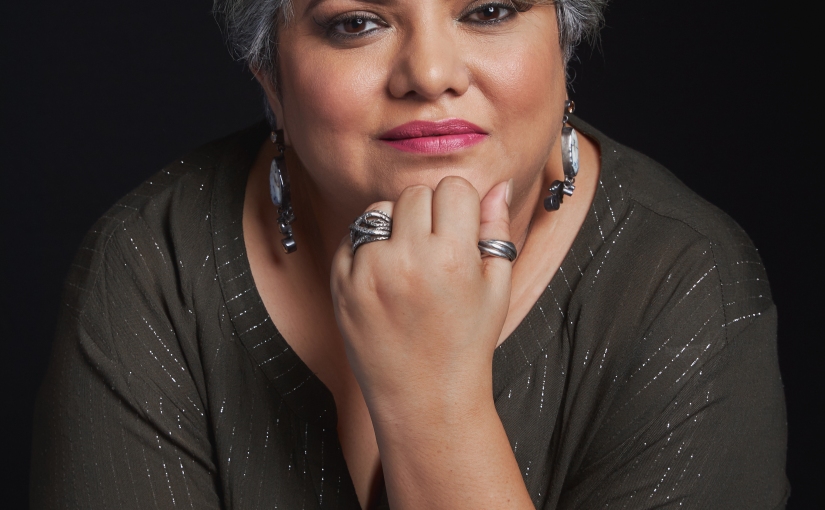
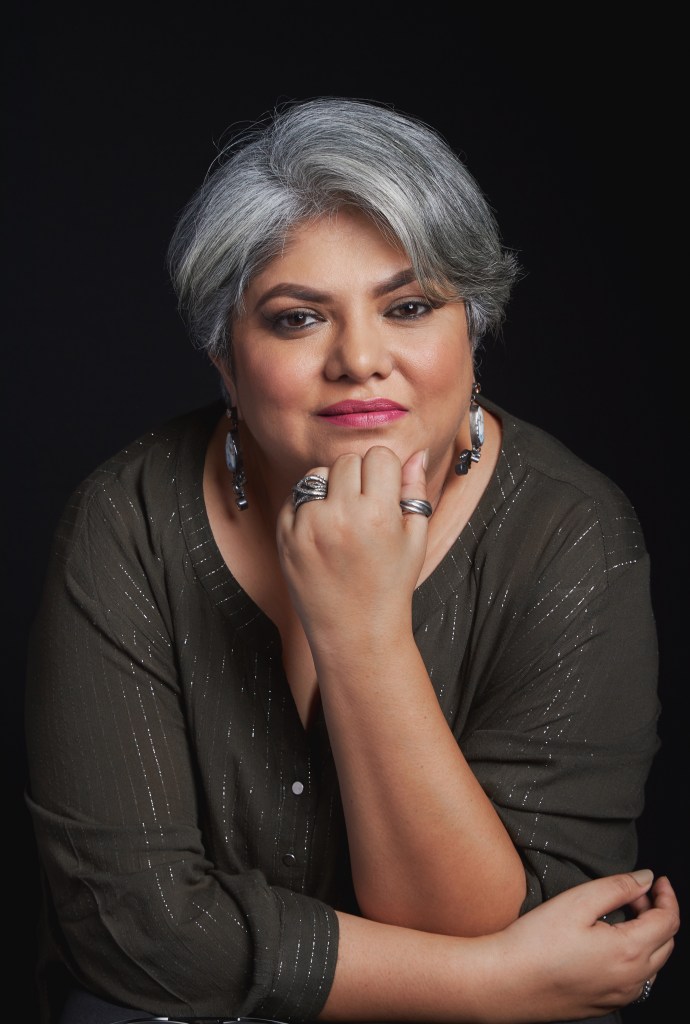
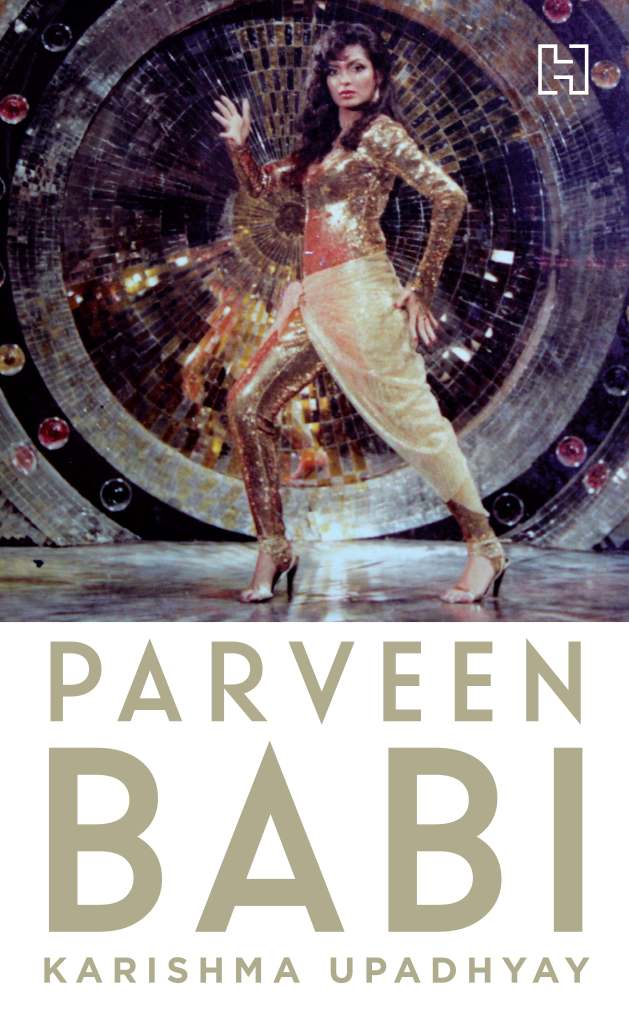
Karishma Upadhyay is a veteran film journalist, a specialist on Bollywood. Parveen Babi – A Life, is her first book, for which, she interviewed the star’s former friends, lovers, and colleagues to build a portrait that is rich and multi-layered. Upadhyay spoke to Prerna Shah about the research that went into making the book, as well as about bringing to light several lesser-known facets of Babi’s life and personality.

Diving straight in – a project like no other

When a very dear friend at Hachette told me that her editor had a project that I might be interested in, and that it was about Parveen Babi, I was at first, taken aback. I had actually never thought I would write a book.

I knew truly little about Babi. One of the first few things that I did was to talk to a friend who is an encyclopaedia on Bollywood and knows so much about the early 70s and 80s. He told me that this was indeed a wonderful opportunity to take on.

And then like anyone else, I looked Babi up on Wikipedia and realised that they had gotten so much so wrong about her and that I could make an honest attempt to bring out the real her. What fascinated me was the fact that she had quit the industry twice and came back both the times, pretty much at the top. I have been writing on Bollywood for 20 years and this is rare.

Why did all the producers, directors and actors of her time wanted to work with her even if she had quit the industry twice? It piqued the interest of the reporter in me. I decided to jump straight into the project.

Finding Parveen Babi – one painstaking detail by another

I didn’t know where to start from. No one from her family was around, and even though I did not want to start from the big names, there wasn’t any other way. But once I did, one person led me to another, and I found out that there were so many people who retained so much respect and warmth for her even today.

Ved Sharma, her secretary was no more but his son Lalit Sharma and Xerxes Bhathena, who was Babi’s costume designer and friend –- they were incredibly kind and shared so much with me, helping me put the pieces of the jigsaw puzzle that was Babi’s life, together.

I wanted to know about her life in Ahmedabad, where she studied at St Xavier’s for her Masters in English Literature. Donald Marks, (the son of a family friend and Babi’s close friend throughout her life) put me in touch with his ex-wife Jyotsna Odedra (who was Babi’s senior and roommate at St Xavier’s), who, in turn, put me in touch with Parizad who was married to the late Neville Damania (Parveen’s first boyfriend.) Slowly, but steadily, I was able to gain a clearer insight into Babi’s life and personality.

The one thing that I was steadfast about was that I would verify each and every piece of information and anecdotes pertaining to Babi with at least two other sources. There were so many things that I eventually did not put in the book because I wasn’t 100 per cent sure if it was true; as a researcher I tried to be a 1000 per cent true to her story.

Not just pretty, punctual to the core

Punctual, extremely courteous, with a photographic memory — Babi was all this and more. Discovering these facets of her personality became extremely important to me. I knew that what was written about her was so overshadowed by her mental illness, almost eclipsing everything else. But there was a reason why people were so keen on working with her.

Ravi Tandon who directed her, including in the film Majboor, reminisced that at 7 am, there used to be two other cars apart from his, that would arrive on the dot at the location. Babi’s and Amitabh Bachchan’s.

Manoj Kumar told me about how non-fussed she was. He spoke about an incident when they were shooting for the film Kranti. It so happened one day that by the time her scene was completed, there was almost nothing left of the lunch laid out for the cast and the crew. There were no plates left even. Babi simply put some subzi over a roti, using the roti as a plate, and had her lunch. No fuss, not a word of admonition for anyone. 

Ranjeet, who worked with Babi in many films, spoke of a scene with her, in which the script demanded that he assault her. In doing so, inadvertently, her clothes went haywire. Again, she wasn’t upset or furious, she simply readjusted her clothes and they went on with the scene.

Her driver Hamunan had the nicest of things to say about her too – how she took care of people around her. The cinematographer for Shaan, S M Anwar, revealed how Babi would always remember the names of spot boys and technicians on the set, courteous with everyone around her. 

There was also a magazine interview in which the late BR Ishara, director of Charitra, had described how Babi, (who must have been 16 or 17 at the time he had approached her for the movie), was keen to know what her character was really like and did not shy away from playing a character that would portray the role of a woman who would become an unwed mother. 

Adventures and anecdotes

This book took three years to research and write. It took me on different journeys. I went to Ahmedabad to research her university days, and after I had spent this afternoon with Odedra talking about Babi, I went back to my hotel. I found to my dismay that my Dictaphone had run out of battery and those conversations were not recorded! I had a flight back and couldn’t prolong my stay in Ahmedabad. This led to a wonderful weekend with Odedra at her farmhouse near the Maharashtra border and I had a lovely time besides rerecording all the anecdotes about Babi.

Getting Danny Denzongpa to agree to speak to me was also quite an adventure but so worth it. After the 70s and 80s, he did not talk to the press about his personal life a lot and he’s an intensely private person. When I finally got a call after six to nine months of corresponding with his secretary, I got on the next available flight to Gangtok. He was the loveliest, spoke candidly, with so much warmth and his insights about Babi were the highlights of the research for this book. At one point, while we were talking about Babi, his wife briefly came in, and remarked that she was so glad that there was going to be a book on Babi.

The missing pieces in the puzzle

There are these three years where she lived in Houston and not a lot is known about those years. I contacted the Indian consulate in Houston, expats, journalists but nothing much emerges of that period in her life, except for what Bhathena and Babi’s cousin’s son Javed could tell me.

I was also curious about how she paid for her three years there; she had only taken whatever little money was in her Bank of America account. So, if some more information comes out, I would love to add that to my book, update it.

However, in relation, more is known about her later years. Yes, she was mostly home bound, didn’t go out. But she did have her church group, I think it became a place of solace for her. She invited Reverend Dyvasirvadum and his family for meals, she celebrated her 50th birthday and had Ved Sharma’s family over for that.

Sense and sensibility – empathy and balance in reporting on mental illness

During Babi’s time, there was a certain lack of empathy in the way how the press reported on her. Calling her ‘mad’, ‘cracked up’ and such. Only a few interviews were done with sensitivity and I mention Rohit Khilnani’s interview in the book, which was one among the few that had balance and empathy.

Now it has been 30 years or so and not much has changed. The timing of the book, when it came out and the parallels with how the press reported on Sushant Singh Rajput’s case are uncanny. It’s not just the media, it’s how the audience, the industry folk, fans and alike reacted to the Rajput’s death that tells us that we seriously need to have these conversations (about mental health and illnesses) both in the media and the society at large.

Schizophrenia – a doctor speaks on record

When I started researching and writing on Babi, I had not previously written (in my capacity as a reporter) anything on mental illness. I wanted to approach this with awareness and understanding. I reached out to the psychiatrist (Dr Ashit Sheth) who had treated her once briefly and he told me what he had diagnosed back then and on record (that she was, at the time he saw her, psychotic, hallucinating, and feeling persecuted). I also wanted someone who lived with a mental illness, (so to speak), to read through my work and give me feedback but eventually there could be no time for that.  I couldn’t do it in detail – like getting a psychiatrist to read all of what I had researched and written but I tried to give the readers an insight into her whole personality, and not just focus on her illness.

A lot of people would say, oh she was so beautiful and talented, how could she have schizophrenia? Similar to the conversations about Rajput.

I did not put in any details that I couldn’t substantiate. Like if there was a talk about a genetic link, I didn’t put in who in the family was rumoured to have a mental illness if I had no means of double checking or authenticating it.

The end – a life and a dream

During the last years of her life, Babi allowed only a few people in her life. She had figured out a way of life that worked for her. It was not that she was deeply unhappy about her life. In 1997, she was baptized at the All Saints Church and you will find out in the book how she reached out to Reverend Dyvasirvadum.

You ask me if there are any paintings that she had painted and if these are preserved? All the material possessions were taken away by the cops and each item was photographed. From what I saw of the photographs, there were diaries, tapes and newspapers strewn about, broken glasses but no proper, finished paintings to speak of.

(A previous version of this interview had two mistakes which had crept in from our side. These have been corrected: the late BR Ishara quote about Babi has now been correctly attributed to a past interview, as also the bit about Jyotsna Odedra who connected Upadhyay with Parizad who was married to the late Neville Damania.)

Related interviews: Jerry Pinto, Amandeep Sandhu, Shyam Mithiya, Anjana Deshpande, Tanika Godbole, Shampa Sengupta

“International players come with an entourage. Many of our players don’t even have proper wheelchairs”

Naik Suresh Kumar Karki’s life is akin to a battlefield. Born in Nepal, he joined the Indian Army in 1995, his battalion was posted in Naugaon when the Kargil war was being fought, and in 2004, during an insurgency in Assam, he met with an accident that left him in a wheelchair. However, his second innings as a para-sportsperson is an indication that he is still a soldier at heart – brave, focused and determined

…..

Swati Subhedar

The coronavirus-induced lockdown forced many people to reschedule their plans or put them on hold. The unprecedented situation was especially upsetting for para-badminton champion Naik Suresh Kumar Karki, 44, who was a national para-badminton champion for six consecutive years between 2013 and 2017 and is presently ranked second in the country. He was excited to participate in the 2020 Summer Paralympics in Tokyo, Japan, scheduled to take place in August-September. It was for the first time that badminton was introduced as a competitive sport at any Paralympics. But the pandemic played a spoilsport, and he could not participate.

Now, to maintain his world ranking — his career-best was 11 in 2017 in singles — he will have to keep playing open tournaments and win international accolades. For Karki, lack of motivation isn’t a problem. Parasports often struggle due to a lack of sponsors and finances.

“Lack of sponsorship and finances are the two main reasons why many talented para sportspersons fail to make a mark,” said Karki. “I got all the help I needed, however, not all are as lucky. If one has to participate in international tournaments, he/she will need a good coach and also a good doctor or a physio to deal with the injuries that come along. That’s basic. When we go out to play, most of the international players come with an entourage. Many of our players don’t even have proper sports wheelchairs,” he added.  

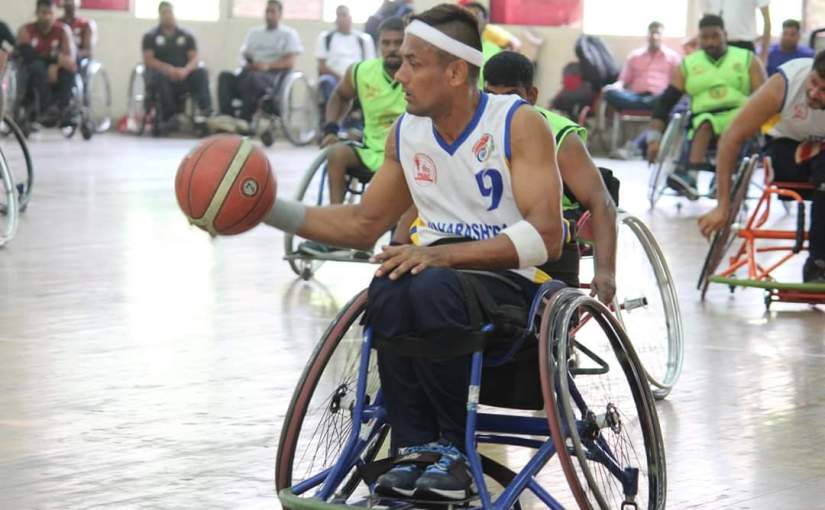
Karki has been into sports all his life. When he was in school, he was an avid footballer. An accident in 2004, while he was serving in the Indian Army, left him in a wheelchair. But this did not break his spirit. From 2006 until now he has been a para-sports player and has won various awards and accolades in different sports like badminton, discus throw, javelin throw, shot put, table tennis, lawn tennis, basketball and swimming. He has also won seven medals in various international marathons, which include two gold medals.

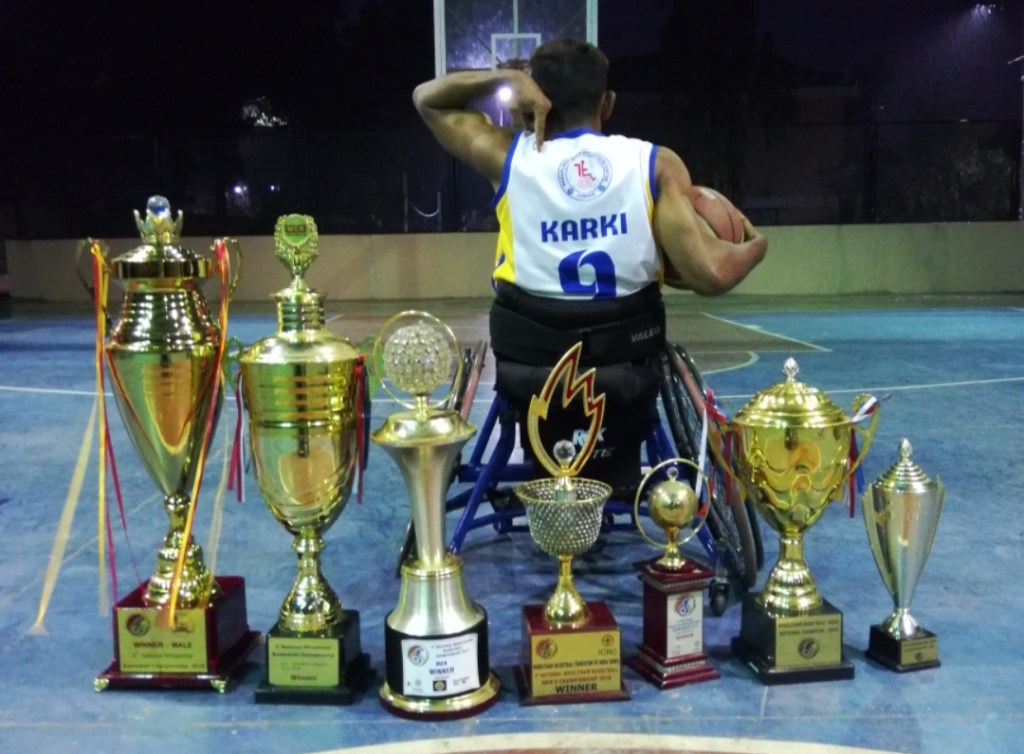
Karki has won these trophies in basketball
Joining the Indian Army and the accident

Karki was born in Jhapa, Nepal, to a family of limited means. He has two siblings — a brother and a sister. The family moved to their uncle’s home in Chowdangigadi after their father left the house after an altercation and never returned. Karki’s mother raised the children. “My mother worked very hard. It was tough. When I was in the seventh standard, I started taking tuitions to help her financially. I was passionate about football and it kept me distracted from the tensions at home,” said Karki.

When he was in the first year of graduation, his friends informed him about an army selection camp. “I decided to give it a try. My village was in the interiors and I had to walk for three days to reach there. I cleared the initial round. We were given a gate pass (to enter India) and after a few days, I was called to Darjeeling for the final selection. I got selected. That’s how I joined the Indian Army in 1995.”   

After one year of service, he went home only to discover that his mother was battling cancer. He took her to Patna, Bihar for treatment, but the doctors said it was too late. His leave was getting over and there was no one to look after his mother. Karki decided to get married to his girlfriend, and she promised to look after his mother. However, his mother passed away two years later.

Karki, who was serving in the 2/9 Gorkha Rifles, moved along with his battalion to Gurdaspur, and then, in 1999, in the middle of the Kargil war, the battalion landed in Nougaon in Kashmir. Karki was a part of many patrolling schedules and ambushes. He even fired a missile that destroyed a Pakistani post.

The battalion then moved to Assam. In 2004, the Bodo conflict was at its peak.  “In July 2004, during an insurgency, a friend got injured. I was told to rush him to the Guwahati Army Hospital. We were in an Army ambulance, just an hour away from the hospital. Suddenly, a public transport bus rammed into us. It was a bad accident. The front of our ambulance was completely damaged. I don’t remember, but I think I jumped off,” said Karki.

Karki was taken to a hospital in Guwahati. He was then moved to Command Hospital in Kolkata. “They put grafting rods in my body. I was then moved to a rehabilitation center in Lucknow. I was in a bad condition. I couldn’t even turn in my bed on my own. Four people had to help me. I couldn’t eat and had no bowel or bladder control. I was slipping into depression. One day, I asked the visiting doctor if I would be able to walk again. His reply shattered me completely,” said Karki.

He was given an option to take sick leave and go back home or move to the Paraplegic Rehabilitation Centre in Kirkee, near Pune. It’s a well-known rehabilitation center for defence personnel who suffer spinal cord injuries while serving the nation. His two boys were too young then and going back was not an option. So, he moved to Pune, a decision he does not regret.

Despite so many accolades, lack of sponsors and finances has always bothered Karki
Getting back to sports

Even after moving to Pune, Karki was battling severe depression. He completed a computer course at the center to distract himself. There were many sports facilities at the center. He would see his seniors practice. That motivated him, and in 2006, he decided to take the plunge.  

He dabbled into many sports like swimming, athletics, cricket, lawn tennis, and table tennis. Within a year, he won medals at the national level for swimming and table tennis. He started playing basketball a year later. It was difficult for him as he didn’t have a proper wheelchair or the strength in his arms. “I would practice like crazy. Others at the academy would comment that I may never get to play international tournaments because my injury was more severe compared to them. These comments would push me to do better,” said Karki. 

Basketball proved lucky as the team, under his leadership, was National Wheelchair Basketball Champion for six times between 2014 and 2019. Later, he led the team on several occasions and won medals in international tournaments like the Bali Cup in 2017. Apart from basketball, Karki has also won medals in discuss throw, Javelin throw, shot put, table tennis, lawn tennis, swimming and has won seven medals in international marathons.

In 2013, Karki took up badminton and has so far won 21 medals at the National Para-Badminton championship and a total of five medals at Spanish Open (2015), Indonesian Open (2015), and Uganda Open in (2017). He has participated in many international tournaments. He was ranked Number 1 in India for six years (2013-2018). Internationally, his career-best ranking was Number 11 in 2017.

Karki feels the government should help other para-sports players with finances and sponsors. “I am very lucky that I got support. Others don’t even get an opportunity. It’s very difficult to get sponsors who will support you long-term. A lot of energy gets wasted in finding sponsors. You are on your own until you participate in the World Championship or the Olympics. Yes, the government is now doing a lot for para-sports, but it definitely needs to do more.”

This is Part 6 of our series ‘Unbound’– a spinal cord injury awareness series. Read Mrunmaiy’s storyIshrat’s storyRafat’s storyGarima’s story Preethi’s story Kartiki’s story, Ekta’s story.

When these children living in Adivasi hamlets in Aarey, Mumbai, got smartphones, they danced with joy!

Just two months back, these children were staring at an uncertain future because they didn’t have a smartphone and were moving one step away from education with each passing day. After Mumbai-based journalist Sohit Mishra did a story on them, help poured in from India and abroad and he personally went back to Aarey and distributed around 85 smartphones. In this first-person account, Mishra talks about how because of the positive response that the story received, the journalist in him could sleep better at night and why there is a need to tell many such stories and do quality journalism during a pandemic

…..

Swati Subhedar

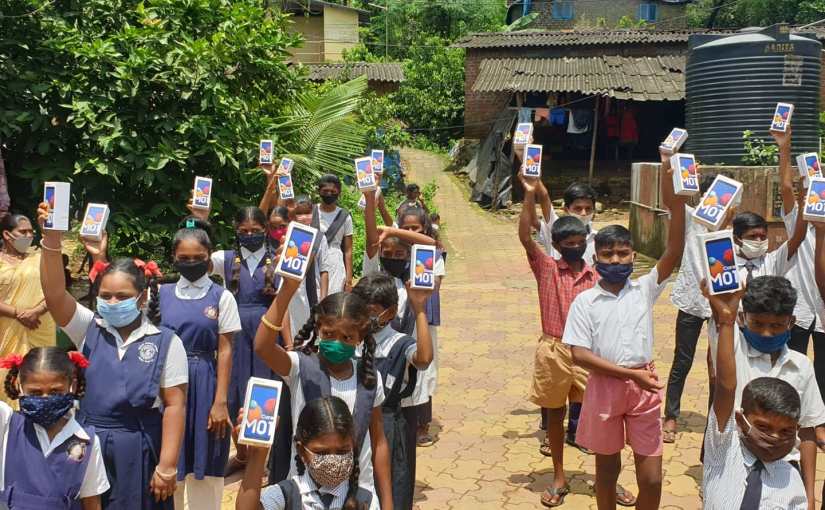
Children living in some of the 27 Adivasi hamlets located inside Mumbai’s Aarey Milk Colony, the sprawling 1,300 hectares of forest land in the heart of the city, received a special gift in September.

In March, following the government’s order of keeping the educational institutes closed to prevent the spread of coronavirus, schools and colleges across India began conducting online classes with the use of smartphones and computers. However, for children living in rural India, urban slums, and Adivasi pockets such as Aarey, this meant a long gap in their education. Many of these families didn’t have a basic phone or had just one smartphone in the family. Factors like poor network and connectivity added to their problems. While many citizens, NGOs, and voluntary organizations have stepped in to help such children either by giving them smartphones or finding alternative means to educate them, there are still many who haven’t attended a single class or touched their textbooks since the beginning of the pandemic.

Sohit Mishra, a Mumbai-based journalist, shares with ‘The Good Story Project’ this heart-warming first-person account of how people from across the globe stepped in to help children living in Adivasi hamlets at Aarey by providing them with smartphones after the story he did on them had the desired impact. He also writes about the importance of doing quality and responsible journalism, especially during a pandemic when there is pain, suffering, and anxiety all around. It’s noteworthy that airing of the story coincided with most of the primetime slots being dedicated to the coverage of the aftermath of the death of a Bollywood actor, and a section of society openly expressing its disgust over the over-the-top, TRP-driven coverage. Mishra’s story led to these children receiving the best Children’s Day gift, that too two months in advance. This is his first-person account. 

Journalist Sohit Mishra’s story (The video is sourced from Mishra’s Facebook post.)

In August end, when I decided to do this story, most of the schools across the country had resorted to online classes. I thought about children living in rural India and the urban poor who were getting impacted because they didn’t have smartphones. That’s when I decided to visit Aarey as I knew the financial condition of people living over there wasn’t good. Through my story, I wanted to raise an important point that if people living in heart of the financial capital of India were not able to afford a smartphone, then imagine the plight of children in the rest of the country. When I reached Aarey, I noticed that children were playing and because they didn’t have a smartphone, they were not studying at all. One of the girls I met, who was around seven-year-old, said her friends were able to study but since she was poor, she couldn’t. That made me very sad that a girl at her age was experiencing discrimination based on her financial status and she knew that she was denied education or wasn’t able to study as her family was not in a position to buy a smartphone. That’s when I decided to go ahead with the story.

I always knew it would be a good story, but I didn’t know it would go viral and so many people will come out to help. Initially, one of our viewers contacted me on Twitter and offered to help Shiksha, a class three student who featured in the story. Her mother had never been to school, but she named her daughter Shiksha. Things were going smoothly until the pandemic hit them and Shiksha’s educational journey suffered a roadblock because of the absence of a smartphone. Soon, help started pouring in from India and abroad and many people started sending smartphones for these children. Several senior journalists who wished to remain anonymous pitched in too. Bollywood actor Sonu Sood, who has been doing some incredible work since the lockdown, also sent some smartphones. It was incredible to receive courier packages every day and opening them at night after returning from work helped me sleep better.

Sohit Mishra (left) with the smartphone parcels. Children at one of the Adivasi hamlets showing their smartphones

I personally went back to Aarey to distribute these smartphones. In all, we have distributed around 85 smartphones. Our initial plan was a cover one Adivasis hamlet inside Aarey, but we ended up covering 12. The children were extremely happy after receiving the smartphones and were dancing with joy. Some of the parents had tears in their eyes and they assured that they would make sure that the children made the most of this opportunity. They said they never expected that anyone would help them. They could never have imagined that people would actually bother to send smartphones for their children. They said that this gesture has given them hope that the world can still be a place where their sons and daughters will be able to grow and prosper.

Personally, as a journalist, this story and the response to it, made me very happy. During the lockdown, I had covered that entire migration crisis. It was heartbreaking to see people on the streets, starving and not having a single penny on them to buy food. I was fulfilling my duties as a journalist by covering these stories, but I couldn’t do much to help them personally. But after the Aarey story, when people started sending smartphones and when I handed them over to the children, that was extremely satisfying for me. It motivated me to do my job with more responsibility and I was happy that as a journalist I could impact a few people and do my bit for society. 

The video is sourced from Mishra’s Facebook post.

The only positive emerging out of the ongoing pandemic, which is an unusual and unprecedented situation in itself, is the fact that people have gone out of their way to help others in need. Since the lockdown, there have been many stories of pain, suffering, loss, despair, hopelessness, and heartbreak. This has affected our society but has also made people more ‘giving’. I think the reason why people came out in large numbers to donate smartphones, even though the pandemic has affected all of us financially in some way or the other, was because somewhere down the line they could feel the pain of these parents. When there are so many crisis-ridden stories, people feel compelled to help those in need in whichever way they can.    

While we need more such people, we also need people who can question the government. After all, after announcing the closure of schools, it was the government’s responsibility to ensure that no student was left out.

Many journalists have done a fabulous job of covering the pandemic and the lockdown with maturity, empathy, and sensitivity. However, around the time the story came out, a section of media was busy covering the aftermath of the death of a Bollywood actor and that coverage dominated all the other news stories. As a journalist, that broke my heart a little. There were so many people who were staring at an uncertain future because of the pandemic, and their stories needed to be told. But it seemed as if no one cared. I think that’s why people liked my story and responded very positively to it. As journalists, it’s our responsibility to tell stories, but we must also do stories that can help people come out of dire circumstances. I am convinced that many such stories would be done in the future and the day is not far when people themselves would support journalism that serves them the news that matters and not garbage.

Sohit Mishra is a senior correspondent and anchor at NDTV India. The views expressed above are his own.

“We need more training institutes and special coaches”

As a college student, Kartiki Patel would sometimes bunk her classes to play basketball, a sport she was passionate about. However, after an accident that left her in a wheelchair, in the absence of proper information, good infrastructure, and trained coaches, she had to wait for long to get back on the basketball court. This is the story of almost all para-sports persons

…..

Swati Subhedar

In 2008, Kartiki Patel was travelling with her cousins from Mumbai to Vapi (in Gujarat) when the car swerved off the road at a high speed and toppled multiple times. She was juggled in the car. The accident broke her spine and left her paralyzed below the waist. This was the second big blow that a young Patel suffered in her life.

Born and brought up in Mumbai, She was living her life like a regular teenager until she finished her 10+2 (school). However, her mother passed away when she was in Class 12, and she lost her father when she was in the final year of her undergraduate course. She had been living with her maternal aunt and uncle Shaila and Ashwin Patel since them. With her aunt’s support, she completed her studies and started working at an IT firm. Just when she thought that she had her life in control, the accident happened. That day changed everything.

The hospital she was admitted to didn’t provide her any information about the spinal cord rehabilitation centres in India. A physiotherapist would come home and help her with some passive workouts. She learnt to get off the bed on her own but had no control over her bowel and bladder. Getting out of the house was a challenge. She was gradually slipping into depression. Her friends from her workplace and her boss pushed her to start working again. She joined her office four months after her accident and continued working at the firm for the next eight years.

Ever since Kartiki was introduced to wheelchair sports, there has been no looking back. Image: Facebook
Itching to get back to sports

Patel has always been an outdoor, sports-loving person. She is passionate about basketball. The home-office-physiotherapy routine was making her restless. She was itching to take up some sport, however, even after six years of her accident, she could not find anything that was wheelchair accessible.

“In 2015, I decided to learn swimming, however, the coaches were not ready to teach someone with a disability. Also, the pools were not accessible. Finally, my mentor, Sunil Shah, volunteered to teach me. My wheelchair could fit into one of the toilets and I managed to change. I got into the pool with the help of the lifeguards. Although I took a long time to learn swimming it was the best decision I took for myself.  I felt so liberated that I was able to move on my own in the pool without any equipment,” she said.

She qualified for the swimming nationals for para-athletes at the end of that year. It was here that she met the president of the Wheelchair Basketball Federation of India, Ms. Madhavilatha. She informed Patel about the first Wheelchair Basketball Nationals to be held in Chennai that year. At the nationals, she met many ex-Army men from Pune who guided her further. She practiced wheelchair badminton and basketball with them.

“Ever since I was introduced to wheelchair sports, there has been no looking back. I played wheelchair badminton for three years and was a national champion for all the three years. After the women’s state team for basketball was formed, I started concentrating on basketball more,” she said.

She added: “I was selected to be a part of the team that was set to play its first tournament internationally. We won a bronze medal at the Bali International tournament in 2017, and I was awarded for my performance and chosen to be a part of the dream team. For the next international tournament in 2018, I was the captain of the Indian Women’s team. I led the Indian team in 2018 and 2019.”

Being a sportswoman isn’t easy. She frequently suffers from pressure sores, which send her back to the bed for days. Image: Facebook
Lack of awareness and infrastructural woes

However, all these achievements did not come easy. The problems are manifold, according to Patel. “First, there is a lack of awareness about disability in India among the general population. Second, how will persons with disabilities take up competitive sports if there is no awareness? On top of that, where are the facilities? I struggled because of the lack of awareness and infrastructure,” she said.

When asked if there is a need for more training institutes for persons with disabilities, now that they are representing India at most of the prestigious international sporting events, she said: “Yes, there is definitely a need for more training institutes, accessible training grounds, and coaches who can teach persons with disabilities. We need more coaches who are trained specifically to deal with persons with disabilities. Presently, some colleges offer small courses, however, I do not know of any college that has a course especially designed to train coaches to train persons with disabilities.”

And then there are infrastructural woes. In India, most of the sports complexes and stadiums are not designed keeping in mind persons with disabilities. “To change this, the government should have policies in place to ensure that all sports complexes and stadiums are accessible to all. Merely having policies won’t help. Implementation is a must,” said Patel.

Being a sportswoman isn’t easy. She frequently suffers from pressure sores, which send her back to the bed for days. But there is hardly anything that can deter her spirit. However, according to Patel, not many women take up para-sports after sustaining long-term injuries, as, according to her, unlike in the West, in India, women are not encouraged to take up sports from childhood. “I am lucky as I have always been into sports. But for other girls, it’s difficult to get into sports if they haven’t been active from childhood. I think, men have a slight advantage here. I believe girls/ women should be encouraged to play sports.” 

Kartiki recommends Born to fly by Nitin Sathe as it’s an inspirational book. Image: Facebook
A go getter

Not just sports, she has been able to fulfil all her dreams, thanks to her supportive family and husband. In 2015, she enrolled herself for a master’s in social entrepreneurship at the Tata Institute of Social Sciences.

“I would not have been able to achieve anything without the support of my family and husband Herman. My maternal aunt and uncle took me into their home after my parents passed away. Both are progressive in their thought process and never stopped me doing anything before or after the accident. Even my husband has been very supportive. There are times when I am away from home for long when I am attending sports camps. He has been very encouraging,” she said.  

Being into competitive sports gives her an opportunity to travel a lot. “My most memorable trip was to Spain. It was my first time travelling abroad with a group of disabled athletes. I loved sightseeing in Spain, but the trip was special because I was able to move around without help as all the places were accessible.” said Patel. She believes there are many career options, sports activities and hobbies that persons with disabilities can take up and urges them not to limit themselves or stop exploring. “I would suggest reading Born to fly by Nitin Sathe. This book is a biography of flight officer MP Anil Kumar. It’s a very inspiring book and a must-read for those with a disability,” she said.

This is Part 7 of our series ‘Unbound’– a spinal cord injury awareness series. Read Mrunmaiy’s storyIshrat’s storyRafat’s storyGarima’s story Preethi’s story Suresh’s story Ekta’s story.
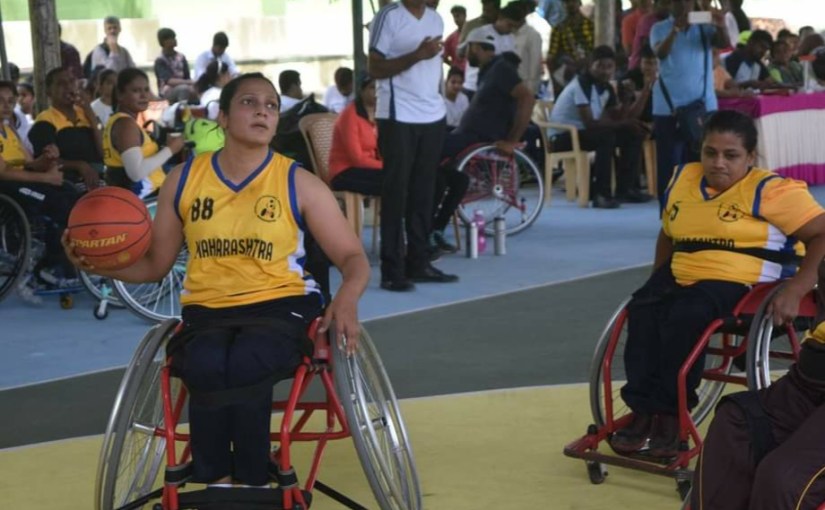
“The need of the hour is to provide assistive devices at reasonable prices and accessibility to persons with disability”

As this article is being published, Ekta Bhyan is busy preparing for the 2021 Tokyo Paralympics. However, it was only accidentally that she stumbled upon club throw – a para athletic event meant for athletes with limited hand function – a sport that changed her life completely after an accident in 2003 left her in a wheelchair

….

Swati Subhedar

“For para-athletes, sports can be a great medium to be financially independent. However, it’s only recently that the government has started promoting para-sports, and there’s a lot that needs to be done,” said Ekta Bhyan, 35, a club throw champion.

However, it was only by chance that she stumbled upon club throw. Though she made a mark for herself within a year of taking up the sport, won medals at the Asian Games and the Grand Prix, and has managed to win several national championships, club throw was something that was not even on her agenda.

“In 2015, Amit Saroha, a Paralympian and an Arjuna Awardee, read one of my interviews, got in touch with me and asked me if I wanted to join para-sports,” said Bhyan. She decided to give it a try and this decision changed the course of her life. This was the second life-altering moment in her life. The first one, in 2003, had left her in a wheelchair.

Accident and the life after

In 2003, after finishing her schooling, Bhyan, who is from Hisar in Haryana, aspired to become a doctor for which she was visiting Delhi for her coaching. The accident happened on the very first day. It was raining. The car she was in was parked and was stationary. Suddenly an overloaded vegetable truck fell on the car. People rushed for help and called for a crane. When the crane managed to lift the truck a little, its chain broke, and it fell on the car again.

With great difficulty, people managed to pull her out of the car but because it was raining heavily, the ambulance arrived very late. People shifted her into the ambulance but provided no support to her neck. She was conscious all this while but could only feel severe pain in her neck. She was taken to a small clinic close by and was later shifted to a government hospital in Delhi. Here, Bhyan and her parents were told she has suffered an injury in her spinal cord.

The doctors at the government hospital refused to operate upon her as it was a complicated surgery. Two days later, she was shifted to the Indian Spinal Injuries Centre in Delhi. The doctors over here made the family aware of the nature of the injury. She underwent three surgeries and spent nine months at the hospitals. The peer counsellors, physiotherapists and occupational therapists helped her adapt to her new life … in a wheelchair.

Ekta at the Asian para games. Image: Facebook

Entering the world of sports

The journey wasn’t easy, however, her extremely supportive parents – her father is a retired horticulture officer, and her mother is a housewife – became her pillars of strength. Bhyan — second among three siblings — completed her graduation and post-graduation and secured a job with the Haryana Civil Services.

In 2015, a chance encounter with Amit Saroha, introduced her to the world of para-sports. It was a completely new domain. Initially, it wasn’t easy for her to throw the wooden club, weighing around 400 grams, while sitting in her wheelchair. But she kept on practicing. Her competitive career started with the 2016 IPC Grand Prix held at Berlin in July, where she bagged a silver medal in club throw.

She represented the country in the 2018 Asian Para Games held at Jakarta, Indonesia and won a gold medal. She qualified for the Tokyo 2020 Paralympics, following her appearances at the World Para Athletics Championship (London 2017 and Dubai 2019). She has also competed at the Grand Prix held at Berlin in 2016, Dubai in 2017 and Tunisia in 2018 and has won two medals. She is, at present, the national champion, having secured gold medals in the 2016, 2017 and 2018 National Para Athletics Championships.

At the World Para Athletics Grand Prix at Tunisia in 2018. Image: Facebook

“Some state governments could do better”

Bhyan believes that it would help if the government starts promoting para-sports a little more aggressively so that persons with disabilities can explore sports as an option. “India is a late entrant into para-sports as compared to the developed nations. Though India’s Murlikant Petkar won the first medal for India in 1972 in para-swimming, I think it was only after the 2010 Delhi Commonwealth Games that the government started encouraging para-sportspersons too and our representation at major international sporting events went up. Even the media, that could have played an important role in spreading awareness about para-sports, was not covering many events. This changed after the 2016 Rio Paralympics,” she said.

At the 2016 Rio Paralympics, India had sent its largest-ever delegation — 19 competitors in five sports — in the history of summer Paralympic games and created history by winning a total of four medals. And yet, we have a long way to go, according to Bhyan.

“The government’s role is very critical. Accessible stadiums, playgrounds, swimming pools, assistive devices at reasonable prices and adaptive equipment are must to create awareness about para-sports. The need of the hour is that the government forms constructive policies keeping para-sports in mind. After all, there is a direct corelation between good sports policies and great performances at international sporting events,” said Bhyan. 

She added: “It is also very crucial to treat para-athletes on par with able-bodied athletes in terms of cash prizes and providing job opportunities. This will motivate them to continue playing sports.”

It was a proud moment for Ekta when she met Prime Minister Narendra Modi. Image: Facebook

Provide a level playing field

In India, most of the sports complexes and stadiums are not designed keeping in mind persons with disabilities. What should be done to change this? Bhyan said: “This is the main reason why not many take up para-sports. Lack of proper infrastructure is a big hindrance. Lack of sensitization is another problem. Due to the lack of awareness, people don’t understand the needs of persons with disabilities and hence are hesitant in offering help.”

The government announced in September 2020 that the first-ever Centre for Disability Sports will come up at Gwalior in Madhya Pradesh. The world-class centre, coming up at a cost of Rs 170.99 crore, is being set up by the Union Ministry of Social Justice and Empowerment through its Department of Empowerment of Persons with Disabilities. Now that persons with disabilities are representing India at most of the prestigious international sporting events, is there is a need for more such institutes?

Bhyan said: “Yes, and across the country. Also, we need dedicated coaches. Now, because of the increased awareness, other coaches are coming forward to train para-athletes. They are going out of their way to understand their needs and strengths. This is a big change.”

Among all her achievements, the special one was when she met the Prime Minister. “After I won the gold medal at the Grand Prix in Tunisia, Prime Minister Narendra Modi shared my story on ‘Mann Ki Baat’. I also received a letter of appreciation letter from the prime minister. I got an opportunity to meet him after I won a gold medal at the Asian Para Games in 2018,” said Bhyan.

She believes human beings possess this biggest strength of adapting to any situation. Trace her journey and you will realize that she not just adapted to an unusual situation that life suddenly threw at her but went beyond and conquered.

This is Part 8 of our series ‘Unbound’– a spinal cord injury awareness series. Read Mrunmaiy’s storyIshrat’s storyRafat’s storyGarima’s story Preethi’s story Suresh’s story Kartiki’s story

“Growing up, I was called pagal ka bachcha (child of a mad woman)”

says Amandeep Sandhu, author of the novel Sepia Leaves (2007), Roll of Honour (2012), and Panjab: Journeys Through Fault Lines (2019). This conversation is a part of our series on mental health and illness and we talk to people whose voices have brought to life, with empathy, and without judgement, what is it to live with a mental illness or to care for someone who does.

When did you first decide that you wanted to write about your mother’s illness (schizophrenia) and your own experience of it — and how easy or difficult it is do so in the Indian context?

As a child, when my parents used to fight, I used to hide behind the sofa and read comics. Somewhere at that time, I realised that books are safe, books are home. As an adolescent, I was in a military school, where, I used to hide in the library to escape corporal punishment. As I grew up, there was a pull to either go into the Army or become a doctor, but I am glad that I did neither.

When my parents joined me in Bangalore, where I was working in the IT industry as a technical writer, I knew I wanted to put down what I knew about my parents. All my earlier life, I was a holiday child in the sense that I only went home for holidays, and now before I was to live with them, I wanted to put down my memories, and thoughts, know my parents better.

This was early 2000. And there was really nothing in the Indian context or Indian writing in English on the subject that talked about the caregiving aspect of the mental health pyramid. A lot of reading that I did, from Sylvia Plath’s The Bell Jar, to Joanne Greenberg’s I Never Promised You a Rose Garden to Dom Moraes’ My Son’s Father, I couldn’t see the caregiver’s point of view. I wanted to read something else than madness as a spectacle, madness becoming ‘the other,’ madness as ‘coveted’ – as in, yes, the artist or the poet suffers but look at the beauty of the work they produced as a result of that suffering.

I wanted something which spoke to me about the everyday grime of living and caregiving, so vastly different from the beauty of painting and poetry of the world of ‘coveted’ madness. That was the beginning and making of Sepia Leaves.

And what was the response to your writing?

It has been 13 years since the book has been published. And I still get messages from readers. Some of them simply say ‘thank you.’ They say, thank you, we did not know that we had a story. In the triage of mental health, there’s the patient, the psychiatrist and the medical practitioner, and the caregiver. While the patient suffers, the power in the triage – to diagnose, label and prescribe medicines — rests with the psychiatrist. The caregiver often doesn’t have a voice in spite of the fact that he or she suffers as well for they do the caregiving out of love, affection, or a sense of duty. It happens many times that these care-givers’ lives revolve around the patient, and they don’t live their own lives.

What resources can one turn to as a caregiver? How have things changed from the time you wrote your book to now?

Growing up, I was called ‘pagal ka bachcha’ (child of a mad woman). Nobody wanted to do anything with my mother, it was like she is your problem, deal with it.

There is more sharing happening now. Recently, there are groups like the White Swan Foundation, the Banyan, SCARF, Sanjivni, Anjali and many more. Publishers are also more open to publishing books on this subject; Amazon recently commissioned ten essays, and one of them was about mental health during Covid (Bravado to Fear to Abandonment: Mental Health and the COVID-19 Lockdown). I did that essay, and, in a way, it speaks about a shift in the publishing mindset too.

Books and memoirs like mine give a reader tangible proof that there are others who suffer like them, and that they are not alone, and their voice and story matters.

There’s still a whole lot of things that need to be done. The new Mental Healthcare Act 2017 of India, which still doesn’t solve all the issues with the previous Act (1987), but the Indian Psychiatrist Association, made an estimate of how much money was needed in order to do all that the Act suggested. It estimates that about Rs 93,000 crore is needed to implement it, and in the last budget, we reduced the outlay from 50 to 40 crores (for mental health). So yes, we need to tap and act at various levels – from education, the voluntary sector, journalism, CSR partnerships.

How do mental health professionals benefit from a resource of Indian writing on mental health?

When I was writing my book, I showed it to three psychiatrists that I knew and respected. I wanted to make sure that I wasn’t misrepresenting the illness. One of the psychiatrists wrote a review of my book in the Indian Journal of Psychiatry and recommended that colleagues read it.

I think every arm of medicine is based on care and affection and more so the one in psychiatry. Memoirs give the medical professionals an insight into what life really is like on a daily basis and changes the degree of kindness and compassion for the kind of work they do, and this, in turn, helps create kind and open spaces.

The recent death of a Bollywood actor and what followed in its aftermath, was that an opportunity lost, in terms of starting an honest and open conversation on mental health?

Any denial harms the larger narrative. When we accept things, we acknowledge that, yes it happens, we don’t know how to solve it, but this is what happened – it is honest, and it creates a space to remove some of the stigma. In the context of the actor’s death, there was one brief moment when there was hope that the narrative would focus on meaningful conversations. But it was lost. It became political and the media was also compromised in the way it reported on the issues and continues to do so.

Even now, our public speakers use grave terms from the mental health terminology as jokes, as insults. The ‘pagal ka bacha’ might not be a refrain one hears very often, but there is still so much learning and work to do.

(The author spoke to Prerna Shah)

In case, you missed the first interview (of author and writer Jerry Pinto) in this series on mental health and awareness, you can read it here. You can also read Karishma Upadhyay’s interview in which she talks about the research that went on behind her book on Parveen Babi and how almost everything that was written about her previously was overshadowed by her mental illness, eclipsing everything else.

Related interviews: Shyam Mithiya, Anjana Deshpande, Tanika Godbole, Shampa Sengupta

“As a child, I longed for a normal mother. I did not know what a normal mother was”

says journalist, writer and author Jerry Pinto. This conversation is a part of our series on mental health and illness and we talk to people whose voices have brought to life, with empathy and without judgement, what is it to live with a mental illness or to care for someone who does.

What role could memoirs and books written around the topic of mental health play in bringing about greater awareness and understanding of mental health in the Indian context? 

I think every book is a bridge. When we read a book, we choose to cross the bridge and we enter into another small world. We are now changed, slightly, ever so slightly but permanently, by the experience. We may forget the book, we may forget that we read it, but there will be a change somewhere. This is true of all books. It is true of all experiences. You may cross the bridge for your own reasons. Your crossing may be motivated by vulgar curiosity, your crossing may be larcenous in nature, your crossing may be a critical enterprise. It does not matter. The words will change you. There have been many ‘mad’ people in our popular storytelling. There have been lunatics and asylums aplenty in Hindi films, for instance. But there is now a genuine desire, I think, to understand what it is like to live with a different mind, to live with a person with a different mind. I think we are now beginning to understand that we may be deepened and widened even without ‘relatability’.

I understand that your debut novel (Em and the Big Hoom) touched a lot of readers. They could share with you their own stories and felt confident in sharing these stories with the world, and that is how A Book of Light came to be. Some of the contributors may have not shared these experiences ever before — in that sense, is storytelling an important tool in helping normalise and speak about mental illness, without sensationalising it or glossing over the realities of what it means to live with, or care for someone with a mental illness on a daily basis?

I do hope it worked that way. I offer you an image as an answer. Imagine that you are on a long trek and the backpack you are carrying is cutting into your shoulders. You stop for a moment and you take a sip of water and you ease your thumbs under the straps and you raise the backpack just a little. There is a great and beautiful sense of release, as the burden shifts and lifts. You savour that and then you let the backpack rest again, in a slightly different position. The old pain eases but soon a new pain begins.

Storytelling is one of the many things we can do to make things better for ourselves and others. But it is one of a menu and must not be fetishised. You have to choose to turn towards the light which means self-care, which means boundary building, which means healthy choices, which means … you get the idea. Depending only on the telling of your story to heal is to put too many expectations on a single act. It is one of many.

Would you say that by writing about a family member who had a mental illness, it also helps the greater narrative — from a sense of shame or outright denial — to one where you accept and understand it? (Like, my mother is blind and there is no way I can hide that or would want to do that, similarly if she had a mental illness, I don’t want to be in denial of that either.) 

We all deal with difference differently. So, I won’t answer in a general sense but in the specific sense of my own experience. As a child, I longed for a normal mother. I did not know what a normal mother was, I could not know since I did not have one but I wanted a mother who would cook meals for me, who would stitch costumes so I could take part in the school play, who would turn up and look like a mother. My mother did none of these things.

Epiphany comes in streaks of dawn light, not in any great sun storm, at least in my experience.

For me, it began when I was teaching mathematics to young children; I was a private tutor and began to see how many parents who were ‘normal’ — in that they had no diagnoses, no psychiatric conditions — could still be terrifying parents. The mother who threw open the door and wept because her son got 97 per cent in mathematics. ‘How will he manage to get into medical college?’ she moaned. ‘Sir, only you can save him.’ The father who told me that his daughters should not study too hard because they would never get husbands.

And so eventually, slowly, I came to the conclusion that parenthood is far too steep a slope to climb for most people. And if you have not climbed that slope yourself, you should not judge.

This applies to all our responses to what we do in the family. The space of the family is truly non-replicable. It is easy to slip into judgements about what we should or should not do. I try not to but it is very difficult

Do you think media houses, and journalists in training can benefit from trainings or by reading memoirs and books written in the Indian context, when it comes to reporting on, or writing about mental health and illnesses with balance, empathy and sensitivity?

Media training is very important but far more important is the notion of ethical media. I think most people would be able to do the right thing if they simply thought: How should I like to be treated in this situation? Instead of which they have their bosses telling them: How should you like it if we sacked you? Bring in the dirt. Do your best to raise the TRPs. Shout. Scream. Rant. Rave. It saddens me but each time I say to myself: You got lucky. You worked in the media when it was not like this. How do you know you would not be muckraking with the best of them if it were about keeping your job, paying your EMIs and keeping your children in that upscale school?

But what we can do is vote with the remote. Turn off the channel. Do not subscribe to the newspaper. Find an alternative. There is quietness out there. Seek it out.

(This interview was conducted via questions sent through an email.)

Related interviews: Amandeep Sandhu, Karishma Upadhyay, Shyam Mithiya, Anjana Deshpande, Tanika Godbole, Shampa Sengupta

Two sleepy villages, two very special Banyan trees, and a manmade miracle

What does it take for two Banyan trees to live again? It’s a magical formula of social media blitz, genuine efforts, and quick action by politicians and concerned authorities. If you need to save one tree today, this is the story you must read. And share

…..

Swati Subhedar

This is a story about two Banyan trees. In the month of July and August — just when the country was gradually “unlocking” itself after a long, coronavirus-induced lockdown — these trees were counting their last breaths. One had almost died a natural death, and the other was all set to be guillotined to satiate human greed. But they survived to pass on their stories to the next generation. What’s extraordinary is that the protagonists of this survival story are people living in two sleepy villages in Maharashtra and Goa. They were at the forefront of rescuing these very special Banyan trees.

The efforts by these local people show that if people are willing, if they persist and if they get help from social media, authorities, and politicians, an effort could be made to save the trees that are on the verge of being cut down in the country. Picture this. Between 2014 and 2019, 1.09 crore trees were cut in the country for development purposes.

And that is why, the stories of these two Banyan trees need to be told.

Location: Bhose village, Sangli district, Maharashtra
The giant Banyan tree in Bhose village in Sangli

A 400-year-old Banyan tree in Bhose village in Sangli district of Maharashtra – 375 kms from the state capital Mumbai – has been silently witnessing one generation giving way to the other for centuries. It has been silently guarding the village for nearly 400 years, just like an old and protective grandfather.

People living in Bhose village sprang into action in the last week of July when they learnt that the tree, whose canopy is spread over 400 sq m, stood in the way of a service road, which was a part of the Ratnagiri-Solapur highway, and was going to be chopped off.

“The contractors, who came to carry out a survey for the highway project, kept us in the dark for almost a year,” said Rahul Ganeshwade, a primary school teacher, who lives in the village. “We were told that the Banyan tree, and the Yellamma temple next to it, would be spared.”

The villagers were blissfully unaware until they saw a picture of the tree in a local newspaper. The caption mentioned that the tree was counting its last breath. “I felt so bad that I wrote a Facebook post saying the tree has given us so much over the years so we should not let it die,” said Ganeshwade. He added: “The post went viral. Many local journalists and environment activists took note of it and joined the cause. On July 24, 2020, we organized a ‘chipko andolan’. Many villagers and nature-lovers participated in the day-long andolan. The local media covered it and the news went viral on Facebook and Twitter.”   

The presence of the media helped the cause immensely

Ganeshwade gives full credit to Aditya Thackeray, the state environment minister, who not only reacted to this news but even got in touch with the Sangli collector and requested him to look into the matter. “We met the collector. We made him understand that the tree could be saved and only a small diversion to the highway was needed. The collector gave a positive response to the environment minister. He got in touch with Nitin Gadkari (the Union Minister for Road Transport and Highway), who immediately asked a survey team to reach Bhose village.” It took five days of sustained efforts to save the 400-year-old Banyan tree.

But the tree could not be saved entirely. Some branches had to be chopped off. Monkeys, langurs, and many species of birds that had made the tree their home for decades were petrified the day the branches facing the highway were trimmed. Ganeshwade is also upset that not many villagers – especially those who benefit from the tree the most– turned up for the andolan. “The fact is that we don’t value trees. The next generation will not even get to see such big and beautiful trees,” he said.  

The Banyan tree, and the Yellamma temple next to it, are of great significance to the Warkaris — pilgrims who march on foot from various locations in Maharashtra to the Vithoba temple in Pandharpur on a particular day every year. The tree and the temple are en route Pandharpur, and in that period, many Warkaris visit the temple and rest under the Banyan tree.

Despite best efforts, the tree could not escape the chopping and pruning of many of its branches

There is an interesting story about how the temple came up next to the tree. “In the early 1970s – during the drought years – there was a plan to build a pond in the outskirts of the village. Originally, that’s where the deity was kept. To save the deity, the villagers shifted it next to the tree and made the temple,” said a 70-year-old environmentalist, who is fondly known as Papa Patil. He was also a part of the mission to save the Banyan tree.

While the mission was on, some people questioned if the Banyan tree was indeed 400-year-old. When asked over the phone to comment on this, an infuriated Patil said: “Maybe it’s not a 400-year-old tree, maybe it’s just 100-year-old, or 50, but it’s still a tree. Lakhs of trees are being cut in the name of development. If we are trying to save one tree, why do people have a problem with that? Every tree is important. It’s never about just one tree.”

His sentiments are beautifully echoed by the residents of Arambol village, which is nearly 225 kms from Bhose.  

Location: Arambol village, Goa
The Banyan tree at Arambol village in Goa. Image: Living Heritage App/Facebook

A 200-year-old Banyan tree in Arambol – a fishing village 35 kms from Goa’s capital Panji — is not just a tree, it’s an experience. The locals believe that The Beatles meditated under the tree when they had visited India in 1968. It is said that in the 1960s, Arambol was at the center of the Hippie movement. The giant Banyan tree, lovingly called ‘The Source’, was a source of happiness for the hippies who visited then and continues to be a hub for the foreigners who visit now.

On August 4, when Sabastiana Fernandes, a resident of Arambol village, stepped out of her house, she was heartbroken. The mighty Banyan tree in front of her house had fallen and its roots were uprooted. It had rained heavily the previous night. Every day she would sit under the tree – it stood in Fernandes’ land — and sell tender coconuts.

The Banyan tree is a popular spot in Arambol. Many tourists, local and visiting, assemble here post-sunset and dance under the tree … popularly known as ‘The Source’ (of happiness). They plug speakers and lights to Sabastiana house post-sunset and disperse by 10 pm. She charges a small fee for this, but her main contention is that people should respect the tree and they do.

When the tree fell after a heavy downpour, Fernandes’ heart broke. When the word got out, people came to see the tree. They took to Instagram and Facebook and posted pictures of the tree lying helplessly on the ground … its branches spread out. When tourists spread across different parts of the world and in the country, who had danced under the at least once tree, saw the pictures, they promised to help. What followed was out of the ordinary. Heartbroken local people, tree lovers and tourists raised around Rs 2 lakh through crowd-funding to help in the rescue of the Banyan tree.

After a few hectic hours, by 3 pm, amid much cheering, the tree stood up again. Image: Living Heritage App/Facebook

Looking at the enthusiasm it was decided that an attempt had to be made to resurrect the tree. The old tree had died but new roots were spotted which meant there was hope. When the word got around, Goa-based Marc Francis from Living Heritage Foundation, an outfit which undertakes conservation of bio-diversity, and Sanobar Durrani, an environmentalist and convenor of the Banyan Tree Project in Goa, connected and reached out to Uday Krishna of Vaata Foundation, a tree expert based in Hyderabad. All the experts brainstormed for days to come up with a resurrection plan.

After planning, came the implementation part. If the tree had to be resurrected, heavy machinery was needed. The money pulled in through crowd-funding was put to use. The fallen bulk of the tree and the roots weighed more than 100 tons, so 40 tons of canopy was clipped. As the tree was dead, it didn’t make sense to put it back where it stood. After much deliberation and many permutations and combinations later, the experts and environmentalists, who had landed in Arambol just for this, decided to dig a pit and place the Banyan tree in it so that it could grow all over again.

August 19 was the D-day. In the morning, Group Seon, which provides construction and related services across a wide range of industries and sectors, arrived at the spot with three excavators and the Bull Backhoe loader. Many anxious and curious locals and foreigners were present there too. After a few hectic hours, by 3 pm, amid much cheering, the tree stood up again.

“The tree is fine now,” said Fernandes when this reporter contacted her in September for the story. The network was extremely sketchy and the call went through with great difficulty. But when she said: “It’s standing. I am happy”, there was a sense of relief in her voice. 
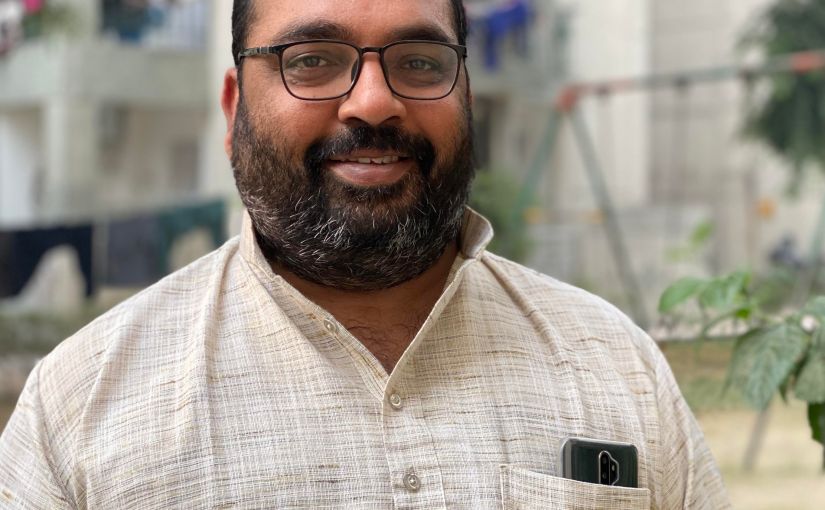
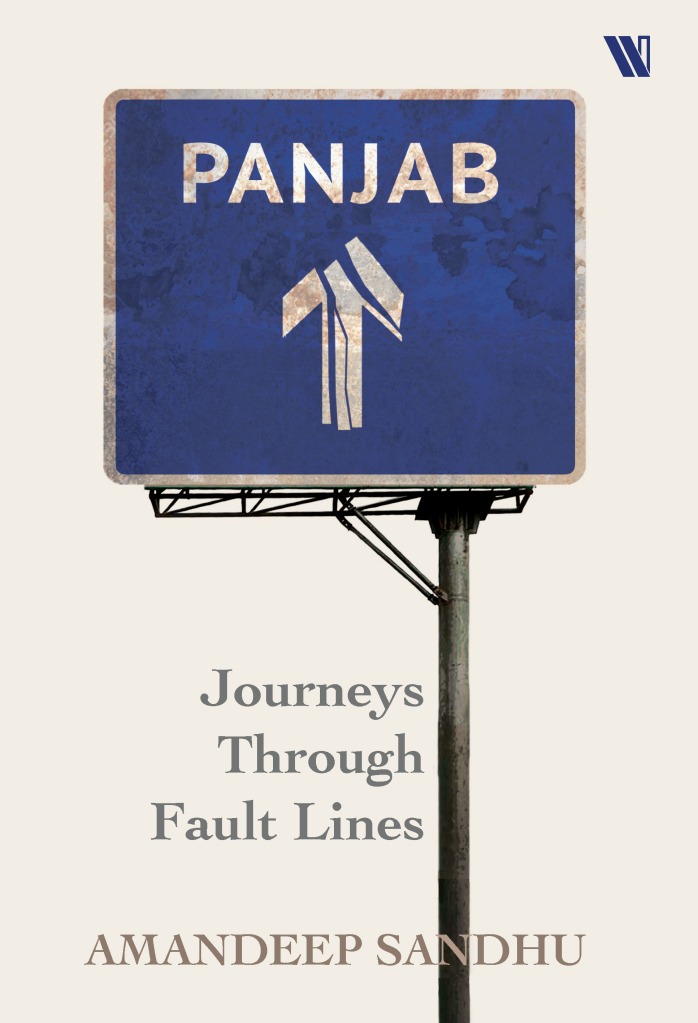
Local people took along with them the fallen parts of the Banyan tree. They said they would plant them somewhere close to their homes. Image: Living Heritage App/Facebook 

“After the tree was successfully raised, we got many messages from people around the world as the story had really inspired them,” said Anna Marsy, a Russian dance conductor, who witnessed the resurrection of the tree. “The Banyan tree story has managed to awaken the trust in the power of the community, trust in a deep belief that everything is possible if we are united and committed for one common cause,” she added.

Marsy is one of the many who has attended the most wonderful yoga and dance practices under the majestic Banyan tree. After every session, people would express their gratitude to the tree which reminded them about the beautiful connection between humans and nature.

“People from all over the world have danced under the Banyan tree and experienced the most unforgettable moments of life — freedom, health, joy and happiness. For all of them, the Banyan tree is a significant part of their memories,” said Marsy.

What’s also significant is that the day the tree was resurrected, local people took along with them the fallen parts of the Banyan tree. They said they would plant them somewhere close to their homes. 

“It is just the beginning of a new era. Humans are finally acknowledging that they are not separated from nature, but are one with the environment. It’s high time we think, act and take responsibility for what will our children inherit,” said Marsy.

* The image on the left in the lead picture has been sourced from the Facebook page of ‘Living Heritage App’

“We had a wonderful time driving around within a 50 km radius of Bangalore, looking at land. A year of picnics!”

says Harini Gopalswami Srinivasan, who describes herself as a natural farmer and sometime children’s writer. In this interview with Prerna Shah, she talks about how she made the shift to a rural, farm-based life and if, inspired by the choices made available by the Covid-19 work-from-home options, you want to consider a shift too, read on…

Harini, if you could tell us a little about yourself, also about your life in Bangalore before you moved to your farm?

I’m part of that bad generation, the baby boomers. Grew up in the 60s, came of age in the 70s, lived all over the country (my father was in a transferable central government job), and loved being rootless. The consumerist lifestyle crept up on us unawares in the late 80s, but within a decade I had its measure and began to make conscious decisions. I think of myself as primarily a homemaker. I taught briefly in a school, and edited for an academic journal for many years, but it was always part-time. I liked to reserve so much time for my family – usually including an animal or more. I also wrote a few books for children. That got squeezed into the busy schedule somehow, and I remember them as fun times with my daughters, who participated enthusiastically in whatever I was writing. Once they grew up and moved away, I lost the motivation and the momentum.

What motivated you to look for a piece of farmland and to then make the move from Bangalore to your farm?

I’d always dreamt of living on a farm, leading an outdoor life, having a lot of animals. My husband and I also love mountains and, for a long time, we thought we’d move to the Himalayas someday, live in an apple orchard with a view of snow-covered peaks. But ‘someday’ seemed far off, and by the time we were both in our fifties, we realised we wanted to live close to our daughters. So we decided to compromise — do what we could here and now. 

We had a wonderful time driving around within a 50 km radius of Bangalore, looking at land. A year of picnics!

How did you find the land that you now call your own? How does one go about finding a piece of land to own and (then) farm or cultivate?

Each state has its own laws regarding agricultural land. Early on we realized we could not own farmland in our state, Karnataka. Fortunately, Tamil Nadu was within easy driving distance. We answered ads, talked to people, met brokers. We wanted land with a view. At last, we were lucky to meet a retired state government revenue officer, who was very knowledgeable and reliable. He helped us buy our land, and also became a good friend. We bought our land (in 2011) with three friends. (And built our house there by the end of 2013). That’s a nice thing, to have good friends for neighbours. Though only one of them so far has built a house there and visits regularly.

One piece of advice for anyone buying land: Make sure the papers are good, of course, but also make sure that the people around are friendly.

One piece of land we looked at was lovely – huge old trees, good soil, sloping down to a lake. But the minute we got there several scowling men turned up to say the land was under dispute. On enquiry, it turned out the people in that village were very quarrelsome. We’re glad we stayed away. Where we live, we are lucky to have generous and friendly people around and don’t have to waste our energies in protecting our property.

In your blog, you talk about keeping a lot of things in mind while designing your house, the well, and a number of other things around the farm. What were the thoughts and ideals that guided you to take these decisions?

We didn’t know a thing. If we had known half as much then as we do now, we’d have done many things very differently. We were scared to death and the house reflects that. We were told not to have glass windows as people would throw stones. So, we have wooden shutters. Our younger daughter insisted we should be able to make a quick getaway in case we were raided by elephants, and that was built into the design. Then we were sure leopards would eat our dogs, so we built a high-walled courtyard. Now we know: the villagers don’t throw stones, you can’t get away from a herd of elephants, and there are no leopards in the adjoining forest (at least for now).

The main thing we got right was deciding to be off-grid. We didn’t want electric wires going across our land and electrocuting elephants. And, of course, there was a kind of romance about the idea. Anyway, it makes us self-sufficient and not at the mercy of an unreliable power supply, especially as we are so isolated. Our house is built of stabilized mud blocks and has recycled windows from a demolished 100-year-old British-era school. It’s quite a small house, considerably basic. When people come to stay, which isn’t very often, it’s a bit of a crush. Fortunately, the two bedrooms and bathrooms are spacious, and we can be outdoors all day. We have a solar-powered water pump and a solar water heater, and we now have rainwater harvesting and a large tank to store the rainwater. These were all good decisions.

Can you also tell us a bit about your efforts in minimizing the use of plastics in your daily life — from food in plastic packaging to cleaning products that come housed in a plastic bottle or container.

This is such a long and boring story, I’m sure no one wants to hear it in detail! Suffice it to say that I have for many years now been dedicated to cutting out plastic – products as well as packaging. I buy groceries, fruits and vegetables in cloth bags for choice, and occasionally in paper bags. I use natural toiletries, laundry powder and housecleaners – things like shikakai, reetha, besan and neem-twig toothbrushes. Many are homemade or homegrown, and some bought from organic stores, almost all with no packaging. I’ll trudge miles to avoid a plastic bag, driving everyone around me nuts. My partner in crime is the Navadarshanam CSA.

What do you grow on your farm? And what grows wild and uncultivated that you find useful as well?

We grow the traditional crops in our area – ragi or finger millet, avare or bush beans, peanuts, and small quantities each year of different things like moong, urad, tuvar dal, til or sesame. We have 22 mango trees, about 10 papaya trees and a few guava and sapota trees that bear fruit. Not yet bearing, but tended lovingly, are several coconut trees, banana, custard apple, jackfruit, lemon, orange and sweet lime, gooseberry, avocado, breadfruit, mulberry, moringa, etc.

The main trees that grow wild in our farm are non-edible species – honge or pongamia, Malabar neem or melia dubia, palash, laburnum and a kind of thorny acacia. They provide much-needed shade, mulch, firewood, and food and habitat for non-human critters. They also add beauty to the land and, when they are flowering, the perfume is intoxicating.

The author with Punkin, her tomcat

Tell us about a typical day at your farm, a day in your life if you please.

Wake up at an unearthly hour, get breakfast and laundry out of the way, potter around looking at how the plants are doing. Once it’s light enough to see an elephant if one is lurking, we go for a long walk. The views are as nourishing as breakfast! From about 8 am to noon I slog – digging holes for saplings, making new beds, planting, watering, weeding, mulching, pruning, picking vegetables. propping up climbers, etc. In non-Covid times I also used to make breakfast for our farm hands and anyone else who was helping out. I have cut that out in the last couple of months. My work is easier for that, but I also miss the daily chats and the happiness of seeing them enjoy the snack. In non-Covid times, we also had friends dropping in for a chat, to exchange seeds, saplings and goodies like pickle or cake. Life is rather lonely at present. At noon we knock off. Bath, lunch, and a few hours of lazing. I spend a lot of time on a lounger under a tree, reading, snoozing, and watching the birds that flit to and fro. Then a couple of hours of light work before dinner. We are in bed by 9 pm with our books and music.

The author with her husband at their farm

Do you spend all your time, most months in a year at the farm or do you divide your time between Bangalore and your farm?

We planned on one week a month in the city to meet family and attend to business things, but it’s been pretty erratic, what with interstate passes and lockdowns.

Do you miss anything about city life at all? 

Not at all when we’re there. But when we come to the city, after the initial culture shock, everything is an exciting novelty – shops, restaurants, newspapers, and TV!

Are there any stereotypes that we may have about life on a farm, and about villages and village folk? Did you learn and unlearn a few things about the rural way of life when you moved to the farm?

Well, they are better informed than you might think, but as superstitious as you’d expect. What I found surprising was that they are all there by choice. Almost all of them have spent some time in the city learning a trade or doing odd jobs. And everyone will tell you how much they couldn’t stand city life, the noise, and traffic, the lack of food security, the commercialization of everything, the polluted air, and water. Here in the village, they say, no one starves. We’re always losing money, but there’s enough to eat, and people will help you out.

I know this is contrary to the reality of farmer distress and suicide elsewhere in the country, and I can’t explain it. Among the farmers of the current generation, the 30-50 group, there is an entrenched belief in the high risk-high return model. They invest large sums of money in a single crop for the market and, if that fails, they lose it all. I hope in time they’ll realize the value of the old model of subsistence agriculture, and grow enough of everything for their own needs.

Another thing that fascinates me is that their brains seem to work differently from city-bred brains. Is it that their spatial intelligence is greater? I love how local and rooted are their memories and stories, their excellent mental maps of places, and their instinctive understanding of natural processes and creatures, which is different from mine at any rate – so much of my knowledge of farming is from books. Of course they are sometimes wrong, but it’s still impressive!

In a blogpost you address this question about ‘after the honeymoon’ and I ask it here again. Has your commitment to the farm and the way of life sustained and grown? 

Yes and no. I love being close to nature and the idea of growing our own food. But I am 62, and Srini, my husband, is 68. I am beginning to realize that we can’t sustain this amount of work as we grow older. It’s deeply satisfying, but certainly not easy. I am committed to work at it until we can really live off our land. Then I shall sit back and let someone else do the maintenance.

‘Anilodharani’ – their home at the farmland

And what were some of the biggest challenges that you have overcome?

Ignorance, poor soil, an inhospitable microclimate. Being at the top of one valley and the foot of another hill, we get a wild raging wind most of the year, sun radiating from the rocks in summer, and not enough rain. We are working hard to improve our soil and capture rainwater. We read a lot, experiment a lot, and talk to the local farmers as well as permaculturists elsewhere. We still have a long way to go, but the journey is fascinating.

What piece of advice would you have for someone who is a novice but has a keen desire to move to rural India and try and live the way you do?

Just do it!

Have you found it useful to document your journey in your blog ‘The Long View’ and how does your writing (not just the blog but your work as a children’s author) come about or is helped by your life on the farm.

I haven’t written a thing since we moved more or less full time to the farm. I have neither the time nor the inclination right now. But that’s not to say I won’t sometime in the future.

And if you could tell us about a native tree or two that grows in your part of the farm or around it and the joy it brings you.

It’s amazing how many trees growing wild around us are NOT native! One beautiful tree that is, is the silk cotton, bombax ceiba. I was thrilled to find two growing on our farm a couple of years ago. The flowers are beautiful, and I love the softness of pillows and mattresses stuffed with its cotton. I’m eagerly watching them grow!

The villagers keep introducing me to interesting new trees. I’ve recently got to know the naarve, with citrussy, rough leaves that are traditionally used to scrub vessels; the jaalaari with scented flowers that, in the season, perfume the whole forest; and the taare (terminalia bellerica), which has nuts almost as good to eat as cashews, but which I later discovered has ‘mind-altering’ properties!

(You can read more about Srinivasan’s life on the farm at her WordPress blog)

For them, dealing with floods is an annual affair. What’s worse, there is no way out

This year, flood fury battered many ‘smart cities’ across India. Horrific pictures and videos of inundation and infrastructure-collapse shared on social media platforms and shown on news channels left us in shock and awe. However, there are many who deal with floods year after year, but their stories never become headlines and hashtags. When a fellow-journalist was visiting a few flood-hit villages in Barabanki, Uttar Pradesh, I tagged along to listen to the stories of these villagers. A first-person account

…..

Swati Subhedar

Barabanki, Uttar Pradesh

I met Bramhadin, 11, on an unusually humid afternoon in August when I visited Sanaya village along with a friend, also a journalist. The village is in Barabanki district, about 28 kms from Uttar Pradesh’s capital Lucknow. He was sitting on a charpoy, his temporary ‘house’, and was trying very hard to shield himself from the sun. But the black tarpaulin sheet that was carelessly flung over the charpoy, and doubled up as the roof of his ‘house’, wasn’t helping much. He was holding a steel tiffin box in his hand. When I asked him if he would share his lunch with me, he hesitated. “Kuch khaas nahi hai,” he said. (Nothing interesting).

He opened it. There was some rice mixed with watery daal (black lentils) in it. His mother had prepared this on the roof of their house — his real home. There was waist-deep water in his house. When the Ghaghara river — the largest tributary of the Ganges by volume — started swelling, the villagers had very little time to shift some very basic belongings onto the roof of their houses and send their children and the elderly to the embankment — a wall or bank of earth or stone built to prevent a river flooding an area — in boats. Bramhadin had not seen his mother for five days, but she would diligently send lunch and dinner for him and his grandfather. When I started clicking his pictures, few more kids, who were playing close by, joined him. Giggling, they all huddled for the picture … no masks, no physical distancing even though coronavirus cases were going up at an alarming rate in the state during that time.

Bramhadin (right) having his lunch. Image: Swati Subhedar

For these villagers living in Barabanki, dealing with floods is an annual affair. Many villages in Barabanki, and the neighbouring districts, get flooded every year after Nepal — which shares its border with the state — releases water from its barrages into the rivers, or when it rains heavily in the mountain regions, said some of the villagers we met in Sanaya village.  

In the first week of August, as many as 666 villages were affected by the floods across 17 districts of Uttar Pradesh, and major rivers were flowing above the danger mark. When we visited some villages in Barabanki on August 4, the situation was quite grim.

We left Lucknow at around 11 am, wearing our masks, carrying bottles of sanitizers, and constantly reminding ourselves to maintain physical distancing. I was looking forward to this reporting trip as I was stepping out of my house after being locked up for five months because of the coronavirus-induced lockdown. The first three-week-long lockdown was announced on March 24. It was extended twice and finally ended in May. Though the country gradually started ‘unlocking’ itself in June, the coronavirus cases were going up at an alarming rate. I was a little apprehensive about this visit, but I tagged along because I was desperate to step out of the house.

The usual buzz was missing on the roads, but once we hit the highway connecting Lucknow and Barabanki, we were surprised to see police vehicles lined up on the highway and there was nakabandi at each checkpoint. At first, we thought they would stop up and ask us to go back, but later we realized that security was beefed up for the mega event lined up the next day (August 5).  

Prime minister Narendra Modi, state chief minister Yogi Adityanath and other important dignitaries were expected in Ayodhya — about 100 kms from Barabanki — for the Ram temple bhoomi pujan. Luckily, the police were stopping only the four-wheelers, so we could quickly move towards our destination — Tikait Nagar town in Barabanki district. The only hindrance, however, was the unbearable humidity. We had to take breaks in between to relax a bit.

The temporary accommodation. Image: Swati Subhedar

When we entered Tikait Nagar, there was no hint of any pandemic. People were not wearing masks and the markets in the town were buzzing with activities. We felt as if these people in small towns and villages were living in some other world where there was no threat of the virus. When we started nearing the embankment, people living in the villages seemed more worried about the constantly rising water level in the river and less about the pandemic.

When we reached the embankment at around 1 pm, we met a few people who were sitting beneath a tree facing the ‘river’. Only after I saw some submerged boats did I realize that it was, in fact, the flood water that had reached all the way to the embankment, washing away many small villages on its way. These men directed us to the spot where displaced people were staying in temporary accommodations. The government provides tarpaulin sheets to people so that they can stay on the embankment for a few days, not very far from their homes. It probably saves the government the hassle of providing them temporary accommodation or relocating and rehabilitating them.

We drove along the embankment for half an hour. Soon, we started spotting the temporary shelters. Many charpoys were lined up and families, mostly elderly and children, were sitting looking hopelessly at the gradually, but constantly, rising floodwater.

The fields were submerged in flood water. Pic: Swati Subhedar

We parked our bike and went to a spot where some boats were anchored and the boatmen were resting. A few men were anxiously waiting for the boats to arrive. I stepped into the water. It was cold. I splashed some water on my face and regretted it instantly. It was flood water and I was on an assignment. Full of guilt, I turned around. The men gathered there had been waiting for two hours. Some wanted to go home, the others were waiting for their belongings that were shipped from across. “How deep is it?” I asked to no one in particular. “kaafi gehra hai. Hamare ghar doob gaye,” said a man. (Quite deep. Our houses are submerged).

Mohan Singh, a farmer, pointed at his submerged fields. “This happens every year. When Nepal releases water from its barrages, our villages and fields get flooded. My half year’s earnings got washed away. I was depending on this crop,” he said. Two other men standing in the group, also farmers, pointed at their fields. I could see only water. When asked if they ever considered moving from here as the floods had become an annual affair, there was silence. “kaha jayenge. Hamare ghar aur khet yahi hai.” said Mohan Singh. (Where do we go? Our homes and fields are here). They said they were stuck. “The government is not finding a permanent solution to our flood problem even though the tragedy hits us annually. The authorities are not giving us alternate accommodation. What’s worse, they don’t even compensate us for crop losses. Every year, each farmer loses one entire crop, which is equivalent to half a year’s earning,” said Puttan Lal, another farmer.

We went to meet some people who were sitting on the charpoys. I met Bramhadin here. He was having his lunch. He pointed at his home where his parents were living, and his school that was completely submerged. When asked if he missed going to the school, he said: “School to kab se band hai corona ki wajah se. Jyada nahi miss karta kyoki jyada kuch hota nahi hai school me. Ek hi teacher hai”. (The school is closed because of corona. I don’t miss my school much. Nothing much happens as there is just one teacher). When asked if he remembered what he studied the previous year, he thought for a while and said, “no”. When I asked if he knows about coronavirus, he said: “Some people came and said we have to cover our mouth, wash our hands and not sit very close to each other,” said Bramhadin.

There was water everywhere, but the villagers were not getting clean drinking water. Image: Swati Subhedar

“We are not getting clean water to drink. How do we wash our hands regularly?” asked one elderly gentleman sitting close by. “Many journalists and officers come here. You people at least talk to us. The government officials don’t even step down from their cars,” he added.

It was 3 pm. I could feel my skin burning. The humidity was sapping my energy. I had always associated floods with inundation. This flood-situation was different. On one hand, the water level was gradually rising, on the other, the extreme humidity was making people sick.

Little Seema, all of five, was quietly sitting on a charpoy close by. When I went to talk to her, her grandfather joined us. He told me about the snakes that pop up at night, and how badly the children were suffering because of humidity and mosquitoes. Not many women were around as they had to stay back. So, mostly, it was these elderly gentlemen who had to look after the kids. Seema’s five siblings were playing close by.

I asked Seema’s grandfather if he was aware that a huge temple was being built not very far from there, he nodded. When I told him that a budget of Rs 500 crore has been allotted for the construction of an airport in the temple town of Ayodhya, he said: “We don’t  mind that, but the government should also set aside some budget for us so that we don’t have to go through this year after year.”

Seema will probably grow up dealing with floods year after year. Image: Swati Subhedar

My colleague was still interviewing some people, so I went and sat next to Seema. The tarpaulin sheet wasn’t helping much, but I felt better here. I wanted to throw my mask away. I took out my fancy copper water bottle to drink water. Seema curiously peeped inside my bag. I kept the bottle inside. Both of us were looking at the muddy water in front of us. While I understood what this tragedy meant for the people living here, god knows what was going on in that little girl’s mind. In all likelihood, she will grow up dealing with floods year after year. Just then, a boat arrived from across. A bicycle was unloaded with great difficulty and while doing so a man lost his balance and fell into the water. Seema found it to be funny and giggled.

Seema, Bramhadin, and the other kids waved at us while we were leaving. While returning, we took a shortcut so that we could reach Lucknow faster. We crossed many submerged fields. On one muddy stretch, a dog was standing in the middle of the road. When we neared, we realized it was a pup (baby fox). It was lost. Probably its home was inundated too. When I reached home, I realized my skin was not just tanned, it was peeling off from my nose and forehead. I took a shower, switched the AC on, and while applying aloe vera gel on my burnt skin, I thought about Seema, Bramhadin, and the other kids who have no option but to sit in that brutal heat all day long.