recalls Eisha Sarkar, a communications professional, and in this piece, she reflects on her journey as a parent and describes incidents, books and literature that helped her chart her own journey through motherhood.
This photograph, used for representative purposes is by William Fortunato from Pexels.com
“You said Ronnie is your enemy,” eight-year-old Rahul shouted to five-year-old Siddharth in Gujarati who was plucking mulberries for my three-year-old son, Ronnie. Siddharth handed over a ripe, black mulberry fruit to my toddler and then sat next to Rahul outside a bungalow’s gate. “Ronnie is my enemy, but his mother is standing here so I decided to help her get mulberries from the tree,” Siddharth told him. I opened my mouth to say something but then my little boy came running towards me giggling and we walked away from the two boys.
Three days before this particular exchange between Siddharth and Rahul, I watched in disbelief as Rahul pinned Ronnie to himself by grabbing his hands and Siddharth scared him by making monster faces. My son was getting very disturbed. I asked the boys to stop and let him go. They obeyed immediately. Why did kids as little as eight and five think curious toddlers were their enemies who needed to be punished or scared away just because they ran amok and touched or smiled at everyone? Did I attempt to explain to them that it was Ronnie’s way of getting to know people? No.
Usually, I don’t intervene when the children play. We don’t live in a gated colony in Vadodara but in a loosely formed society where there are more senior citizens than young children. With Covid 19 restrictions in place, schools, nurseries and playcentres shut, this is the only form of socialization I can offer to a curious toddler who wants to know the world around him. I want him to interact with children of all ages and different backgrounds. For most part of the half-hour of play, I am a bystander, watching him make his way through the pecking order. The older girls are very welcoming. The boys not so much. Some occasions require me to get in the middle of their play. When my toddler disrupts a game of cricket or badminton by running onto the ‘pitch’, I have to carry him off with him wailing and writhing in my arms or I have to step in when the kids play rough.
When I narrated these incidents to my mother, who has over a decade of experience as a schoolteacher in Mumbai, she warned me. “Don’t let the older children bully Ronnie. You must come to his rescue. Don’t stand there and wait until they push him or something. The moment you see them behave in a way that is disturbing him, act. Be involved. That’s what parenting is about.”
Parenting hasn’t been easy. During my child’s first eight months, I suffered from post-natal depression. Instead of counselling what I ended up with was streams of visitors, relatives and friends who would drop in to see my baby at any time of the day or night, often without asking me if I was okay with it. It drained my energy, along with long breastfeeding sessions and sleepless nights, to such an extent that I didn’t want to spend an hour a week talking to a therapist. Many people gifted and suggested books, right from Heidi Murkoff’s What to Expect When You Are Expecting during my pregnancy to Time Life’s Your Baby’s First Year to Skinny Bitch Bun in The Oven by Rory Freedman and Kim Barnouin to old copies of Reader’s Digest which had articles about babies and Tarla Dalal’s cookbooks. A zillion links to blogs and articles about parenting and babies were WhatsApped to me.
I read some of them and they did help me deal with issues of diapering, feeding, cleaning, nutrition, sickness, and exercise but I also needed a book that would guide me through the day-to-day conflicts of raising a multicultural child in a multicultural household. I am agnostic and Bengali by birth. I have no direct connection with Bengal, having lived my life in New Delhi, Pune, Mumbai, Brisbane, and Vadodara. I studied in Christian schools and colleges and have friends from diverse communities. My husband and his family are traditional, religious Nagar Brahmin Gujarati with roots that run deep in Saurashtra and Vadodara. Often, the conflicts at home revolved around food, language or how a sick child should be treated.
Thankfully, now a book like that is available. In Raising a Humanist, authors Manisha Pathak-Shelat and Kiran Vinod Bhatia write, “Accepting something that is ‘different’ is not always easy. We often look with suspicion at people who seem different, who (have) a different lifestyle or culture or who have a different way of seeing the world. Realizing that we – parents, teachers, family members, and other adults – are responsible for sowing seeds of bias and prejudice in the minds of young people can be unsettling, especially when we love them and care for them. As a result, most of us refuse to evaluate our stake in the process of raising children who are biased, intolerant, and scared of interacting with others who are different from themselves. Also, many of us are unaware of our own personal bias towards other individuals, belief systems, practices and processes.” While I believed that I was more secular and liberal than the Gujarati part of my family, after reading the book, I realised how haughty and prejudiced that assumption is. In order to bring up a child who accepts both cultures, I need to be less biased towards the other culture in my own household.
While leafing through the pages of the book, I revisited the play scenes in my head and discovered that, as the authoritative figure, I had left the field without telling two young children what they had done wrong, that they should have been gentler when they played with my toddler. The next day when Ronnie saw the boys coming towards him, he first got scared and then aggressive. I calmed him down by laughing and telling him that they were making monkey faces. Humour cuts where anger doesn’t. The word, ‘monkey’ did the trick. The boys stopped at once. Then Rahul tried to grab both Ronnie’s hands and pin him down. Gently, I asked him, “How would you feel if someone were to do that to you?” He immediately let Ronnie go. “Good!” He smiled at me and took Ronnie’s hand. For the next forty-five minutes, the three boys played with each other as if nothing had happened. That’s the beauty of childhood.
This incident also says something about the power and potential of books; of finding voices and approaches that help you in your journey as a parent. Sometimes, it could be just a line, other times, an entire book.
If I were to leave you with some of my personal favourites – books that resonated with me, and continue to do so as I grow as a mother, I would suggest looking up:
· Time Life’s Your Baby’s First Year, which is the most no-nonsense practical book you can find
· Becoming by Michelle Obama, if you want to learn how to strike work-life balance as a mother
· Tongue in Cheek – The Funny Side of Lifeby Khyrunnisa A., if humour is the antidote you need to alleviate your anxiety
Everyone approaches parenting differently and there is so much to learn and unlearn, and if you have curated a reading list on this topic, please feel free to write back to us with your thoughts.
(Names of all the children have been changed to protect their identity.)
Eisha Sarkar is a writer, educator, designer and peacebuilder based in Vadodara, Gujarat and has worked extensively in the fields of journalism, education, peacebuilding, design, documentation and international relations. She became a mother in 2018 and currently has the toughest job on her hands – trying to get her toddler to obey her instructions.
While the piece has been edited to suit our format, the views, thoughts, and opinions expressed in the account are Sarkar’s own.
Why should one do a series on loss and grief? For one, these experiences are central to our lives. There’s not a single person who hasn’t experienced loss (via death of a loved one) or wouldn’t do so in his/her lifetime.
Who we lose and how … the situations differ and yet, it is rare to come across someone who has never grieved. Sometimes the loss is unexpected, or traumatic or takes place in circumstances that change us forever. It takes time for us to acknowledge and process the impact of that loss, and how it has shaped us.
There are no tailor-made solutions or one singular way to cope with loss. Sometimes writing it down helps, sometimes sharing helps, and at other times, all that we need is for someone to listen without judgement and with empathy.
Swati and I wanted to do this series for years now, but how do you ask people to share some of their most intimate, vulnerable experiences? We have both been moved to tears while reading some of the experiences that people have shared with us, and one in particular.
As it so happens, much before The Good Story Project came to be, one of us had reached out to this person two years ago and asked if she was willing to be interviewed or write a piece on her loss. That piece finally came to us this year, and once it was in, we realized it had been such a big ask from her. Writing about such a life-altering loss is always difficult and more so when you are going to share it with someone else and open it up for so many other people to read.
I should know this. It took me several years to write about losing my father and how it affected me, and even though I could write about many things under the sun, every time I tried to put in words my father’s last moments and the last hour leading to his death, I would end up staring endlessly at a blank screen. Though my father was calm and dignified when it was his time to go, his death and the aftermath affected me deeply and writing about it has also been one way to honour his memory as well as acknowledge my grief.
So we would like to thank each and every one of you who has shared or is in the process of sharing your deeply personal experiences with us.
And we cannot take without giving. Therefore, I am sharing links for a piece that I had written in 2019 and also for one that I wrote in 2020. These pieces are deeply personal and deal with my own sense of grief; having written them for my personal blog.
You can find the 2019 one here and the one I wrote more recently here.
In the first part of our series on ‘Stories of Loss and Healing’, read Mumbai-based sports journalist Nitin Naik’s story here. Naik lost his wife to cancer in 2015.
In the second part, read Lakshmi Kaul’s story here. Kaul lost her only daughter to a freak allergy incident in 2017.
In the third part, read Darshana Shukul’s story. Shukul lost her mother when she was a child.
Continue reading the fourth part and fifth part of the series. These stories deal with the grief of losing a parent.
The sixth and seventh stories are about losing a loved one to Covid-19 and mourning a loss during the 2020 pandemic.
The last story in our series is on loss and what it feels like – 19 years from when it first happened and what one can do help someone who is grieving.
Says artist and sculptor Zaida Jacob whose daughter was only a year and half when she lost her husband.
Moving beyond labels
The labels I see on myself keep changing. In early days I used to feel people pasted a ‘fragile’ label on me. Then I felt ‘bold.’ I mean they think I am bold. But I am not. I just cope because one has to.
I find myself feeling tentative. Like the ground under my feet is still moving. It has been 19 years since we lost Mihir. That assured feeling of ‘belonging’ has never come back.
Having said that, the flip side is the world has opened up. The feeling that everybody has a universal spread. A kind of package of life – like a buffet or pantry of sorts – sometimes with a cold storage section too.
What is in your plate or dish at any given moment may vary. But life’s kitchen has similar ingredients for all. It completely depends on how creatively you cook your dish. I may laugh at what I have just said a few moments later but for now will let it go.
What grief feels like
Photo courtesy: Zaida Jacob. In this photograph, Mihir holds Aruvi.
Well, the way I see it, ‘grief’ is when you are in the midst of it, it does not feel. You just do what needs to be done.
When you have had an accident or a limb has been cut… you are so busy coping with the hurt or the absence of it, that there is no time to think of feeling. (You need to adjust to the new life without a limb…. or with a big wound.)
In my case I was fortunate. He was popular (liked by lots of people) and so the absence was shared. I found myself comforting other people sometimes when they came to condole. Plus, I have a huge support mattress in my friends. It’s like falling on the bed wherever you fall. I was looked after… all along. And so was our daughter. I am not sure whether I can take credit for this but in losing my husband I allowed lots of other friends to share the role of parent for my daughter. And so, our daughter became like a child brought up in a huge joint family. To live by their ways and terms while she was with them was followed. She had six families where she had a sense of ‘home.’
Talking of grief and pain getting smoother with time, I can say that when you look back and see the marks of the dried-up wounds suddenly it hurts sometimes. I can feel pain physically somewhere in the middle of my stomach or someplace within. When I think of our daughter and how both of them missed getting to know each other, I feel a lump in my throat and a horrible feeling of loss and of how unfair it is.
However, it does get bearable with time if you allow it. Plus, you have to keep being real and asking real questions to yourself.
“Am I really so unfortunate?” “What did I come here to do?” “Is there something larger than the things I do that I am meant to do?”
Look for the things that engage your love. In my case I had my daughter so the demands of being in the ‘now’ doesn’t leave much space for grieving.
How people helped, how I helped myself
I lost my mother-in-law in 2000, just after that earthquake in Kutch took place. And when I missed her and thought of how the centre of our family had suddenly just gone away, I was reminded of those many, many children who lost their parents, their homes. Some lost spouses, some lost their children and yet others their everything. How big was my loss?
Somehow, we humans have a strange way of comforting ourselves in finding other people who are worse off. And so, I lost my husband in 2002 and in a few months, I kept seeing images of innocent people who lost loved ones because of the riots in Gujarat. So much loss, so much grief and so universal was this feeling of loss. What was I being asked to learn? What was I being told to do? I had a child of one and a half and she had me. The immediate task in hand was to give her security, to hold her close. To do all that I needed to keep the feeling of family intact. So, I took up a job in Mumbai since I needed to be close to my parents but resolved to come back and give our daughter the rest of the ground beneath her feet.
My neighbours for example adopted her out of love as their granddaughter, our close friends became immediate family. She had a nani in my friend whom we called bhabhi so she called her ‘bhabhi nani‘ and her children were like elder cousins to her. Till she was seven or eight she didn’t know the difference between blood relatives and friends. She believed all these were hers and she belonged to them.
She even wrote essays in school enlisting a huge family of members and dogs as her own family – who actually didn’t exist in her blood relations or in her home.
I let her do it. Sometimes I informed the teacher to be kind and not question her. She had an amazing principal and teachers at her school. They too gave her love and created a feeling a co-parenting for me.
To date these angels, stand close to me in my heart. I wish I can always be there for them as they have been for us.
Therapy is good too
I did see a therapist, because I was unable to get back to my artwork or to get back my confidence in my life. They were helpful and I do believe one should see one even if it feels like they tell you what you think you already know. Sometimes they are smarter, and it helps to surrender to them.
Helping a person who is grieving
Give the person the assurance that life is unfair, but he/she can cope and will eventually come to terms with it. Tell them they can do it.
Life is unfair but quitting is not a choice. Not to be a victim and lamenting is not a choice. But the thrill of staying afloat, of keeping your head above water till the rescue team arrives is wonderful. If a rescue boat doesn’t arrive you will have learnt to swim by then. Just hold on and let it pass.
Take each day as it comes. Break the day’s tasks into smaller pieces and focus on the priority of tasks to be done. Keep yourself busy in doing something for yourself and others at all times. Engage yourself open-mindedly into occupying yourself till you can tide through.
The person you lost had just that much in his share of life and it is utterly painful that you got to know him/her just at the time he was leaving but be glad you got that time. How horrible it would have been if you would never have met?
You too have a set of days with you to live through. Make the most of those. Turn back and feel proud for having coped.
On a poster, I once read, ‘It all turns out ok in the end. If it doesn’t it’s not the end.’
Remembering Mihir and his memories
I remember him so fondly. The memories flash in front of my eyes like movie slides sometimes. Sometimes they are blurred. I feel sorry for him having lost out on his life. I feel sorry for him missing to be the father of a daughter and a lovely one at that. And I miss him for the many lives he touched. He could be there for so many people. I feel inadequate to reach out. I didn’t have him all to myself ever. He was always somebody’s Mihir.
He came and left in intense moments even in his living life. And that is how I was with him. So most often I feel it’s those moments when he has gone for something larger than me and is needed more than I need him and someday he will come home to me. But now over time, I know he isn’t ever coming back and the most real parts of him are in my memory if I refresh and preserve them. Some of them evaporate. Some return.
How do I describe Mihir to someone who has never met him?
He was a personified version of life. Intense moments, phases, one different from the other, courageous, could take risks, impulsive apparently, but real and practical, full of zest till he had fuel in his body…rested only when he slept. Reached out to anyone who looked for him – always. Could never say no. Selfless. No attachments. Yet full of passion. Sensitive. Compassionate. Very hard working and perseverant. A year was more than 365 days, and a day and night were more than 24 hours. He went miles before he slept but yet had promises he may have wanted to keep.
Loss shapes us in many ways
I think I saw life differently after he left. He was a people’s person and he made me see the universality of humankind. How similar we all are and yet how different. How small in the bigger picture. And how if the compassionate being in us remains at the front it cannot only be my pain, it’s pain that everybody feels or has felt or will feel someday. So, I am not unique.
I really don’t know how I would have been had he been around. But most of the time I am glad for the world has become a larger place for us.
Irrevocable is part of the passage of time too. I’ve grown and also lost myself in time. The girl I was. So, I don’t know how time can bring back anything?
I’d like to meet a new me instead. As long as she knows how to laugh at stupid jokes and gets up and does things that need to get done, I’d like her to not change. She’s built with a lot of minute details – like a fabric.
Zaida Jacob’s account is a part of our series on ‘Stories of Loss and Healing.’ Read Pooja Ganju Adlakha’s story here, in which she talks about losing her mother to Covid-19.
(Disclaimer: The views, thoughts, and opinions expressed in the account above belong solely to the author, in this case, it being Zaida Jacob’s and not that of The Good Story Project or its co-founders.)
In November 2020, Pooja Ganju Adlakha started writing this story which was meant to be about coping with the grief of losing her father, Major Virendra Ganju, in 2016 to Motor Neuron Disease. However, by the time the story could come out, she unexpectedly lost her mother to Covid. In this first-person account, she writes about how, with both her parents gone, she is experiencing a different kind of an empty nest syndrome
…..
I wrote this piece for my father in November 2020. The story was meant to be about how I was able to cope with the grief of losing him in October 2016, and how my mother was my biggest source of strength. But soon after I submitted the story for publishing, my whole world came crashing down around me.
I lost my mother, my precious, precious ma, to Covid-19 on December 26, 2020. It seemed unfair. I always thought my ma would be by my side forever. I don’t think I have the strength to deal with her sudden loss, that too in a pandemic year. A dagger is stuck in my heart forever.
They say an empty nest is when kids move out of parents’ home, but, with both my parents gone, I am experiencing a different kind of an empty nest. They will never be there to hold my hand and help me sail through. No one would shower me with unconditional love. I will miss the aroma of food cooked by my ma, and my pa’s infectious energy whenever I will enter my maternal home, that empty nest, from now on.
With both her parents gone, Pooja is experiencing a different kind of an empty nest syndrome
However difficult it may be for me to talk about this, I must still try for the sake of my ma who filled our lives with love and affection after pa left us. Now, looking back, I feel how difficult it must have been for her to live without him and not showing the slightest of pain to us, her three daughters. THAT for me is displaying pure strength for the sake of family.
This loss also made me realise we are never alone in grief. As painful as it is for me, it is equally heartbreaking for my sisters and much more for our children who doted on their nani. For now, we are numb. We are still coming to terms with the fact that we will not be able to hear her voice and see her every day. We are angry at God for taking her away from us. But we have to be sane for the sake of our children, like my ma was for our sake. I love you ma and you will always be alive inside me. Here goes my original story, the one I wrote for pa, before ma left me to be with him in heaven …
I was expecting my second child when my father Major Virendra Ganju, a veteran in the Armed Forces, passed away. He had been battling Motor Neuron Disease and was completely bed-ridden in his last days. I particularly remember this moment when he asked me with hand gestures what I wanted … a girl or a boy. I said a girl. He called me closer and touched my belly and blessed me. And there I was, the very next month, on his tervi, giving birth to my daughter. There will always be this sadness that he was not able to see or hold my little girl, but I am glad that he had blessed her. To me, she is a piece of my papa.
Major Virendra Ganju battled Motor Neuron Disease for 23 long years
Papa … it’s a small little word but it signifies a valley of emotions, love, memories, and pride. My father has been, to this date, my hero, and I, being the youngest of his three daughters, was his most pampered one.
I have been finding ways to deal with the loss of my father for the past four years. As per the definition of grief, it is a response to loss, particularly to the loss of someone who has died. Well, in reality, grief is much more than a mere collection of words defining the immensely strong feeling of loss one feels when a beloved is gone forever.
People are often asked how they feel about the loss, how do they manage it, deal with it, or make themselves accustomed to the great void that gets created. Well, I am not sure if they actually ever get used to the void. They try to keep the memories alive to occasionally relive the moments that were once spent together, irrespective of the pain they bring along.
I can tell from my personal experience that things do get better with time, but, at times, you feel like rewinding the years all over again. The acceptance part was easier for me, as he had been defying Motor Neuron Disease (MND), a very complicated disease, for 23 long years. It was a miracle considering the doctors had given him just three years to live after he was diagnosed with MND. So, the additional years were a blessing, and it was in these years that we saw the real hero, the real soldier who had this immense will to live a happy life and none could fathom what he must have been going through.
Pooja with her parents
Though he was not active in the last few years, it was his real absence that hit us the most … all the talks that did not happen, the war stories I did not hear from him, the time that we could’ve spent together … they are just flashes, in retrospect. At times, I feel guilty, that I lived so close by, yet I could not spend every weekend with him. A valuable lesson learnt. We will always be busy, but let’s not forget to spend quality time with our loved ones. Do not wait for the right moment. It may never come.
I was in awe of my mother for being his pillar of strength. We did all that we could for him and have no regret that we could not find the right treatment for him. I personally did extensive research on MND, spoke on forums to realise how little progress has been made and, in India, how patients suffering from MND and their families had limited access to resources and support systems.
The last year that I had with him was the year when he was the most vulnerable. He was bedridden, could not speak, he was being fed through pipes, there were catheters and oximeters, and yet, whenever we would ask him about his health, he would always show a thumbs up. THAT was my papa.
So, to not see him running around fixing everything for us or throwing parties or to not hear him sing was a big blow and a realisation that a glorious chapter was about to end. He always called me his mighty son, and when it was time to lit the pyre, I was not allowed to see him as I was expecting my daughter. I did feel a bit of a rage, but my sisters lit it for the three of us, and I could not have been prouder.
Pooja’s mother with her kids
I feel it is these memories that make us strong and keep us going, and yet, there are moments. Tears are rolling down my cheeks as I am writing this. I want to be as strong as he was. I am getting there. My mother and sisters were my pillars of strength. The year after he passed away, my mother stayed with me. I felt relieved that I could not spend time with my parents while my father was alive, but I got to spend time with my mother.
Handling the loss, being strong for the sake of your other parent, is also a way of dealing with grief. There are some other coping mechanisms that come in handy. I try to keep him alive by doing things he loved the most … like singing, watching movies, throwing parties for kids, donating and distributing things to people randomly, impulsively. He was indeed a happy-go-lucky man, who would not worry about the future, something I still need to learn.
I make sure to celebrate his birthday, my parents’ marriage anniversary, and his death anniversary. We play music, order their favourite dishes, donate food to the needy and that, in a way, has really helped me have happy memories of him. I know I am a bit like him so, sometimes, I justify it by doing these things. And, at times, I randomly talk to him. That keeps us connected.
Pooja Ganju Adlakha’s account is a part of our series on ‘Stories of Loss and Healing’. Read Sunil Kumar’s story here. He lost his wife just four days before the 2020 lockdown and eight months after they got married.
(Disclaimer: The views, thoughts, and opinions expressed in the account above belong solely to the author, in this case, it being Pooja Ganju Adlakha and not that of The Good Story Project or its co-founders.)
Sunil Kumar, a social worker and an artist based in Muzaffarpur, Bihar, lost his wife Sarla Siriwas, 33, just a day before the March 22, 2020 Junta Curfew – a day-long lockdown that was announced ahead of the complete lockdown last year to stop the spread of coronavirus. While the whole country was anxious, Kumar was fighting a different battle at a hospital in Muzaffarpur caring for his wife, a social worker and a puppeteer, who had spent most of her life travelling across and living in some of the Adivasi-dominated and Naxal-infested regions. This inspirational story is about how he dealt with the grief of losing her
…..
The date was March 21. The country was gearing up for the Junta Curfew — a day-long nationwide lockdown that was scheduled for the next day to stop the spread of coronavirus in the country. Not much was known about the pandemic then and people were very anxious. However, I was more anxious than the rest of the country because I was at the Sri Krishna Medical College in Muzaffarpur, Bihar, looking after my wife Sarla Siriwas, 33, who was admitted there. She was suffering from Meningitis and Kidney stones and had been battling for her life at the hospital for 50 days. For a week after she was admitted on January 31, 2020 after she complained of high fever and headache, her condition was improving, but after that she was gradually slipping away with every passing day.
The doctors were never optimistic, but I was hopeful. I had waited for Sarla for years before she had agreed to marry me on July 10, 2019. Now, nearly eight months later, I was at the hospital holding her hand and full of hope as she was swinging between the states of semi-conscious and unconsciousness. I was mentally prepared that day. The pain was unbearable for her. Finally, at 9 pm, my wife left me forever.
Sarla used puppeteering as a medium to spread awareness. Ironically, March 21, the day she passed away, is celebrated as World Puppetry Day
The next day was her funeral and also the Junta Curfew. The situation was tricky. Apart from the immediate family members, very few people who knew my wife well and had worked with her managed to come down to Sikandarpur (in Bihar) for the funeral. My heart sank when I touched Sarla for the last time. Sarla was a social worker, a puppeteer and an artist, who had spent most of her life travelling across and living in some of the Adivasi-dominated and Naxal-infested regions in the country and working for the betterment of underprivileged Adivasi women and children. Many friends and acquaintances spread across the country who knew Sarla well wanted to attend her funeral, but couldn’t because of the situation. But over the next few days, I was inundated with messages on social media and WhatsApp, which helped me come to terms with the fact that she was no more.
It didn’t help that the country went into a complete lockdown on March 25, just four days after her death. There was a void inside me, my house … and there was a strange stillness outside. However, the initial few days gave me the time to think about how to deal with the grief of losing her. And I thought the best way to do that would be to celebrate her life and work.
Sarla was a social worker and a puppeteer, who had spent most of her life travelling across and living in some of the Adivasi-dominated and Naxal-infested regions in the country
While she was alive, Sarla had worked non-stop every single day of her life for years and one of the reasons behind her untimely demise was the fact that she dedicated her life to make the lives of others better but never bothered about her own health. For instance, she would cook meals for hundreds of volunteers at social events but would forget to eat her meal.
Born on August 14, 1986 into a family of modest means in Balaghat, Madhya Pradesh, Sarla had to face many adversities while she was young … like the passing away of her elder sister when she was a child and not getting to spend time with her mother as she was mostly bedridden and away. Her father would repair flat tyres to make a living, but he was also a folk artiste. Sarla inherited many of the creative aspects from him. Participating in cultural events in school like singing, dancing and drama helped her escape from the harsh realities of her life. She also learnt the art of puppeteering, a talent that came in handy later in life when she travelled across some of the most remote and backward Adivasi regions to spread awareness using art as a medium.
Sarla moved to Muzaffarpur and continued her social work activities along with her husband
From 2013 until she passed away, she was associated with various organizations in Madhya Pradesh, Chhattisgarh, Maharashtra, Odisha and Jharkhand. She used the mediums of song, dance, skits and puppets to spread awareness among people living in backward Adivasi villages. She was also a part of many peace marches and cycle yatras that were organized to appeal for peace in regions that were affected due to Naxal violence. While her journey had been incredible and she did some commendable work, but she kept neglecting her health. In fact, she was so immersed in her work that though I had known her for long, I had to wait for many years before she could find time to marry me.
Sarla moved to Muzaffarpur and though she was new to the city, she started working soon after we got married. In a brief period of time, she befriended many people and touched many lives. I am also a social worker and an artist, and I was thrilled that I was getting to spend a lot of time with my wife as we would often travel together for work.
All those who had met her still feel the void of her passing away. For me, personally, it would be impossible to feel that void … ever. I still feel the pain of losing my life partner just eight months after getting married … a partner whom I had very patiently waited for, for years.
She was admitted in the hospital for 50 days. Her husband did all that he could to make her feel better
I thought the best way to try to get over the grief would be to continue the work she had dedicated her life to. We took small steps. For instance, during the lockdown, we collected funds from those who were willing to contribute and helped the underprivileged with food and ration. With the help of journalists and NGOs, we worked on a project that helped those who had lost their jobs during the lockdown to find some form of employment. We distributed food packets and used art as a medium to stop people from falling into the trap of depression and anxiety.
On Sarla’s 34th birthday in August 2020, her first after her demise, I invited all those from across India who had worked with Sarla over the years and together we pledged to keep her work alive. In the last year, I took over the projects she was involved in and I am trying to complete them. While the pain of losing her will never subside and the void will never get filled, the least I can do to keep her alive in my memories is to continue her work.
Ironically, March 21, the day she passed away, is celebrated as World Puppetry Day.
(Image credit: Sarla Siriwas’ Facebook page)
Sunil Kumar’saccount is a part of our series on‘Stories of Loss and Healing’. Read Eshwari Shukla’s storyhere. She lost her father when she was only 13.
(Disclaimer:The views, thoughts, and opinions expressed in the account above belong solely to the author, in this case,it being Sunil Kumar and not that of The Good Story Project or its co-founders.)
In this first-person account, Eshwari Shukla, a journalist, talks about the day her father passed away in an accident when she was only 13. She mentions how, initially, it was strange for her to see her mother in a white saree. Her empty forehead would remind her of the sudden vacuum in their lives, but, gradually, the mother-daughter duo became each other’s silent strength while coping with their common grief
…..
It’s been 12 years. At times, it feels as if it happened yesterday and, at times, it feels as if one lifetime has passed. The date was February 29. The year was 2008. The landline rang in the morning and my grandfather got up to receive the call. I was around 13. I was sitting there, aimlessly flipping through the pages of a newspaper that was in front of me. I don’t remember very clearly what happened next. Those moments are still somewhat blurred. Sepia-tinted. My grandfather would lovingly call my father ‘babu’. Suddenly, while talking to someone over the phone, he started referring to my father as ‘body’ and not ‘babu’. He kept the receiver down. We were told that my father had passed away in an accident. The car he was travelling in had collided with a truck. My father was no more. It didn’t really sink in at that moment.
Eshwari Shukla
Soon, the house was full of people. Arrangements were being made. I could see stunned, teary-eyed faces around me. I could hear the hushed condolences. I was quite numb, but I could hear the conversations.
It was very strange for me to accept his sad and sudden end. Just two years before my father passed away, we had lost our grandmother. That was the first time I had dealt with the sadness of someone leaving this world. But my father’s death was quite unreal. People who had gathered in the house were saying things like my grandmother loved my father so much that she called him to be with her within two years of her passing away. Those conversations scared me. I was 13. I was not a child, but I was not grown up enough to understand the complexities of death or such conversations. It felt as if someone else was about to die that day.
The news came in the morning, the body arrived at night. Those hours were full of anxiety. When I heard a vehicle approach our house, my heart beats started racing. The ‘body’ was home. As it was an accidental death, a post-mortem was conducted. His eyes were partially open. There were bloodstains on the plastic sheet in which he was wrapped in. His body was covered with a white cloth. He was kept on a mat beneath the mango tree that was in our courtyard. My elder sister sat near his feet. She was occasionally touching him, probably to ensure it was indeed him. I sat next to her. I have never mentioned this to anyone ever, but I did not touch my father’s body. I just could not. There was a moment when a helicopter (a flying insect) sat on his foot. I touched his foot to shoo it away. That was the last time I had touched my father.
Writing helps Eshwari deal with painful emotions and memories
His death was so sudden that we didn’t even know how we were supposed to deal with the loss. We were just not prepared. I remember my mother would play Ludo with us all day long. She would read the entire newspaper … from the first printed word to the last. She was well-versed with everything that was happening in the country then. This was how she spent her days. To be in a zone, far away from the reality … that was probably her coping mechanism. It was strange for me to see her in a white saree. I thought I would have to see her draped in a white saree all my life. She stopped putting her bindi. Her empty forehead would remind me of the sudden vacuum in our lives. Her hands would look strange without the colourful bangles. She gave away her toe ring, a tradition which married women in India follow, to our house help.
There are things we take for granted. Until my father was alive, I never bothered to think about what kind of father he was. I don’t think about it even today. He would fulfil all my wishes. He bought me a Barbie watch and high-heeled sandals. He bought a payal for me and some makeup when I took part in a school function. What more can a 13-year-old girl ask for from her father? He was working elsewhere and would come home on the weekends. He was a little strict. But I remember he would tell me stories at night and take me on rides on his scooter. But, for me, he was just that … my father. It was nice to have him around, but I wouldn’t miss him much when he wasn’t. My eyes would always search for my mother. Her comforting presence was an important essence of my life. It still is.
For Eshwari, her mother is her emotional strength
After my father passed away, my mother moved to Lucknow. She had to explore ways to be financially secure. There was a time when I could not imagine living away from my mother. And now she was in another city and I had to get used to that. Life, as they say, is an amazing teacher.
I dealt with the grief of my father’s passing away in a strange, but mature way. I stopped taking part in school functions to cut down on expenses. I stopped wearing Barbie watches. I became a quiet person. I wanted to be with my mother all the time, so much so that I even hated going to school. As a child, it was probably the fear of losing her as well. To be with her, to spend time with her, to touch her, to hug her … these were probably my coping mechanisms. Now, I am grown up enough to understand the complexities of life … and death. She continues to remain at the core of my universe. I do miss my father. I sometimes wonder how things would have been if he were alive today. One thing though has remained consistent in all these years. My father would fulfil all my wishes. After he passed away, I have not asked for anything from anyone.
Eshwari Shukla’saccount is a part of our series on‘Stories of Loss and Healing’. Read Gurudas Pai’s story here. Pai lost his mother to cancer in 1989. Four years later, he lost his father on the day of his wedding.
(Disclaimer:The views, thoughts, and opinions expressed in the account above belong solely to the author, in this case,it being Eshwari Shukla and not that of The Good Story Project or its co-founders.)
Gurudas Pai’s life suddenly changed in the span of four years. He had no option but to face these adverse situations, but, according to him, those intense episodes of darkness were also the best teachers. What keeps him going? It’s a poem by Walter Wintle. Read his first-person account
…..
The darkest moments in life are the ones wherein you see the person who you love the most go through an unending agony and gradually slip into the claws of death. What’s worse? There is nothing that you can do but to see them sink every single day.
In 1989, my mother was diagnosed with breast cancer. It was in the last stage. Though she was operated upon, cancer managed to spread to her lungs. To see her smile through the agony for our sake was heartbreaking. She battled the disease for 10 months, but breathed her last at the age of 52. I was 25 then and my sisters were 22 and 17, respectively. All of us pitched in to take care of the household. Keeping ourselves occupied helped us deal with the painful emotions. My father and the youngest sister would slip into depression if they saw the two of us struggling, so we would not bring up any such topic that would make any of us upset. We were each other’s strength. There was a great deal of sorrow but we would laugh once in a while to overcome the intense episodes of darkness. That gave us the strength to deal with the loss of our mother. Amma, I love you.
This, however, was not it. Life had some more tricks up its sleeves. I have no words to express the sorrow of suddenly losing my father, that too on one of the happiest occasions of my life … my wedding day. He died a lonely death just four hours after I got married. He went to take a nap in the hotel room, suffered a heart attack, was taken to a hospital, but could never return home.
My mother’s death had probably created a vacuum in his life which we could not fill. The weight of many responsibilities and a lack of companionship bogged him down. He was a diabetic. He was not an alcoholic, but he enjoyed his drinks, and occasionally smoked too. My younger sister got married in 1989, eight months after my mother’s death. I got married on August 26, 1992. The same day I lit my father’s pyre. My father, 64, was gone forever. Anna, I love you.
After his demise, we felt as if a storm blew away the roof over our heads. The situation was bizarre and delicate. The suddenness of the situation led to some conflicts in the house — I was newly married and could not give enough time to deal with the situation, my wife had walked into something very unusual for a new bride, and my youngest sister, who was still unmarried, was dealing with a lot of insecurity. My father had started looking for a prospective groom for her while he was still alive. So, it wasn’t difficult for me to take over the responsibility. My sister got married when she was 20 and moved to the US.
He lost his father on the day of his wedding
Adversities are the best teachers. I have learnt this the hard way. Losing my parents and dealing with that grief in a way prepared me to deal with the ups and downs of life in a better way. Hence, in 2018, when my wife and I parted ways after 26 years of our marriage, I was better equipped to deal with those painful emotions. It was heart-wrenching to see our children put up a brave front and smile through our separation process. Today, we are cordial with each other and my daughter’s wedding was a perfect example of this. At times, one has to live with the guilt of not having given a ‘normal’ life to one’s children.
Pain, separation, heartbreaks and setbacks are various chapters of life. Every person is wounded in some way or the other. What I have learnt from my experiences is to face your demons and make peace with the fact that things happen because they are destined to happen in a particular way. Acceptance is the key. Never run away from the setbacks. It’s probably the reason I found love again and remarried.
Pai with his sisters
While coping with my grief, these are the important lessons that I learnt.
Always remember to get up and get going. There are people around you for whom you are precious. Identify them. Share your joys, sorrows and experiences with them. Be kind to others as everyone is nursing a wound. Never hesitate to ask for help. If you like someone, walk up to him/her and tell him. Lastly, be passionate about something in life. For me, my political activities keep me going. I am determined to make a difference, and I will.
This poem by Walter Wintle has always helped me deal with my emotions in a better way:
If you think you are beaten, you are If you think you dare not, you don’t, If you like to win, but you think you can’t It is almost certain you won’t.
If you think you’ll lose, you’re lost For out of the world we find, Success begins with a fellow’s will It’s all in the state of mind.
If you think you are outclassed, you are You’ve got to think high to rise, You’ve got to be sure of yourself before You can ever win a prize.
Life’s battles don’t always go To the stronger or faster man, But soon or late the man who wins Is the man WHO THINKS HE CAN!”
Gurudas Pai’saccount is a part of our series on‘Stories of Loss and Healing’. Read Darshana Shukul’s story here. In 1986, Darshana lost her mother soon after her baby brother was born. She was just five.
(Disclaimer:The views, thoughts, and opinions expressed in the account above belong solely to the author, in this case it being Gurudas Pai, and not that of The Good Story Project or its co-founders.)
Darshana Shukul, a corporate communication professional, lost her mother soon after her baby brother was born. She was just five. She still remembers seeing her mother lying on the hospital bed, pale and lifeless, and the strange deafening silence between the two. In this first-person account, she talks about how, while growing up, she wrote stories, sought solace in God’s grace, and befriended books, weapons that helped her battle the painful emotions of losing her mother
…..
Life sometimes brings joy and sorrow wrapped in one gift parcel. Such experiences leave you speechless, numb, and empty. And, when such surprises are thrown at you in your childhood, you are left with no option but to accept the gift with a heavy heart and teary eyes.
I was all but five … naughty, demanding, and a brat … but everything changed soon after I was blessed with a baby brother. While my younger sibling arrived as a bundle of joy, the arms that wrapped him were that of my father. My mother chose to head to heaven instead of coming back home along with my brother.
The year was 1986. Memories of that day are still fresh in my mind even today. I remember jumping into one of the cars that was heading towards the hospital. When all the relatives got off from the car, I pretended to be a part of the crowd. And then I saw my mother lying on the hospital bed … pale and making every effort in the universe to hold on to life. Our eyes met. We looked at each other as if we were strangers and time stood still between us. I was too young to have a proper conversation and she was so exhausted that she could not say anything. But, in those silent moments, we communicated with each other without actually saying a word. In those silent moments, I promised her to be her Atta Girl! I promised her that her daughter will be a force to reckon with. In her faint smile, she knew her girl will hold on to life, a luxury she no longer had.
A young Darshana with her mother
Life changed overnight for this little girl. For a few months after my mother passed away, nobody in the house held me or calmed me down. I spent months crying but, in my brother, I saw a ray of hope. He was my gift, the reason why I wanted to live. So, at five, I became a mother. My world had ceased to exist the way it was, but his world became the center of my universe.
My father, in the interim, got married. Being a child, I could not understand the concept of calling another woman a ‘mother’. One day, I was introduced to my stepmom. We did not connect. She was my father’s new wife, and I was his biological daughter. Even at that tender age, my instinct instructed me to distance myself from my papa. His world had changed for the better and he had embraced it with an open mind and a smile. For me, I was left to deal with life all by myself. I lived in a joint family set up. I think I just grew up on my own. There was no support system. Unlike other children in the house, I had no one to throw tantrums at. There were no wish lists, no fancy birthday parties, or a room to call my own. When I cried, no one hugged or comforted me. Even in those lonely hours, the divine force within me held the strings of my heart.
Then there was this promise that I had held on to … the promise I had made to my mother that I would be her Atta Girl. I started to write stories, build an imaginative world and sought solace in God’s grace. And then, absentmindedly, I befriended books. It was from here that my dreams began to germinate. Every book, every author was akin to my mother. The world of words held the reins of my life, my mind, and my dreams. My world started to reverberate with rhythm, verve, and vitality. The dimpled smile was back and, like a possessed soul, I took the world head-on … like a warrior.
Darshana shares a special bond with her brother
I began to dream. I began to fall in love with the idea of love (thanks to Shahrukh Khan and his romantic movies). I made friends who found my innocence endearing. My teachers, both in school, and college were great mentors. They believed in ‘Darshana’ and encouraged me to appreciate my work. There were times when my answer sheets were discussed and applauded in front of the class toppers. It was in moments like these that my heart would swell with pride and life gave me reasons to smile.
These little spurts of encouragement helped me pave my way in the otherwise competitive world. From clandestinely working for a local agency in the initial years to getting an opportunity to work with one of the biggest newspapers in Asia, life was finally beginning to be kind. I felt normal; as if I belonged, and the financial independence that came along with these jobs gave me wings to fly and live my dream.
There was a time when my brother and I had just started working. We would go to small eateries near our office, scan the menu and order the least priced item. But we were still happy that we were in a position to treat ourselves. We soon graduated from this phase to a phase where we could enter a fancy eatery, say a Pizza Hut, not look at the price and order whatever we wanted. That gave us the confidence that soon we would start living life our way.
Darshana with her daughter
I am now married and so is my brother. I am reliving my childhood through my daughter. Her little arms are my entire world. Her smile, her hugs, and her unconditional love have erased all the pain. There are no bad days anymore. In my daughter, I see my mother. It’s as if she has come back to heal me. My husband’s passion for life and music is infectious and he has given me the stability that I had always dreamt of.
Life continues to challenge me. The rides get fiercer, but my spirit stays buoyant. Even the murky waters and rough terrains could not take away my innocence. However, somewhere deep inside my heart, a faint hope is still alive … a hope that I would meet my mother someday. I feel as if she is hiding somewhere and I will get to hear her, touch her and hug her. Perhaps it’s this hope that keeps the ship sailing. The real treasure of life is not buried under the deep sea, but it is right there in the boat that you are sailing in … it is the little thing called ‘life’ that beats in your heart.
Darshana Shukul’s account is a part of our series on‘Stories of Loss and Healing’. Read Lakshmi Kaul’s story here. Kaul lost her only daughter, aged nine, to a freak allergic incident in 2017.
(Disclaimer:The views, thoughts, and opinions expressed in the account above belong solely to the author, in this case it being Darshana Shukul, and not that of The Good Story Project or its co-founders.)
Says Lakshmi Kaul, who lost her only daughter, aged nine, to a freak allergic incident in 2017.
My name is Lakshmi Kaul, and I am Nainika’s mum.
In fact, a lot of you already know me as Nainika’s mum and have come to know of my late daughter through my Facebook posts, blogs, and letters to her.
And yet it took a long time for me to write this. Prerna Shah had written to me first in November 2019, a couple of years after I had lost my daughter to a freak allergy incident. In an email, she had sent me a set of questions and had quoted an excerpt from my blog as well.
Even though I have written and spoken about Nainika and my pain so openly, in a piecemeal, I struggled to put in words, my full story on Prerna’s request for the blog. I guess I was scared, not ready and unsure. I read and re-read her email many times, since she first wrote to me. Recently, in 2020, when she reached out to me again, having read them before, the words somehow came alive:
“Our idea behind this series was that everyone, at some point in life undergoes loss, and accompanying grief. And while there are no tailormade solutions or responses to how one approaches loss – be it of a friend, colleague, parent, grandparent, child, spouse, or a family member – the experiences have a commonality, an almost universal element to them. And in telling of these stories, we share with each other, a deep understanding, empathy, as well as our strengths and vulnerabilities.”
Loss and bereavement is something common to all of us, yet it surprises and consumes us.
Passively, we watch the world go by, get on with our day-to-day mundane, though seemingly perfect lives as we slip into darkness where nothing seems to make sense. We put on a brave façade, even smile but really, inside you want to scream, shut out the world and just sleep, never having to wake up, ever again. Everyone calls you ‘brave’ and ‘strong,’ yet you know you are just ‘broken’, ‘helpless’ and ‘weak.’
I suppose I could pause here and share some nuggets of positivity on survival, on life and its possibilities, memories, on life and about moving on. But instead, I will pay tribute to pain. Life is borne out of pain. A mother hurts a long time, before giving birth. The earth breaks before a seed sprouts and the skies crack for the light to pass through at dawn.
“Nainika is here!”
These were my words when I first held her in my arms. I was ecstatic as I had silent faith it was always going to be Nainika. I watched her as she navigated her way to my breasts and suckled at them; the natural, first instinct of a new-born is a joy to experience! To fix the third degree tear I had had, while delivering her, I was taken to the operation theatre and I remember blabbering all the way to the operation theatre, how happy I was today and that I was a mother to a gorgeous little baby girl called Nainika. I told them proudly, Nainika means apple of our eyes.
When the coffin arrived home before the funeral service, someone came and said to me, “Nainika is here!”
I had created space for her to sit in her favourite spot, clearing the couch but placing her coffin exactly there, where she always fought with her father to claim that particular spot to watch the telly. There was forever a competition between them on who bags the remote control to the television. She won, even today! I had bought a beautiful Indian traditional outfit for her to wear at the Kheerbhawani Puja this year, that I was holding. They opened the coffin lid and I saw her again. I put her ‘Indian dress’ on her and kissed her goodbye.
How do I describe my child?
I am often asked by strangers what she was like? The closest I come to explaining is that as a person she was a miniature version of me though with much better brains and God-like patience. She set high standards for herself and nothing ever limited her, not even her age. If she wanted to learn something, she wouldn’t wait to enrol in a class but would start teaching herself; she always knew how to. She spent a lot of time in her room, exercising, listening to music, writing, doing craft, re-arranging her room, creating research projects and books, setting up a kids’ club or even writing a blog.
Nainika Tikoo arrived a week before her due date on 18 February 2008 in the City Hospital, Nottingham. She left four days after she was medically declared dead on 22 May 2017. I had to turn off her ventilator on 26 May 2017 after having sat through the excruciating stem cell death tests to ascertain if she was alive on 22 May.
Photograph courtesy : Lakshmi Kaul
At what point does grief begin? Where does it end?
So, in sharing my journey of pain, grief, I wonder at what point did it begin? Was it on 20th May when I received a distress call from her father, begging me to save her from this allergic reaction and to come home urgently? For the sake of simplicity, I will use this as a starting point.
I walked into a scene of shock and a row of ambulances outside our newly bought home in Harrow. She lay there on the floor of our living room, stripped naked, with just one sock on – pink and blue in her left foot (I still have this sock with me). At the point, I had no idea what had happened, and all I could guess was that it was an allergic reaction from the panic call I received earlier.
From that moment when I walked into our home, I was numb. Only responding to what was needed of me. The paramedics asked me to pack to go to the hospital and bring her stuff. I ran up, grabbed her hospital bag (we were used to going to the hospital owing to her asthma and allergies), put the car keys in my satchel lest her Dad decided to drive in that state and requested the paramedics to take him in the ambulance as he couldn’t be left alone. I would follow in a taxi I said but they insisted I travel with them instead so they could speak to me. I couldn’t have left him behind in that state with nobody to take care of him, so they agreed to take us both.
The journey to the hospital was only 15 minutes but it felt like 15 hours.
They asked me what had happened, and I couldn’t tell them. They asked me various questions about her allergies etc that I responded to. As soon as we got to the hospital, I messaged a couple of close friends to come to the hospital and take care of my husband as I was busy focussing on Nainika in the emergency ward. This was enough to summon them all to the hospital and within an hour they were all there – nine of them, most of them doctors!
“There is irreversible damage to the brain”, the consultant said to me. They would need to shift her to the Intensive Care ward in another hospital and they said this could be anywhere in the country. I said, “Do what you must do to get her better.”
At best, paralysis for a few days and then recovery is what I thought to myself. She is a strong girl, and she will bounce back. It was already over an hour and a half since leaving home and finally she started breathing again. If you understand human physiology, you’d know that if your heart stops breathing it disconnects the oxygen supply to the brain and even moments of this is dangerous. Nainika’s brain was bereft of oxygen supply for over an hour and this meant her survival chances were next to none. The doctors were trying to tell me this all the way through, but they kept trying, hoping for a miracle.
Photograph courtesy: Lakshmi Kaul
A living nightmare.
Nainika’s father could barely get up and he clung to me, crying like a baby, apologising to me continuously. I calmed him down and said it’s not his fault. It was just an accident. I handed him to the nurse for I had to attend to Nainika and prepare for her to be moved to the paediatric intensive care ward at St Mary’s hospital in Paddington. There was hope I thought. Her heart was beating, and she was breathing. She will of course get better, just in time for her first residential camp with her new school friends. And she had a gymnastics competition too that she had been preparing for. Oh, and then her dance stagecoach performance, dance show and her first time performing with the school choir in the new school!
We got to St Mary’s hospital and though the consultant there told me, “there was irreversible damage to the brain,” I requested her to at least give Nainika 24 hours. On 22nd May they declared her medically dead and asked us to let them know when we wanted to switch off her ventilator. The hospital staff were kind and very considerate. They let her stay till Thursday. On Wednesday, her family from India arrived to say goodbye one last time, hundreds of visitors, friends, acquaintances, strangers came to see her, pray for her and then on Thursday, I switched off her ventilator, alone. I never wanted to do it, but I had to.
The days at the hospital and afterwards felt unreal.
All those visitors – I met each one, calmed them down and told them that Nainika’s journey here was over and that she must now travel. I saw shocked faces, their eyes stealing glances at me, wondering how I could be this calm? They thought I had lost my senses and hence wasn’t crying.
The days until her funeral and beyond, we had visitors who expected us to cry as they hugged and offered condolences. But I stayed away. I was hardly home and each morning I got ready, left for work, and stayed there till late evening. At night, I would sob into my pillow silently, my eyes burning in the morning when I caught a wink of sleep.
Since Nainika died because of an allergic reaction, I ran a dedicated campaign to create awareness around allergies, and journalists, documentary film makers and a camera crew started filming and interviewing us. Nainika’s father refused to do it so this responsibility fell upon me, even without me volunteering to do it. I made this a mission in honour of her memory and a sense of urgency to do something before another child meets this tragic fate pushed me to carry on.
What is normal?
Weeks after her funeral, people began leading a somewhat normal life. For me, a part of me died. Everyone thought I was incredibly strong in how I dealt with loss but inside, I was wilting away. Often it is who we think are our own, who hurt us the most and I heard remarks such as “you were careless during your pregnancy and carried on working so Nainika was born with allergies.”
“You should have never given birth abroad and instead stayed in India – we told you to deliver the baby in India where she would be born as a normal child,” “had you been a caring mother, Nainika would never have had the accident.” The comments felt like daggers and I began avoiding dinner table altogether.
Then came the pressure to ‘have another baby’ so ‘you may bring Nainika back.’ Since they couldn’t have this conversation with me directly, they propped up her father to bring this up with me. I remember how angry I got at this proposal and snapped back: “I would choose to never have a baby if it were to replace her. Nothing, nobody would ever replace her. And I would anyways never do this to her younger sibling – for them to grow up in the shadow of her memory.” This was unacceptable a response and I was established as a heartless, uncaring woman who didn’t like children.
In December 2017, I walked out of our home and marriage, never to return.
The divorce was filed by her father and the marriage was dissolved in 2019 a few days after her birthday. A few months later, I realised that a part of her ashes had remained at the crematorium, forgotten by her father and without my knowledge. I brought her home in that box. Put her in her favourite T-shirt and hugged her all night, as I would when she was alive. Every day, for three months I slept with her ashes and for days I had no energy to get out of bed. There were clear signs of depression and people at work noticed though according to myself, I was putting up a brave face, working harder than before.
In November 2017, I started a new job as the Head of Confederation of Indian Industry in UK; a completely different role from my previous political positions. It wasn’t just a new job but a different life as well, and this was soon after Nainika’s passing away. It was almost a reset of my life itself and I couldn’t make sense of it. I accepted it all as fait accompli and carried on.
Today as I write this down, the memory is already patchy of the years gone by.
There is hesitation as to how much I open up – what wounds do I share with you? These aren’t just scars from her passing, but from before too. When my husband left me and his daughter as he got distracted for a few years, then returned to be a good father but forgot he was also a husband. Perhaps my own shortcomings as a wife too in response? A couple of years later, the fateful day that a loving breakfast father and daughter cooked together, ended up taking her life! As soon as she left, I realised how lonely I was all these years and the only companion I had was my child. A few months later, I was all alone, scared and broken, but nobody saw my tears or wiped them. Each night I died, and then gathered myself up to face the world, making an impression in my new role at work.
Then I read about Kaya, a little girl looking for stem cell donors as she battled a life-threatening condition. I signed up and tested to see if I could be a match alongside thousands of potential donors. The resilience of that child and her family encouraged me.
Someone wise said once, that if you think you are suffering, all you need to do is look around you and see others in more pain and misery than yourself. Kaya did that to me and I sent Nainika’s remaining ashes off whilst on a quiet visit to Kashmir, her motherland that she always longed to visit. I felt peace.
These months since her departure, I struggled to sleep alone or eat alone.
I always had Nainika to cuddle up to and to say “Mummy I love you” over and over again, even in her sleep. She would kiss me and hug me real tight. I missed this and a lot of other things. I missed arguing with her. I missed a lot of things and felt extremely uncomfortable eating alone. Slowly, I made peace with it all and learnt to enjoy my own company. A dear friend often reminds me, “those who can’t enjoy their own company, imagine how boring a company they might be for others?” It’s not always that you need to do something to keep busy. The day we learn to also do nothing and just relax in that sweet nothingness, we have learnt to truly be content. Happiness is really within us and it comes from very simple, little things in our daily life.
You never get closure really and sometimes these things don’t even make sense, ever.
Life and its end is a continuous process. What is born will die. I do often wonder what she would look like as a teenager, and later as a university student and an adult? I sought comfort in watching her friends growing up healthy, doing extremely well in school and enjoying their progress. In these children I see a glimpse of my own Nainika, and feeling proud, I send them my silent blessings. There are friends and family who feel I must find a life partner, a companion and move on, settle down. Her father did that and has a loving life partner now. Each of our journeys are different and we eventually find our respective paths. The operative word being, ‘journey’.
About the author: Lakshmi Kaul is an Indian British resident of London. She is the Head & Representative of Confederation of Indian Industry (CII) UK. Kaul is also a columnist with iGlobal News of the India Inc group and often writes on international policy, India UK relations, human rights, diversity & inclusion in The Daily Guardian, Sunday Guardian, Kreately, Asian Voice, New World Order and a number of others. Lakshmi continues to campaign on allergy safety since the passing of her late daughter, Nainika and writes an occasional blog #ForeverNainika on social media.
Lakshmi Kaul’s account is a part of our series on‘Stories of Loss and Healing’, read Mumbai-based sports journalist Nitin Naik’s story here. Naik lost his wife to cancer in 2015.
(Disclaimer:The views, thoughts, and opinions expressed in the account above belong solely to the author, in this case it being Lakshmi Kaul, and not that of The Good Story Project or its co-founders.)
Nitin Naik, a Mumbai-based sports journalist, lost his wife to pancreatic cancer in September 2015. In this first-person account, he talks about how his wife’s illness and death triggered episodes of intense darkness and depression and his coping mechanisms that include spending most weekends rearranging her wardrobe, which helps him reconnect with her
…..
I lost my beautiful wife, Dr Raksha Naik, to pancreatic cancer on September 14, 2015. She was 38.
My life just changed completely. The diagnosis itself, which happened on January 3, 2015, blew me away as I, despite not being a doctor, knew how bad the prognosis was for pancreatic cancer. Being a doctor, I am convinced, she knew too. She just was too brave and too great to show it to me.
Seeing a loved one go through the pain of chemotherapy and seeing the physical deterioration (hair loss, weight loss, handling irregular periods) and the mental scarring they go through is morale-sapping. You can hear the clock tick all the time. She often reminded me to not look so worried all the time. “Don’t look at me that way, I feel death is closer than it actually is.”
The end was extremely painful with the disease progressing to the liver, causing ascites that needed frequent tapping. Being a part of the decision-making team to opt for a risky surgery, makes me feel very guilty at times.
In her case, the treatment (surgery) proved to be worse than the disease as it increased her morbidity. She would have died even without the surgery, but maybe the end would not have been so painful.
(Left) Nitin Naik with his wife Dr Raksha Naik. (Right) Raksha with her twin daughters. Pic credit: Nitin Naik
I have always prided myself for being someone with a great deal of patience and someone who does not lose his temper. My wife’s illness and death triggered sudden bouts of needless rage and episodes where I used to talk to myself and frequent incidences of emotional binge-eating.
I used to stock bars of Cadbury chocolates in the fridge and after coming home from work, I used to see her pictures and her CT scan CD and biopsy reports, have a crying session, curse myself for agreeing to the operation and then start gorging on the sweets. It was only after my weight crossed 100 kg and after my twin girls told me that they have seen me cry and talk to myself that I started to get a hold of myself.
I spoke to close friends and relatives and they were very generous with their time and their words. I then decided to write about my experiences. I wrote a series on Facebook titled ‘From Diagnosis to Death’ and penning my thoughts helped me a great deal to process my grief.
It has been more than five years, but I still have episodes of intense darkness and depression, but I now know it is normal and I don’t fight it. I know that it will pass.
My coping mechanisms vary from taking out a favourite dress of hers or her jewellery and then touching them for a while and keeping them back. I spend most weekends rearranging her wardrobe. It gives me a lot of happiness in doing that and helps me reconnect with her. On festivals and special days like anniversaries and birthdays, her loss gets magnified.
Over the past five years, my parents and my mother-in-law have been a source of immense support and have helped me perform my duties as a sports journalist for The Times of India, Mumbai, and also perform my role as a father to two beautiful girls. I struggled to explain death and the fact that they would never see their mom again to my girls initially, but eventually, they understood. I feel they have coped better than me.
This note won’t be complete without acknowledging Jaideep Bose and Derick D’Sa, my bosses at The Times of India, who allowed me to take leave whenever I wanted when my wife was ill and undergoing treatment. My colleagues on the sports desk too have been very supportive as have been all my friends who kept my spirits up with WhatsApp chats at godforsaken hours and useful emails and messages.
Dr Raksha Naik. Pic credit: Nitin Naik
On May 28, 2016, nearly eight months after his wife passed away, Naik started writing a series of posts on Facebook titled ‘From Diagnosis to Death’. These 25 posts are an attempt on Naik’s part to chronicle how the family’s perfectly happy lives turned upside down after his wife was diagnosed with cancer. The following post, posted on July 2, 2016, is the last one in the series.We have shared the post with due permission from Naik here.
From Diagnosis To Death: Chapter 25
September 12, 2015: Dr. Raksha Naik is very very drowsy and is about to go into a coma. She can barely speak because of the ryles tube. However, she signals to me to come near her and whispers: "Please take me home." She also waves at me indicating that it is time for her to say goodbye. I just hold her hand.

September 13, 2015: At around 5.12 am, Dr. Raksha slips into coma. Her BP and heart and pulse rate are still normal. But even deep pinches and extreme light focused on her pupils don't show any movement. She also starts bleeding from the ryles tube. Raksha's best friend Dr. Pinky Sarkar arrives in the evening and I am glad that she could see her best friend at least once even if she was in deep coma. My other relatives too arrive to see her one last time and some even choose to stay back to offer support despite having commitments of their own. God bless them for that.

September 14, 2015: Raksha had now developed cheyn stokes breathing. The end was very near. The doctors asked me whether we want to put her on life support. I ask my mother-in-law what should be done. She tells me to do it only if it benefits her. I ask the doctors whether it will be of any use and is her condition reversible.They answer in the negative. I say no.

At around noon, her pulse rate starts to drop and her heart too begins to beat irregularly. The intervals between inhalation and exhalation increase with every passing minute. I call up home and tell my parents to bring the kids from school as Raksha would be leaving us soon and I wanted them to be near her and touch her one last time.

The kids come but get a bit disturbed on seeing the glum faces and moist eyes in the room and ask to be taken back home.  By 3.30, her heart rate and pulse rate both drop to the 20s. Then by 4 pm, it gets down to the 10s and at 4.35 pm on September 14, 2015, the vital parameter monitor showing her heartbeat records a straight line. Dr Raksha had left us.

She had fought valiantly for almost 8 months and of those 8 months, the last two months were spent in extreme pain and misery and her passing away meant that she was finally pain-free.  We bring her home for one last time for the final rites before cremating her at Oshiwara electric cemetery. I send the kids to their friend's place till the time the funeral is over. I must thank Madhur Gera and Amit Gera publicly for taking care of my kids at an important time. I will always pray for them. My colleagues brave the maddening traffic and come to share my grief as do members of my society and friends. I am thankful to all of them as well as to others who visited me the next day.

Funnily enough, the effects of the grief and bereavement start to hit me only later. Three weeks after she had passed away, I wake up in the middle of the night and start looking for her scan and path reports and begin arranging them thinking that we have a doctors' appointment to make the next day. It was only after 20 minutes that I realise that she had already passed away and go back to sleep. I was on autopilot for nearly 7 months and my life revolved around doctors and hospitals, probably that is why I did whatever I did.

I still remember every doctors' appointment and every word that each of them said as if it was yesterday. I have still kept all her reports and scans and sometimes I read them again just to confirm whether everything that happened actually happened or was it just a bad dream. Unfortunately, it wasn't. Dr Raksha Naik is no more with us. What remains of her are memories. And those are timeless and priceless.
(Disclaimer:The views, thoughts, and opinions expressed in the account above belong solely to the author, in this case it being Nitin Naik, and not that of The Good Story Project or its co-founders.)
Eating only home-grown organic vegetables, looking after cows and consuming fresh milk, breathing in the fresh air, connecting with your roots, spotting tiger pug marks in your courtyard, and spending most of your day playing with dogs and pups and shooing monkeys away while working from home and fulfilling your professional commitments … if this sounds like an exciting life, writer, director, and filmmaker Kanchan Pant is actually living it
…..
In July 2020, as the world was coming out of a long and painful lockdown, Kanchan Pant, a writer, director, and filmmaker, took a brave decision. She, along with her husband and two-year-old daughter, moved from Bangalore to her 100-year-old ancestral home in Almora, a town in Uttarakhand … lock, stock, and barrel … to live a peaceful and stress-free life. Along with setting up a professional base in Uttarakhand, her routine now includes feeding the cow, gardening, and shooing the monkeys away. She is completely enjoying connecting with her roots; for instance, learning to make ‘Neembu Saan’ – a winter delicacy savoured in the Kumaun region during winters and letting her daughter play in the dirt. While her life may have changed, her dreams haven’t. She wants to give talented youngsters in Uttarakhand a platform so that they don’t have to flock to Mumbai, as creative people usually do, to showcase their talent. The idea is to help them create a niche for themselves so that they can dream big while living in small towns. In this interview, she talks to The Good Story Project co-founder Swati Subhedar about the big shift and life after.
These days, the biggest pull for the family to come back home is that it gets to pick fresh vegetables from the garden
What motivated you to move back to your roots? Was the decision triggered due to the lockdown and the choices made available by the Covid-19 work-from-home options? How difficult was the shift?
We moved to Uttarakhand in early July. Our ancestral home in Almora is about a 100-year-old beautiful building. My husband and I were always aware that at least one of us would have to eventually come back. We kind of knew that it would be me. I almost shifted to Almora a couple of years back. But then I became a mother and it felt wise to go back to Mumbai for some time. So, I wouldn’t say that we came back because of the pandemic, but it was certainly a catalyst. There are many things one needs to consider while shifting with a two-year-old … the climate, health facilities, schools etc. But once we finally decided to move, there was no looking back. It was as easy (or difficult) as it is to shift from one society to the other. The locals were extremely warm and welcoming although most of them still don’t get the point of us moving here. Many still think that we will go back as soon as the pandemic is under control.
The family woke up to this view one winter morning. They could see the fresh snow on the Himalayan peaks
Having lived/worked in big cities, was it difficult to start living in a small town? Talk about the initial days.
I moved to Delhi right after my graduation. I was only 19. It has been almost 15 years since. I have lived in metros like Delhi, Mumbai, Bangalore, and even Tokyo. When you live in such big cities, you get used to a certain kind of lifestyle and comfort. You have machines and devices to help you with the daily chores. Good hospitals and schools are within your reach. These things change after you move to a small town. Soon after we moved, the family who used to take care of the house had to leave because of some personal reasons and we were left with a cow and a calf. We had absolutely no idea about what to feed them, in what quantity. We found a lady to milk the cow, but we had to learn everything else. On top of that, we were in quarantine, so we couldn’t go and buy basics like vegetables. But we were getting plenty of milk every day. So, we learnt to use milk in different forms in every meal … paneer, curd, cheese, sweets. We also utilized this time to clear the land, remove the weeds, and to make a part of the land fertile again. Those days were very exciting!
Spotting tiger pug marks in the courtyard in the morning
What are the advantages of living in a small town? How challenging it is to live in a secluded house like yours?
For me, the biggest advantage has been that I was able to get rid of the unnecessary stress and noise from my life. While living in a city, the noise becomes a part of your life and one gets used to the chaos. We breathe in fresh air now, we eat non-toxic, organic vegetables, and drink pure milk. The cost of living has come down substantially. These are some of the visible changes, but subconsciously, many things have changed. When you live in big cities, you are just a face in the crowd. You don’t get to meet your friends often. You are practically non-existent if you don’t have a job and a distinguished identity and you don’t fit in if you don’t have a fancy home or a big car. In small towns, these things matter a lot less. That gives a deep sense of security.
My house is my most favourite place in the world. I enjoy the greenery and the open space around it. But, living in a secluded house has its own set of problems. On the third day after we moved, we were baffled by a strong stench. It was as if someone was burning something. We later realized that there was a tiger around. It’s pretty normal here. It has become our morning ritual to look for tiger pug marks. We now know that a tiger crosses our front yard at about midnight and then early in the morning it returns. Then there are leopards. We have to let our dogs in the house after sunset as that’s when leopards usually attack. Spotting snakes is also normal. The first time I saw a baby snake inside my house in the middle of the night, I froze. I spent all night researching how to keep snakes away, how to identify poisonous snakes, and the immediate steps to be taken if somebody is bitten by a snake. During the monsoon, we spotted snakes in our courtyard almost every other day. It’s not that we don’t get affected by their presence anymore, but we have now started accepting their existence. To realize that the earth does not belong to just the humans and all the other creatures have an equal right to live was a humbling experience. If their presence is an inconvenience to you, it’s your problem, not theirs.
Neembu Saan is a Kumauni delicacy that is savoured during winters in the hills. Rich in fiber, antioxidants, and Vitamin-C, it’s made using lemons (or any other citrus fruits like Malta or oranges) and bhaang (hemp seeds). Watch this video to know how Neembu Saan is prepared
Do you miss going to malls and multiplexes, dining out or the convenience of ordering food via apps, meeting friends over a cup of coffee, or other luxuries and conveniences of city life?
I lived in metros for nearly 15 years but didn’t really become a city girl ever. I always enjoyed having my evening tea sitting in my balcony, alone, rather than going to a coffee shop. Parties, multiplexes, shopping … these are the things I can live without. To be honest, small towns are not so small anymore. The options are limited, but many online shopping websites operate in Almora as well. I was surprised to see that a few restaurants do home delivery of food too.
How does your normal day look like?
It’s been almost six months since I moved here and believe me, I have not had a single mundane day. There is so much to do on a daily basis that even 24 hours seem limited. Our work keeps us busy, but we spend a lot of time gardening. I feel so proud that we turned around an entire area in just 5-6 months. Also, our family members now include two dogs, a recently adopted four puppies, two cats, a cow, and a calf. There are interesting problems. Like, one dog hates sharing the house with the cats, so we have to be attentive all the time so they don’t get into a fight! The other dog loves to tease the calf. A family of special guests – monkeys — keep visiting multiple times in a day! They keep us on our toes!
How has your lifestyle changed?
We have transitioned into consuming non-contaminated, non-toxic food. Junk food and beverages are completely out of our lives. We eat what is available to us in our surroundings and not the ‘branded’ food. These days, the biggest pull to come back home is that we get to pick fresh vegetables from our garden. Apart from potatoes, onions and some other occasional ‘change-of-taste’ vegetables, we haven’t really bought any vegetables from the market in the past three-four months. We have planted many medicinal plants and now I want to plant fruit-bearing trees as well. I was always into gardening but it mostly meant buying plants from a nursery. Now I preserve seeds for the next harvest, make new plants from the old plant cuttings … it’s really satisfying. We have started mushroom farming and the first crop is due anytime now. Water is a scarce commodity here so we restored an old water tank for rain water harvesting.
Pant is loving connecting with her roots. On Diwali, we per the tradition, she made a mud temple and placed a deeya inside it
Do you miss having a friend circle? Do you sometimes yearn to have meaningful conversations?
Yes, I miss my friends, the care-free conversations, and informal gatherings, but I am not completely disconnected from them. Most of our friends are fascinated by the hills, so, I am planning to create a getaway for them so that can spend some quiet moments. Creative people can work from anywhere and they connect irrespective of where they live.
Your daughter is still very young. What does this shift mean for her? Won’t she miss the city exposure?
Probably this dilemma stopped us from moving earlier. Talking from my personal experience, growing up in a small town laid the foundation of who I am today. I have interesting stories to tell, I am not dependent on material luxuries to get entertained, I connect with nature and find strength in it. But it’s also true that I grew as an individual while living in cities. So, I have no intentions of cutting all my ties from city life. Our work is rooted there, most of our family members live there. So, we are not going to be depriving our daughter. We want her to have the best of both worlds.
You are now trying to set up a professional base in Uttarakhand. Usually, creative people flock to Mumbai, but you came back. Talk about this reverse journey.
Mumbai is an amazing place to work, but I had realized long back that I would not be able to keep up with the pace. I don’t want to be a part of the ruthless competition. For me, life is more than work and money. As far as creating good content is concerned, it can be created from anywhere. The only challenge that I am facing in Uttarakhand is to start everything from scratch. It is exhausting, but I am thoroughly enjoying it.
There isn’t a functioning entertainment industry in Uttarakhand. Pant’s dream is to set one up
The young people of the region must be immensely talented, but do you think not having the right connections and exposure can deter their prospects.
Exposure and connections are important. I faced these problems 15 years back when I had started out, but things haven’t changed much even today. That’s the precise reason why I came back. I know that most of the talented youngsters here will never get access to the film industry. Even if they do, it will take them years to rip off the self-doubting image of themselves and to accept themselves as equal to the people they are going to be competing with. I am trying to help them create a niche of their own so that going to Mumbai is an option and not a necessity. I have met many writers, artists, singers, musicians, and cinematographers in the past couple of years who didn’t or couldn’t go to Mumbai. They lack professional exposure, but they are raw and fresh. Since they don’t know the set pattern, they don’t follow it, which makes them unique. I am trying to create a platform for them. We don’t have a functioning entertainment industry in Uttarakhand. My dream is to set one up.
Pant’s two-year-old daughter has adapted very well to her new life
How has your daughter adapted?
Not long ago, I used to show pictures of animals to her. Mosquitoes were the only insect she knew and occasionally she would spot street dogs. Fast forward a few months, she now recognizes the sun, the moon, the stars … she even points at Mars and Jupiter. How many city kids have the advantage of learning things by looking at them, touching them, and not from the books? She plays in the dirt, scares off (at least she thinks she does) the monkeys and pigs, she knows the difference between a pebble, a stone, or a rock. She tries to climb trees and feeds the cow … and she is not even two! Every time I see her do all this, I know I have made the right decision.
(Image and video credit: Kanchan Pant)
The coronavirus-induced lockdown and work-from-options have encouraged many people to try connecting with their roots. But Bangalore-based Harini Srinivasan, who describes herself as a natural farmer and children’s writer, made the shift to a rural, farm-based life much before the lockdown happened. Read her story here.
says Anjali Fahnline,14, as she looks back and writes about her adoption journey. Fahnline and her two sisters were adopted in 2017, and she is our youngest ever contributor, bringing in the much-needed perspective as an adoptee, and an honest account of her experiences and feelings
When I found out that I’m getting adopted to another family, I didn’t understand what they meant. Few days later Amma, who was the head of the hostel, said that my sisters and I were going to meet our new mom. I understood then that I was getting a family. I wasn’t excited to meet my new family, but I just pretended to be because I didn’t want them to think that I was not happy to see them.
One April afternoon, we left to meet our new mom. I was nervous. When we arrived, I saw a woman wearing a beautiful saree. She came towards us and I said, “Hi Ma’am.” She smiled. Then I said “Mom?” She said yes. She introduced herself, “Namaste, I am Rama, your new mom.” She sounded friendly. However, because she was wearing glasses and had short hair, I was afraid that she may be strict. She reminded me of a woman I knew who was very mean to everyone in the first hostel we stayed at.
When we went to a separate room to talk, our new mom asked, “What do you like to do?” I said, “I like to play with the kitchen set.” I used to love to pretend play. It was so much fun to cook, pretend to be a parent and send kids to school. Our new mom got a delicious biscuit which we all shared and talked about other things for a while. She asked us about the things we don’t like, and I replied, “I don’t like it when adults fight.” I don’t think any kid likes it when their parents fight. They get scared and sometimes, it becomes traumatic and haunts them for the rest of their lives.
Sometime later, she showed us her husband’s photo. We were shocked! My sisters and I had never ever seen a white man or woman in our lives and there he was in the picture!
I imagined his whole family looking white, it was like he had put so much powder on his face; that’s what some people do in India. I asked our new mom, “When are we going with you?” I wanted to make sure how much time I had with my friends in the hostel. She answered, “As soon as the paperwork is done.” We had a good time talking and sharing things about our lives. I felt happy because she wanted to know about my life, my likes, and dislikes.
I didn’t feel good about going and living a completely different life and leaving my birth mom. I thought what if she comes to my hostel and looks for us, and we are not there? It was very hard to think of living in a new world. That evening, at the hostel, everybody asked questions: “Are they rich? Are you going to America? Are they nice?” I didn’t answer because I didn’t know if they were rich or if I was going to live in America. America is a big and rich country to live, and I had never even dreamed of living there.
At the same time, there was something that made us happy. My sister and I were excited about getting beautiful dresses, living in a nice neighbourhood, and having things. We had been poor and faced many difficulties. The place we lived was not very safe, my birth dad had been violent, and we were not able to get a good education. I was kind of excited about the new opportunities. But I still wondered if I was ever going to see my birth mother again. So far, I haven’t, but I know I will one day! I was scared too because some people in my hostel frightened us. “They’re your second parents, so they’ll be mean, and will hit you and your sisters.” I’ve heard a lot that second parents don’t treat you like their own kids. I was anxious about our safety.
From what I have experienced, I don’t think all second families are mean. To be honest, I do feel worried about my family getting rid of us or doing bad things to my sisters. Kids who are adopted have that kind of fear inside them. It takes time to trust everybody again and adjust to the new life. It took me and my sisters a lot of time, and I’m still working on trusting everybody again.
After few months, my new mom and dad came to pick us up; we were going to stay with them until the court hearing. It was so hard to leave my hostel. My sister and I cried. Everyone there kept us safe and happy for three years, and now I was leaving them. I gave a speech saying how much I loved them, I was so sad that I couldn’t even say anything properly. I distributed ladoos to everyone and took a final picture. I didn’t want to leave anyone, especially the woman who took special care of me, like a mother. Before I left with my parents, she gave me some of her jewellery, and her photo. I still have them with me.
From top left to right: Anjali with her siblings, Anjali and her siblings earning how to drive a bicycle with the help of their father, Anjali’s youngest sister playing garba with their father, and Anjali and her siblings with their mother Rama
It rained heavily as we drove nearly three hours to get to our hotel. My sister and I were so tired that we fell asleep before we went inside the room. My sister wanted to use the toilet, but it was not the Indian style that we were used to. My mom helped her use the bathroom and my sister went back to sleep.
The next morning, my younger sister saw my new mom wearing a short skirt. And she called out to me and said, “Didi (elder sister) look, she’s wearing small skirt, doesn’t she feel shy?” I told her, “Shhh, she will hear you and then she’ll be upset. Be quiet.” But my mom already heard her and said, “It’s ok.” We never saw women wearing anything short. Then we went out for breakfast. There was nothing that we knew or liked except bananas. There were pancakes, waffles, and other things that we had never ever seen, not even in books or on TV! We had bananas and omelette for breakfast, after which we went shopping for clothes. I was so surprised to see such a big store, then I found out that it was called a ‘mall.’ We bought some pretty dresses and night clothes and went back to the hotel.
We stayed in the hotel for few more days, then moved to an apartment in Thane. For my parents, it was hard because the bathroom was Indian and there was no furniture. We had to get a lot of things. We sisters feared the dark, so we kept the lights on the entire night. We all slept in the same room. One day I woke and didn’t see my mother. I started crying, worried about how to take my sisters back to the hostel. She came out – she was in the other room. After that night, my mom left a note beside me even if she went to the bathroom. We watched Hindi movies on the iPad. It was something familiar. Our parents sent us for classes so that we had a routine. People were friendly to us, and we learnt a lot of new things. My mom bought north Indian food from outside because that’s what we always ate. She didn’t cook north Indian food. Her cousin lived a few houses down, and we spent time with them. I learned to use a library, got pocket money, made choices on how to spend it, and ate out at restaurants.
Soon it was time for the court hearing. I asked my mom what will happen at the court hearing. She said, “They will ask you if you want to live with us or go back to the hostel.” I asked, “What if I said no, I want to go back?” She replied, “The judge will listen to your choice. You will go back to the hostel and I will go home.”
I had to make that decision for me and my sisters. I decided that I will say yes. I wanted to live with them because I liked the few days that I spent with them. I felt safe. I was also happy to give them the responsibility of caring for my sisters. I couldn’t accept her the same as my birth mom, but I felt comfortable with my new mom.
When the judge asked me if I was ready to go with my new parents I said “Yes, my sisters and I will go with our new family.”
(Anjali Fahnline enjoys designing clothes and henna, is an avid photographer and is excited to help other children in similar circumstances. You can read more of her writing at Anjali’s corner at www.forallourkids.com)
You may also want to read Sangitha’s piece on adoption.
“I always thought no one can ever understand me because my situation and my life experiences have been extraordinarily different. Not all in a good, extraordinarily different way though. But after reading Jerry Pinto’s interview here, I think he will definitely understand me. His words moved me to a place of quiet acceptance of all that I felt and experienced in life. Thank you for sharing this. I feel a wonderful sense of kinship with the author. Kindred souls of the same world. His words are so gentle and kind.”
Our first story was published in October 2020. We were concentrating on two series – one that presented voices and experiences of those living with spinal cord injuries, and another on those living with or caring for a person who had a diagnosis of a mental illness. (The mental health series also included interviews with a psychiatrist and a therapist as well as with journalist and author Karishma Upadhyay who has written a biopic on Bollywood actor Parveen Babi.)
While we were certain that we wanted to do these stories, what we did not realize was the impact that these stories would have on us, and the responses we would receive from readers.
In that sense, what did we learn from doing the stories that we did?
Honesty and candour are powerful
One of our most important lessons was that when people talk about their deeply personal and vulnerable issues with honesty and candour, it has a powerful impact on the readers. We were humbled when people trusted us, and were willing to share some of their very difficult moments and insights. Once we published these interviews and first-person accounts and subsequently shared them on social media, we got reactions like the quote this story starts with. The quote came from a woman who responded to the interview with author and novelist Jerry Pinto, in which he talked about among other things, growing up with a mother who was diagnosed with schizophrenia. This was just one of the many reactions that we received on some of our stories, especially those that focused on mental health and spinal cord injuries. The genuinely candid and straightforward first-person accounts and interviews helped other people in similar situations find a sense of community and gave them the comfort of being understood.
The beauty of bringing together diverse perspectives
The series on mental health also taught us a thing or two about the value of having different perspectives on board. Take for instance the interview with author Amandeep Sandhu in which he also presented a caregiver’s perspective and that touched a chord with a lot of our readers. As a reader wrote back after coming across Sandhu’s interview on social media: ‘Amazing work. My compliments to include the carer in the circle of care. It is true for any sufferer I think – no attention is paid to the mind or intent or situation or long term effects of suffering silently – and the patient is the only one that is allowed to voice any discomfort. Have watched a friend tend to his wife sick with cancer and her subsequent death – without a word… So many stories are here among us. Thanks for bringing this one out.‘
It also made us think about the unique challenges a caregiver faces, and how they could do with some acknowledgement and support. We wondered if employers in India would make provisions for some form of support for caregivers, something on the lines of caregivers leave perhaps?
Everyone has a story to tell
We also realised that we were right in our belief that ordinary people have some extraordinary stories to tell. And while successful, accomplished and famous people certainly have amazing stories to share with their audience, it is also important to give a voice and platform to people who are doing things in their own right and aren’t necessarily well-known or in the limelight. These are people who are doing something that makes an impact or are overcoming a challenge. It could be about how they manage a life-altering illness or diagnosis, find an alternative lifestyle, advocate for better education or awareness of an issue and are able to find whatever measure of success that they can in these endeavours. Challenges, successes and endeavours of ordinary people need to be celebrated because their stories are inspiring and make an impact like no other.
By telling you my story, I am trusting you to present it with balance and empathy
A series that we are working on, but is yet to be published is about loss and grief. That series has taught us a lot about trust— how people opened up about some of their most deepest and vulnerable moments and they trusted us and the platform as a safe space to be able to share their stories. Only after the entries came in, and some of our emails were answered, we realized the enormity of what people had shared with us, and how difficult it may have been to do so. It also brought home to us, the power of writing as one of the elements in processing our feelings, and the therapeutic value of putting it all down in words. And the fact that all stories must be presented with the respect, empathy and sensitivity that they so deserve.
Resilience and the need for inclusivity
The series on spinal cord injuries was also a lesson in resilience. Each of the individuals that we interviewed had undergone a great personal setback and had worked really hard to live life with a sense of purpose, integrity and positivity despite the many challenges they faced. Most of the interviewees talked about the lack of infrastructure and facilities, and some of them recounted how their mentors and workplaces had made changes in order to make the spaces comfortable and accessible for them. That brought home the importance and power of small steps that employers and organizations can take in order to make workplaces more inclusive.
Of course, these are just five of the many lessons we learnt while doing the stories that we did. Every story/interview/feature is an opportunity to learn something new. And we are interested in both – your stories as well as what it teaches us.
Thank you for the many opportunities — to our contributors for letting us tell your stories, to our readers for reading them and for getting back to us with feedback, comments, and ideas.
— The Good Story Project Team
Keep swiping right to read some of the feedback we have received so far
The Good Story Project with the help of artist Vidya Vivek brings together a piece that talks about the role of compassion and kindness during Covid-19
The Good Story Project started in the midst of the pandemic. Many of the stories that it featured reflected in part, what was happening around us because of Covid-19. Now, as a new year has begun, we thought we could use this opportunity to reflect on the issues and things that really mattered, those that left an impact on us and will guide us in the years to come.
And that is why, we decided to focus on kindness. The reason is, that without acts of kindness this year would have been even more terrible than what it was. And whether pandemic or not, kindness needs to be in abundant supply.
This piece is on how kindness impacts us as people, and a few examples of how it mattered when nothing else seemed to work or make sense.
Cooking and feeding — an act of love and kindness like no other
Illustration by Ireland based artistVidya Vivek
A colleague’s mother recently received a voice message on WhatsApp. She had sent daily dabbas of home-cooked meals to her neighbour, who had caught Covid-19 and was too sick to get up and cook for herself. Every day, till her neighbour recovered, the colleague’s mother would place containers of simple, hot, nutritious meals outside her door. Once the neighbour was declared Covid negative, she sent a message. You can hear her voice, choking with emotions when she says she would never forget this kindness and that she would never be able to repay it back, but it meant so much to her. And that, out of all the neighbours and residents in the residential society where they lived, only the colleague’s mother had the foresight and the willingness to reach out and help.
Hearing the voice-note set us thinking. Imagine the power all of us have, the power to make a real difference by simply cooking in our kitchens and handing out meals to those who need it the most. It could be an elderly neighbour, a person living on his or her own, someone who is sick and exhausted or a family who has faced bereavement.
The pandemic has brought into clear focus the role food plays in our life, and also the disparity that exists in the world around us — so many people have full pantries and so many struggle to place three square meals on the table. And perhaps that is why, feeding people — those who were sick and unable to cook, those who needed help with their meals because they were elderly or homeless, or simply just unable to fend for themselves — was so important and impactful during the pandemic.
We could all do more of it in 2021.
If we know someone who could do with a home-cooked meal once in a while, all we have to do is to cook a little bit extra from what we are cooking for ourselves. Like Anthony O’Shaughnessy who cooked for his elderly neighbour during the lockdown in England or the way Rohit Suri, cooked meals for his tenant Kaushik Barua, a 30-year-old critical care doctor at a private hospital in Delhi.
Can we get you something?
Illustration by Ireland based artist Vidya Vivek
Sometimes, we wonder how we can help someone else, bound as we are with our own unique personal challenges and limitations.
Here’s an example that might inspire you. My mother is blind, and she lives on her own with the help of two helpers. During the lockdown, her electrician called her up and said, to her, “Baa (grandmother), do not venture out of your house. My nephew lives in a society near to you, and so give me a call and he will deliver anything that you need and leave it outside your door.” And true to his word, his nephew helped my mother at a time when she and her caretakers were fearful of stepping outside the home. (The mother in reference here is the mother of one of the founders of The Good Story Project — Prerna Shah).
In a similar way, kindness was also brought home during the pandemic when countless people across the world thought about other people — people who may need help, and came up with innovative ideas and solutions. For instance, there were community groups, like My Block, My Hood, My City, (in Chicago, United States), which helped arrange for and deliver groceries and care packages for elderly neighbours.
It is empowering to realize that even with our personal limitations, we can help someone by doing something as simple as fetching their groceries while we fetch ours.
Every little counts, give what you can
Illustration by Ireland based artist Vidya Vivek
So many people fundraised. People who had fundraised before, people who were novices. Fundraised for PPE gear, food packages for the poor, ventilators and other life-saving equipment for hospitals — and all of that made a difference. We found it incredibly inspiring and comforting to come across news reports and stories of people who campaigned and fundraised and then made these funds available to those who needed it the most — in the form of services, food, resources, medicines and a variety of other essential items.
On a personal level, we knew and were able to interview (for other publications) some very lovely individuals who stepped up to the many challenges of the pandemic and decided to fundraise so that funds could quickly reach people and organisations. One of the very moving accounts we heard was from a lady in Bangalore who had ventured out of her house to feed the stray dogs in her area during one of the lockdowns. When she was feeding the strays, several children came up to her, and asked her for the food she was placing on the pavement. She explained, that this was food for the dogs, and but they replied that they were so hungry that it did not matter. She rushed home and cooked a huge pot of khichdi and went back to the kids. From that day onwards, she started fundraising and working with like-minded individuals to run a kitchen that would feed hungry children living off the streets.
I am here to help, in any way that I can
Illustration by Ireland based artist Vidya Vivek
We cannot even begin to count the ways people were able to be there for others — even despite the many restrictions that the pandemic imposed.
Sometimes, it was by taking up work and duties that most of us would be very hesitant to do. Like the duties that Abdul Rehman Malbari performed. Malbari, is the president of Ekta Trust, a Surat-based NGO, which has been providing funeral services for abandoned and unclaimed bodies for the past three decades. However, during the pandemic, he and his team went above and beyond the call of duty. During the months of April and May, they were ferrying 150 patients daily. Their job was to transport the deceased from the hospitals and homes and take them to crematoriums. Malbari and his team did not go home for weeks, and albeit they had PPE kits and safety precautions in place, it does warrant a question — how many of us would be willing to do what he and his team of volunteers did?
There were also goodwill gestures and simple acts of thoughtfulness. Remember the teary-eyed face of Karan Puri from Panchkula, Haryana? He turned 71 amid the lockdown. Puri was on his own as his children live abroad. One of his relatives contacted the Panchkula police via Twitter requesting to celebrate his birthday as he was alone at home. When the Panchkula police reached his home with a cake, Puri got very emotional and broke down in tears.
Some of these acts of kindness have been captured in words, or in videos or photographs and some are between the doer and the receiver. But what matters in the end is that these acts made a difference.
We need to continue with kindness, we need to do more
If there’s anything that we need more of, not just for 2021 but for the years to follow as well, it is kindness and compassion. In any way, or shape or form that we can.
The World Bank has said that Covid-19 was responsible for 71 million to 100 million additional people falling into extreme poverty in 2020. And the figures are getting updated.
People are hungry. People are unemployed. Lonely, grieving, anxious.
Let us just do what we can. Keep in touch with a friend who we know is feeling isolated or low; give what we can to a fundraiser, help someone with a referral or assignment if they are facing unemployment or a loss of income, listen with empathy when someone shares their troubles and simply remember the power that each of us carry within ourselves.
All of us can do something. And it matters.
On that note, we would be delighted if you are able to share any acts of kindness that you have encountered during the pandemic and if you are in turn inspired to pass it on in 2021. As they say, goodness must travel.
The year 2020, which was both forgettable and unforgettable for the entire human race, is finally drawing to an end. There wasn’t a single person who wasn’t affected by the tiny virus that brought the world down to its knees. While the economic, financial, and emotional suffering was immense, death, unfortunately, topped all the sufferings, as world over, the numbers kept mounting by the day. Overflowing crematoriums, mass burials, heart-wrenching scenes from hospitals, and stories about unsaid goodbyes broke everyone’s heart. As this year comes to an end, we revisit some of these stories as never before have we, collectively, stared at death so closely
…..
Swati Subhedar
In a few hours, the world will ring in the new year in a hope that the coming year would ease some of the pain and emotional bruises that 2020 … the pandemic year … inflicted upon us. As this story is being published, a staggering 1.79 million people have succumbed to coronavirus across the world (India 148k) and a new strain, 56% more contagious than the previous one, is rearing its ugly head constantly reminding us that it’s still not curtains down to the pandemic drama even though the year is ending.
As countries continue to count their dead, we spoke to some families who lost a loved one in a pandemic year to get a sense of how they were able to process the loss and if a closure is even possible. While the virus was the primary reason why many of the deaths occurred, many people lost their lives because of manmade tragedies surrounding the pandemic and the lockdown.
As this story is being published, a staggering 1.79 million people have succumbed to coronavirus across the world. Image credit: Sunil Sachan
Deaths due to starvation, illnesses, accidents, and exhaustion
On May 27, a video went viral on social media. A woman’s body was seen lying on one of the platforms of Muzaffarpur railway station in Bihar. Her scantily-clad child was seen playfully tugging at a sheet that was partially covering his dead mother. Another child holding a milk bottle was also seen in the video. Her belongings, stuffed in two bags, were kept away from her. The woman was later identified as Arvina Khatoon, 24. Originally from Katihar district in Bihar, Khatoon and her two small children had boarded a Shramik special train on May 25 from Ahmedabad. They reached Muzaffarpur on May 27, but Khatoon passed away on the train due to extreme heat, hunger, and dehydration as passengers were not served food or water on the train. Some people kept her body on the platform and the train moved on. Khatoon, who was stuck in Ahmedabad since the nationwide lockdown was announced on March 24 and worked as a daily wager, managed to reach Bihar, but never reached home.
Watch Arvina Khatoon’s video here. Source: Swati Subhedar/Twitter
For a few weeks after the nationwide lockdown was imposed, National Highways across the country witnessed a mass movement of people. Migrants who were stranded in different cities set off for home, hundreds, sometimes thousands, of kilometers away desperate to be with their families in the prolonged lockdown that left them with no money, no jobs, and no roof over their heads. While some borrowed or bought bikes or bicycles exhausting the limited savings that they had, most just set off on the long walk wearing basic shoes with paper-thin soles or ordinary flip flops, their belongings packed into backpacks or bundles … but they never reached home. Fatigue killed them. On September 13, Union Labour Minister Santosh Kumar Gangwar said the ministry does not how many migrant workers may have died during the 68-day lockdown, but it informed the Parliament that over 1.04 crore migrants returned to their respective home states during the lockdown. While stories of some migrants walking back home-made news because they were heart-wrenching, other migrants silently kept walking. While some made it, some, like Khatoon, didn’t.
“I was with Arvina in the Shramik special train. Everything happened in front of my eyes,” said her brother-in-law Wazir Wajid. “With great difficulty, we could board that Shramik special train. It was extremely hot and the train was crowded. We didn’t eat anything during the entire journey and shared one bottle of water. After she collapsed, people didn’t come to help fearing corona. I got her down. Her body was lying on the platform for hours. Nobody told me what was to be done. I had to spend money from my pocket to get her body home. We are daily wage earners, but the way the government treated us was very bad,” he added.
During the lockdown, thejeshgn.com, a website run by a group of techies and scholars, started documenting deaths that occurred during the lockdown, but not due to coronavirus. The data was published in July. The deaths were categorized as exhaustion (walking, standing in lines), starvation and financial distress, police brutality or state violence, lack of medical care or attention, death by crimes associated with lockdown, accidents due to walking or during migration, suicides, suicides due to fear of infection, loneliness and lack of freedom of movement, deaths in Shramik trains and deaths in quarantine centers. As per the data, during the lockdown, 216 people died due to starvation and financial distress, 209 people died in road and train accidents, 133 died due to suicide, and 96 people died while travelling in Shramik trains. As per the website, a total of 971 people died due to non-covid reasons.
Migrant workers outside a bus station in Ghaziabad on March 28. Source: Swati Subhedar/Twitter
Take the case of Hari Prasad, 26, who was doing odd jobs in Bengaluru and also learning driving in an Industrial Training Institute (ITI). A resident of Meetapally village in Chittoor district in Andhra Pradesh, he had moved to Bengaluru so that he could earn more and send some cash to his parents who were struggling to meet ends. During the lockdown, he couldn’t earn a penny and was not getting enough food. His family suggested that Prasad should return home. As no transport facilities were available, he started walking to his village on April 27. The distance between Bengaluru and his village is 121 kms. Prasad kept on walking for three days, taking short breaks in between. On the morning of April 29, he reached his village, but collapsed due to exhaustion on the outskirts. The family called for an ambulance, but Prasad died on the way to the hospital. When the family returned with his body, the villagers refused to let them in as they suspected Prasad had died because of coronavirus. The family had to wait for Prasad’s corona report and his body was kept in a field in the outskirts of the village. The family could cremate the body only after they got his report which confirmed that he didn’t die due to corona. The anti-climax of the story was that after walking for 121 kms, Prasad died just a few meters away from his home.
Rajamma Prasad, Prasad’s mother, said her son went to Bengaluru to earn money, but never came back. She is upset that the family did not get any help from the government.
On April 16, a video of Parvez Ansari, 23, who used to work as a labourer in Ahmedabad, Gujarat, went viral. An extremely weak Ansari, his voice barely audible, was seen pleading in the video that he wanted to go back to his home in Ranchi, Jharkhand as he was extremely unwell. After the video went viral, people requested the Jharkhand and Ahmedabad police to step in. On April 19, the Ahmedabad police admitted Ansari to a hospital in Ahmedabad. His medical reports revealed that both his kidneys had malfunctioned and he also has TB. Ansari had started taking treatment for TB just before the lockdown, but could not buy medicines because of the lockdown. He wasn’t even getting food to eat. Ansari died on April 27 … alone …away from home. Because of the lockdown, his family could not attend his funeral that was arranged by the Ahmedabad police.
Watch Parvez Ansari’s video here. Source: Swati Subhedar/Twitter
It’s been eight months since Ansari died, but his brother Tauhid Ansari, 25, is still angry. “Had the government made some arrangements for those who were stuck in other cities during the lockdown, my brother could have survived. He was very unwell, but could not come back. The situation was such that we could not reach him. I still can’t believe that he is no more. His death was very unfortunate,” he said.
Administrative failures and unsaid goodbyes
Vinita Yadav, 26, who worked as a police constable, gave birth to her son at the Lady Loyal Hospital in Agra on May 2. Her Covid sample was taken during her delivery. Yadav and her husband Ravi Yadav returned home on May 4 along with the newborn. On May 6, her condition started deteriorating and she couldn’t breathe. “I took her to various hospitals but all of them refused to admit her. Finally, I reached SN Medical College in Agra. My wife died even before I could complete the formalities. After 20 minutes, I received a call from the Chief Medical Officer’s Office (CMO) who informed me that my wife was corona-positive. It’s sad that all the hospitals I took her to refused to admit her and she didn’t get a bed in time. She would have been alive today,” said Yadav. Her body was lying in the hospital for hours because the staff failed to guide the family about what was to be done next. Yadav could not even touch her one last time and bid her goodbye.
Vinita Yadav with her family. Image credit: Ranvijay Singh
In the initial days, when the cases suddenly spiked, healthcare facilities crumbled. Patients and their families were seen hospital-hopping just to get their loved ones admitted. While overworked and fatigued healthcare workers struggled in the absence of enough PPE kits and guidance, patients suffered because there were not enough Covid facilities, beds or ventilators. Many deaths occurred because of such administrative failures and there were many, like Tarun Singh, who could not even bid adieu to their loved ones.
In July, Ankit Singh, 26, a resident of Lucknow, Uttar Pradesh, tested positive for coronavirus. The family called for an ambulance at 7 PM, but it arrived only at 11 PM. Many hospitals refused to admit him. Finally, at 4 AM, he was admitted to Lucknow’s TCM hospital. “My brother called me at 5:30 AM saying there was no one to look after him and he was feeling breathless. That was the last time I spoke to my brother,” said Singh’s younger brother Tarun Singh. Without the family’s consent, Singh was discharged from TCM and taken to King George’s Medical University (KGMU) in Lucknow which had a dedicated Covid facility. But he passed away before he could reach KGMU. Singh’s body kept lying in the ambulance for hours as the family could not get in touch with authorities who could guide them as to what was to be done about the funeral. They couldn’t even touch him one last time.
Thirty-two-year-old Rajkumar Sharma’s father Deshraj Sharma (61) suddenly took ill on June 24. The family took him to the Metro Hospital in Noida where they tested him for corona. On June 26, the family was informed that he was corona-positive. Many hospitals refused to admit him. Finally, Sharda Hospital in Greater Noida agreed to admit him only after the family pleaded with the authorities. At midnight, Sharma received a call from his father who informed him that he was thirsty and no one was looking after him. The call got disconnected. That was the last conversation they had. For the next two days, the son kept trying the hospital, but no one was forthcoming with any information. On July 2, a hospital staff called him and asked him to collect his father’s body. “I wonder sometimes if somebody gave my father water before he died. We don’t even know the exact date, time, and reason of his death,” said Sharma.
“We were exhausted and the patients were just pouring in” — Dr Rupendra Kumar, 40. Image: credit: Ranvijay Singh
Overflowing crematoriums and overworked staff
“Don’t even remind me of those days. It was so hot that it was torture to wear those PPE kits. I would sweat profusely and that would leave me dehydrated. Plus, the working hours were extended. We were exhausted and the patients were just pouring in,” said Dr Rupendra Kumar, 40, who was in-charge of the corona ward at the Lokbandhu hospital in Lucknow. Talking about fatigue, Girish Vishwakarma, 48, a lab technician working at Lucknow’s civil hospital, said: “During the lockdown months, I was working for 14 hours a day, taking samples of 150-200 patients every day.” The pandemic has left our health workers completely drained. They are not the only ones. The entire chain, including nurses, ward boys, doctors, lab technicians, ambulance drivers, and those who help in cremations and burying the dead were not just physically drained, they were emotionally exhausted too.
“We used to work round the clock,” said Sunil Sachan, the Lucknow region head of 108 ambulance service. “In April and May, there were many patients in Lucknow. We had 44 108 ambulances. But they were insufficient, so the 102 ambulances were roped in too. There was a time period when we had to call for ambulances from outside Lucknow. Those were difficult days. The heat was brutal and many of us would keep fainting because those PPE kits were too stuffy. The authorities kept telling us to maintain social distancing, but things were so bad that we were actually lifting patients who had died because of corona and shifting them into ambulances. We couldn’t go home regularly. We didn’t get paid for three months, but we continued working,” he added.
In the initial days, when the numbers of causalities started going up, crematoriums across the country were not prepared to handle so many dead bodies. Image credit: Sumit Kumar
Sharing the cremation burden
On March 22, Abdul Rehman Malbari, 51, got a call from the health officer of Surat Municipal Corporation (SMC) for disposing of the body of a 67-year-old man, the first Covid fatality in Gujarat. Malbari reached the hospital and did the needful. Malbari, is the president of Ekta Trust, an NGO, which has been providing funeral service for abandoned and unclaimed bodies for the past three decades. The pandemic, however, presented novel challenges, yet, Malbari and his team, continued working throughout the lockdown without giving a second thought of getting infected with the deadly virus.
In the initial days, when the numbers of causalities started going up, crematoriums were not prepared to handle so many dead bodies. The staff at crematoriums feared contracting the virus and were hesitating to perform their duties. Emotional scenes were witnessed as family members were not allowed to go near their loved ones. As the bodies started piling up, the overworked staff at crematoriums needed a helping hand. Many Good Samaritans came forward to help them and shared the cremation burden without bothering about the faith or religion of the deceased or fearing the virus.
Malbari has disposed of more than 70,000 unclaimed bodies in the last three decades, but the pandemic was an unusual and unprecedented situation for him and his team. In May, Surat was an epicenter of coronavirus in Gujarat. “The situation is under control now, but in April-May, we were ferrying 150 patients daily. Our job was to transport the deceased from the hospitals and homes and take them to crematoriums. There were non-covid patients too. The government had given us PPE kits and made arrangements so that we could take bath. But still, we couldn’t go home for weeks. It was an emotionally draining phase. We were exhausted, but we were duty-bound, so we had to carry on,” said Malbari.
The last sentence spoken by Sachan is an apt climax to this pandemic death story. “Throughout the year, the government kept reminding us ‘corona ko bhagana hai, desh ko bachana hai’. None of the authorities bothered to tell us hame apne aap ko kaise bachana hai. Yet, we continued working for the sake of people. We had no choice,” he said.
These grandmothers – all in the age group of 60 to 90 years – living in Fangane village in Maharashtra – had just one dream … to be able to write their names before they reached the end of their lives. Their dream came true in 2016 when Yogendra Bangar, a local schoolteacher, opened a school for them. Now, they proudly shun the thumb impression ink pad and put their signatures on ration cards and bank documents. These days, they are praying very hard for coronavirus to go away so they can go back to their school
…..
Swati Subhedar
Sheetal More, 34, a school teacher, sounded a bit concerned when I spoke to her over the phone. The school where she teaches is shut since March in the wake of the coronavirus pandemic, and, given the situation, she is not sure when it will open next. She is a tad worried that her students – grannies in the age group of 60-90 – are going to forget what she had taught them before the nationwide lockdown was announced in March.
“They say they have been practicing at home. But that’s not going to be enough. I am the only teacher at the school and it has been challenging for me to teach them. Some can’t hear and some can’t see. So, I have to teach them individually. Plus, they tend to forget in two-three days, so I have to keep repeating. I am especially worried about slow learners! The other students would mockingly tease them for being slow when we used to have regular classes!” said More.
The school is shut now but the mornings have never been this busy for More. When the call went through at 10 AM, she was sitting along with her two children, both studying in the primary section of the government school in the village, and her mother-in-law. The children were practicing their Math assignment forwarded by their teacher on WhatsApp. Her mother-in-law, Kantabai Laxman More, 70, was writing English alphabets on her black slate. She had been listening to the entire conversation. So, when More handed over the phone to her mother-in-law, she said in a mock teasing tone: “I won’t lag behind! The only teacher in the school lives in my house! I can clear my doubts whenever I want! My friends don’t have this advantage!”
Teacher Sheetal More with her mother-in-law
There was a brief interruption in the interaction as the pressure cooker whistle went off and senior More instructed her daughter-in-law to switch the flame off.
All this was happening in a small village named Fangane, located in Murbad Tehsil of Thane district in Maharashtra, around 120 kms from state capital Mumbai. The village comprising 70 homes – majority farmers, only a few are employed in state government jobs — is home to Ajjibaichi Shala — a school for grandmothers, which was inaugurated on March 8, 2016, on the occasion of Women’s Day. Thirty “100% illiterate” grannies – all between 60 and 90 years of age – enrolled in the school. It was first decided to give them green sarees as uniforms. But as most of them were widows and, as per the Maharashtrian tradition, they were not allowed to wear green, they were given pink sarees. The colour matched with their red school bags. Before the pandemic hit, they would wear their saree-uniforms – most would drape it in Navvari style, a saree draping style in Maharashtra — neatly comb their hair, cover their head with the saree pallu, pack their bags and go off to school. Big bindis on their foreheads, anklets, and flowers in their hair … those were the only accessories they had.
Gradually, the nondescript village started making news for being a progressive village that was trying to educate ajjis (grandmothers). These women never got an opportunity to attend school when they were young, most got married even before they turned 18, and have spent the better part of their lives managing their households, raising children, helping the men in the fields, and looking after their grandchildren. They had resigned to their fate but secretly yearned to read and to write … at least their name … before they reached the end of their lives.
So, when they got an opportunity, they grabbed it. The school was the brainchild of Yogendra Bangar, 44, a Zilla Parishad school teacher, who, in 2012, got transferred to the only government school in Fangane village. He wasn’t very excited about it as it was an Adivasi region surrounded by mountains, and the village was considered to be very backward. He had two options – either to go with the flow and wait for the next transfer or be the changemaker. He chose the latter.
Keep swiping right to see some heartwarming images of Ajjibaichi Shala
“There were many problems like poor sanitation, no healthcare facilities, and lack of public transportation. After living in the village for nearly two years, I realized the major problem was the severe water scarcity. People had to walk for 2.5 kms to fetch water and their entire day revolved around this activity. I wanted to change this,” said Bangar.
In 2014, Bangar met Dilip Dalal, the founder of the Motilal Dalal Charitable Trust — an organization based in Ambarnath, Mumbai, which, along with many businesses, is also involved in charitable activities. “I told him about the water problem in the village and requested him to allocate some funds. He jokingly challenged me that if he gave me Rs 1 lakh, I would have to resolve the water problem in the village within a week. I accepted the challenge. The entire village dedicated itself to this task. Together, we dug the pits, laid the pipelines, fixed the corks, and within four days, each and every house in the village got piped water connection. Dilip jee was impressed!” said Bangar.
So, two years later, in 2016, when the Ajjibaichi Shala was to be set up, Motilal Dalal Charitable trust instantly came on board and helped with the uniforms, bags, school stationery, and basic books.
Yogendra Bangar with his students
“The village is like a close-knit family. After the water problem got resolved, we grew many fruit-bearing trees. We celebrate each and every festival with great enthusiasm,” said Bangar, adding: “On February 19, 2016, on the occasion of Chhatrapati Shivaji Maharaj Jayanti, we had organized a grand function. The children had prepared skits and musical events. The adults were reading religious verses. The ajjis werethere too, sitting in the last row, wearing brand new navvari sarees. After the event, a few of them came to me and said they regretted being illiterate and wished that they could at least read religious books and write their names.”
It affected Bangar. He instantly decided to open a school for the ajjis in the village. “I got so excited that I mentioned it to one of the local journalists who was there to cover the function. I told him that I would open the school after a month, on Women’s Day, but, at that point in time, it was just an idea. The journalist published this news and from the next day onwards I started getting calls from other journalists!” said Bangar.
However, answering these phone calls helped Bangar conceptualize the idea of a school for ajjis. When asked why grandfathers were not included, Bangar said: “This generation was born in the 1930s, 40s, and 50s. There was a lack of awareness and financial problems in most homes. But, even then, men were sent to schools, and women were excluded. Most of the grandfathers in the village could read and write, but the grandmothers were 100% illiterate. Besides, these women have struggled a lot. Their lives have revolved around managing homes, looking after their children, and working in the fields. And now, when the next generation has taken over, they often feel unwanted and unloved. Educating them was the primary task, but I also wanted them to laugh, socialize, make friends and enjoy life,” said Bangar.
It was first decided to give them green sarees as uniforms. But as most of them were widows and, as per the Maharashtrian tradition, they were not allowed to wear green, they were given pink sarees
The tagline for the school is “shikshanala vayache bandhan nahi” (age is no bar when it comes to education). The school was first set up in the living room of a farmer. But when they got a good response and many journalists started coming to the village to write about the ajjis, the school got a permanent address. Sheetal More, who had studied until class 10, was the most educated lady in the village back then and was unanimously chosen to be their teacher.
“Earlier, the students had to attend the school daily, for two hours in the afternoon, but after two years, we started calling them over the weekend as they also had to help with household chores. Our primary objective was to teach them how to write their names. They went beyond that. Today, all of them put their signatures on official documents and no longer have to go through the humiliation of giving their thumb impressions. They can read short stories, do basic calculations and most can read religious books. There are very few who can’t but that’s because they are too old and can’t see,” said Bangar.
The schooling isn’t restricted to studying. These grannies also play games, like kho-kho. As per More madam, they are quite a handful. They giggle and pull each other’s legs while the class is on. They have been allotted a space to sit depending on their hearing ability and vision capacity, but they don’t follow these rules and go and sit with their friends. There are the quintessential backbenchers too, who, despite warnings, wipe their slates with their sarees. The grannies are particular about two things … no homework, and no exams. “The good part is that they never bunk. There is this ajji who came to attend the classes even though her son was getting married the next day and there were guests at home!” said More.
However, whenever they behave and, more importantly, perform well, they are rewarded by the management. In 2018, they were taken on a two-day picnic to Wai in Maharashtra, also known as “Dakshin Kashi” as there are more than 100 temples in the city. “It was a lot of fun. It was after a long time I was going on a casual trip and, for the very first time, I was going with my friends,” said Parvati Kedar, one of the ajjis who attended the trip.
The ajjis were taken on a school picnic to Kashi
A lot has changed over the years. Bangar has got transferred to Murbad district, 15 kms from Fangane. He, however, visits the grannies regularly to know their progress and resolve their issues. More continues to teach at the school without charging a penny. Earlier, it was a batch of 30. Now they are 28. Two students, both in their 90s, passed away owing to age-related ailments. The other ajjis miss them but are glad that they learnt to write their names before they passed away.
To be able to write their names gave them the identity they were looking for all their lives. It was almost as if they were living, but never existed on paper and their thumb impressions always stuck out like a sore thumb. To get a sense of what putting their signature on bank documents or ration cards meant for them, I spoke to four ajjis over the phone.
Kantabai More, the mother-in-law of teacher More, got married when she was 17. She never went to school as her parents never had enough money. Her brother, however, was sent to school. “The primary reason I joined Ajjibaichi Shala was because I wanted to learn how to write my name; at least that. So, when I signed for the first time in my life, I felt very happy. It’s my wish to sign on the paper in the bank while withdrawing cash, but they are not letting me do that. They are saying it’s a lot of paperwork to change the thumb impression and letting me sign. But that’s fine. I am not complaining,” she said.
The story of her friend Parvati Maruti Kedar is no different. She does not know her age or at which age she got married. She was never sent to any school. Ajjibaichi Shala was her first formal education and she is happy with what she has managed to learn. “When I signed for the first time when I went to get the ration, my hands started shivering. But I felt really good. I feel proud of myself.”
Nirmala Kedar, an octogenarian student, said: “I couldn’t go to school as a child and remained illiterate all my life. But I didn’t want to die illiterate. I am happy that now I would be able to carry a few words with me when I die.”
Sunanda Kedar, 70, her voice barely audible, said: “I can write my name. I have no regrets now. It was my only desire in life … to be able to write my name. I am happy that I have managed to achieve this.”
To be able to write their names has given them the identity they were looking for all their lives
The school is going to be shut until further notice. “The students keep asking me when will the school open as they are missing their friends and the atmosphere. But they are also aware that it can’t open till this disease goes away. They know they can’t sit next to each other,” said More. While teaching these grannies, she got motivated and cleared her high school exams and is presently pursuing her BA as an external student. Inspired by her, two other girls in the village are also pursuing their graduation.
The situation of the village hasn’t changed much though. The only school in the village is only until class five. Her kids are in primary now but later on they will have to travel 20 kms one way to attend secondary school, which is in another village. She has no idea how would that work out, but, for now, she is happy that she is sitting next to her children and her mother-in-law, and all of them are studying.
The tradition of pulling horse carriages has been in existence since the time the Nawabs used to live in Lucknow. These taangawalas make their living by ferrying tourists who come to visit the many historical monuments in the city. However, during the lockdown, they were forced to feed substandard fodder and grass to their horses as they were not earning. They exhausted all their savings to buy essentials like ration. In the absence of any tourists because of the pandemic, the taangawals these days are killing their time by chitchatting. They are worried that if the situation persists for long, their horses will have to eat substandard fodder permanently
….
Swati Subhedar
As I was waiting for Juggan Khan, 70, who has been riding a taanga in old Lucknow for the past 50 years, I couldn’t stop marveling at the grandeur of the Bara Imambada, which was right in front of me. Commissioned by Nawab Asaf-Ud-Daula, the construction of the Imambara started in 1786, when a devastating famine had hit the Awadh region. The Nawab’s objective behind commissioning the structure was to provide employment to people in the region so that they could tide over the crisis. Going by the grandeur of the Imambara, which also houses Bhool-Bhulaiyan, a series of labyrinth, and Shahi Baoli — a stepwell, one can only guess the number of people who must have toiled for years to build the Imambara.
As I waited for Khan at one in the afternoon next to a nariyal paani wala, as he had instructed, I also occasionally looked at the imposing, sixty-feet tall Rumi Darwaza, also built under the patronage of Nawab Asaf-Ud-Daula in 1784, and the 200-feet tall Husainabad Clock Tower, built in 1881 to mark the arrival of Sir George Couper, the first lieutenant governor of the United Province of Awadh.
Keep swiping right to see images of some of the historical monuments in Lucknow.
The main entrance of the Bara Imambara
Bara Imambara.
Bara Imambara as seen from the Bhul Bhulaiyan
Bhul Bhulaiyan
Rumi Darwaza
Ghantaghar
Chota Imambara
In short, walking along this stretch in old Lucknow is like flipping through the pages of a history book. The taangawalas of Lucknow are also a part of it. The tradition of pulling horse carriages has been in existence since the time the Nawabs used to live in Lucknow. The 30-odd taangas that are still in existence had been struggling to survive, but the pandemic and the lockdown have added a few more worry lines on the foreheads of the taangawalas, most of who are over 50 years of age.
“This is Lucknow’s shahi safari and look at our plight. If it continues like this then you will not find a single taanga in old Lucknow and that will be the end,” said an extremely soft-spoken Khan. These taangas are a tourist attraction. The visiting tourists start their tour from the Bara Imambara. They make pit stops at the Rumi Darwaza, the clock tower and the museum, and end their tour at the Chota Imambara — built by Nawab of Awadh, Muhammad Ali Shah, in 1838. Though the distance between the two is around 1.5 kms, most of the tourists either opt for the e-rickshaws that have eaten into the business of these taangawalas, or the taangas.
Juggan Khan, 70, with his horse
As per the Indian tourist statistics, Uttar Pradesh attracted the highest number of domestic tourists in the country in 2019 (53.5 crore) and the state bagged the third spot in terms of arrival of foreign tourists. As many as 47.4 lakh foreign tourists visited Uttar Pradesh in the same year. As per the Uttar Pradesh tourism website, a total of 79,6521 Indian and foreign tourists visited the Bara Imambara in 2019. In contrast, 2020 was a dampener. And, as per these taangawalas, there is not going to be an uptick any time soon, something that is going to affect them badly as they are daily wage earners and their earnings depend only on the visiting tourists.
“On an average, our daily income is between Rs 300 and Rs 500. On good days, we manage to give a ride to foreign tourists and they give us anywhere between Rs 500 and Rs 1,000 per ride. But this happens rarely. And I am talking about the pre-lockdown time. Now, we spend most of our day chitchatting as there are no tourists,” said Khan.
While I was talking to him, three more taangawaals arrived. It was lunchtime for their horses. They had tied a bag full of fodder around the crest of their horses so that they could stretch their legs for a while. When asked how did they manage during the lockdown, Mohammad Shakeel, a 56-year-old taangawala said: “We managed to get ration from a few sources. Someone or the other helped. But mostly we got dry ration like flour and rice. One needs oil, spices and gas to cook that. Since we were not earning anything, we had to spend from our savings to buy these additional things. We were eating less, which was still fine, but the horses suffered. They needed their set quota of daily fodder. On an average, we have to spend Rs 300 per day to buy good quality fodder for the horses. During the lockdown, we were giving them substandard fodder. I also know a few taangawalas who were feeding grass to their horses. Some were also thinking of abandoning them.”
Mohammad Shakeel with his horse
The biggest problem, according to taangalwala Abdul Razzak, is that they are not registered or don’t have any official license to operate. “These taangas are a part of history. The government should take us under its fold if it wants us to continue. Ideally, the tourism department should give us a fixed salary, no matter how small, because we are a part of the tourism industry. What we do has a historical significance. Because we are not registered like most of the guides or tour operators are, we could not avail the financial help that was released by the government during the lockdown.”
The government had announced a Rs 20-lakh crore stimulus package in May and a Rs 2.6 lakh crore stimulus package in November. Besides, Uttar Pradesh was the first state to implement a policy for lakhs of people in the unorganized sector. In April, Uttar Pradesh chief minister Yogi Adityanath had announced a Rs 1,000 monthly allowance each for those working in the unorganized workforce (like hawkers, vendors and cart-pullers) through direct bank transfers. However, these taangawalas slipped through the cracks.
“I am 70. I don’t understand the banking system too well. I have a small phone which I use only to make calls,” said Khan while narrating an interesting incident. Amitabh Bachchan-starrer Gulabo Sitabo released in April 2020. Set in Lucknow, the movie was shot in the city in 2019. In one of the shots, Khan got an opportunity to share the screen space with Bachchan. “He was sitting in a taanga. I had to sit in a taanga next to him and pretend as if I was riding it. Just that. It was a small shot which lasted a couple of seconds. In May, during the lockdown, a media organization did a story on the plight of taangawalas in Lucknow and mentioned that how I had shared screen space with Bachchan but had no money to buy fodder for my horse. When the director (Shoojit Sircar) read the story, he and a few others offered to help me financially. Someone from his office asked me to share my account details and my mobile number. The person kept asking me if I had some buttons in my phone (khan was referring to apps like Paytm and Google Pay). I was clueless. The person who had done the story helped me out and I suddenly had Rs 10,000 in my account!” said Khan.
A still from the movie Gulabo Sitabo featuring Khan.
For Khan, it was a lottery. The others have not been as lucky.
“I love Raja (the horse). But I am not sure what will happen to him after I am gone. My children have already taken up other jobs. They work as craftsmen. They have seen my struggle. They don’t want to take this profession up. They have loved all the horses that I have had. They have looked after them. But I don’t think there are going to be more taangawalas in the family. They are keen to keep the horse only if the government offers some fixed incentive,” said Mohammad Ariz, another taangawaala, who was gearing up for his first ride of the day.
When asked if he remembers the names of all his horses he has had, Khan starts counting them. “Laxmi gave me a tough time. She was very chanchal. Raju was extremely lucky for me. He died accidentally due to electrocution right there. The one I have now is Bijli. We are still getting used to each other. She is probably unhappy with me as I couldn’t feed her properly during the lockdown,” said Khan, while patting Bijli’s back.
Abdul Razzak with his horse
Khan being a veteran feels the taangawalas are a slice of history and an attempt should be made to preserve this tradition. “I have been coming here for the past 50 years. I have seen the city change. I taangas have also evolved from the time of the Nawabs, to the time when I starting riding, to the ones that you see plying now. We could have done something else to earn more money. But you don’t abandon your kids for money, do you? My family is keen on keeping the tradition alive,” said Khan.
Razzak pitches in and said: “My children and grandchildren are keen to keep the horse too. Let them. Allah has given us space in this world. He will ensure that my children and my horses don’t sleep on empty stomachs … ever.”
Spiti — a cold desert mountain valley located high in the Himalayas in the Northeastern part of Himachal Pradesh – was barren this summer. It was peak season, but there were no tourists because of the coronavirus-induced lockdown. It’s going to be a cold, dark, and long winter for the locals as tourists have been advised to give Spiti a miss until further notice. For homestay and hotel owners, tour operators, drivers, trek-organizers, horsemen, porters, and locals, who are dependent on tourists for survival, the pandemic has meant zero earnings. This story is like a postcard from Spiti … words and pictures telling you individual stories
…..
Swati Subhedar
Scenic Himalayan lakes, 1,000-year-old monasteries, pretty villages, unexplored treks, surreal landscapes, harsh highlands, winding roads, dramatic skies, extremely warm people and apple-cheeked children … Spiti, a cold desert mountain valley located high in the Himalayas in the Northeastern part of Himachal Pradesh, is all this and a lot more.
Despite the inaccessibility and harsh weather conditions, Spiti Valley is on the bucket list of many travel and adventure enthusiasts, and usually, between March and June, the valley is packed with Indian and international tourists, bikers, trekkers, and adventure-seekers. This year, something unusual happened. The summer of 2020 was a black summer for the locals of Spiti Valley … a summer they are not going to forget for a long, long time.
“For the first time in the past 18-19 years, there were no tourists in Spiti during the peak season because of the lockdown and the coronavirus pandemic,” said Lara Tsering, owner of Spiti Valley Tours and Lara’s Homestay in Kaza — a town situated along the Spiti River at an elevation of about 12,500 feet above sea level, home to the world’s highest petrol pump. “I spent the whole summer cancelling bookings and refunding money. I don’t think people will travel anytime soon. The harsh Spiti winter will set in from October. I am expecting the situation to improve only next year,” he said.
For homestay owners, hotel owners, tour operators, drivers, trek-organizers, horsemen, porters, and locals in Spiti Valley, the pandemic has meant zero earnings.
The valley — situated 415 kms from the summer capital of Himachal, Shimla, and 390 kms from the winter capital, Dharmshala, which is home to Dalai Lama and the Tibetan government-in-exile – is a research and cultural center for the Buddhists. The name Spiti means ‘The middle land’ (the land between Tibet and India), and the popular tourist destinations in Spiti are the Tabo monastery; one of the oldest in the world, Dhankar monastery, Ki monastery, Kibber Monastery, Pin Valley, Chandra Taal and Giu, famous for the 500-year-old mummy of a Buddhist monk, among others.
Largely untouched, tourism set foot into the Spiti Valley after 1992 when the valley opened up to the outside world. The valley, and the surrounding region, is one of the least populated regions in the country — the Lahaul-Spiti district has a population of 31, 564, and Kaza is the sub-divisional headquarters. The northern part of the valley is usually cut-off for eight months due to heavy snowfall and the southern part, which has access via Shimla and is a more popular tourist route, is shut periodically throughout the year because of snowfall.
The best time to visit Spiti is from March to June when the temperature ranges from 0-15-degree Celsius. Tourists avoid visiting Spiti during the monsoon months (July to September) as there are possibilities of massive landslides. Winters in Spiti are for the daring as the temperature dips to as low as -20 degrees Celsius because of the heavy snowfall. The locals, and those associated with the tourism industry, thus have a very small window to earn money through tourists.
Keep swiping right to see some stunning visuals from Spiti.
Image: Swati Subhedar
Image: Swati Subhedar
Image: Swati Subhedar
Image: Swati Subhedar
Image: Swati Subhedar
Image: Lara Tsering
Image: Lara Tsering
Image: Lara Tsering
Image Lara Tsering
Image: Swati Subhedar
Image: Swati Subhedar
Image: Lara Tsering
When Spiti Valley said no to tourists
Himachal is a much sort-after tourist destination. There are 3,350 hotels, 1,656 homestays, 2,912 travel agencies and 1,314 guides, 899 photographers and 222 adventurers registered with the state tourism department. The total bed capacity of hotels and homestay units is 91,223 and 9,144, respectively. While 1.72 crore tourists (Indian and international) visited Himachal in 2019, 1.64 crore visited in 2018.
In January this year, when the locals living in Spiti Valley – most dependent on the incoming tourists for livelihood — were gearing up for the upcoming tourist season, coronavirus had just started spreading its tentacles in the country. After a long and cold winter (October-January), when the business is bleak, the locals were looking forward to the peak season to pick up. They were optimistic as they were getting many booking enquires.
However, as the number of coronavirus cases started going up in February, people started cancelling their bookings. From March 23 onwards – the day the first three-week-long nationwide lockdown was announced by the government – everything came to a standstill. The lockdown was extended twice after that and eventually ended in May end.
In July, the Himachal Pradesh government announced opening up the state for tourism with guidelines that tourists were required to follow. It was mandatory for the incoming tourists to show their COVID-19 negative report, furnished from any of the Indian Council of Medical Research (ICMR)-recognized labs. They also had to pre-book hotels and stay at least for two days. However, by September, the state eased some of the guidelines and lifted the mandatory condition of carrying an e-pass or registration for tourists and also allowed inter-state travel.
However, the Spiti Tourism Society decided it would stay shut to tourists for the year 2020 and said no tourism activities, including jeep safaris, package tours, trekking and camping, would be allowed.
In a letter submitted to Additional Deputy Commission of Spiti, Gian Sagar Negi from Spiti Tourism Society said: “This decision is made considering the consequences of the pandemic on the high altitude region of Spiti Valley which has limited medical facilities, underdeveloped infrastructure and extreme geographical condition with our harsh winters and pre-existing medical condition of Acute Mountain Sickness.” The letter further states that social distancing would be tough in winters and patients would have to be taken out of the valley in case one such case emerges, further complicating the situation. The letter also urges travellers to cancel all travel plans to Spiti Valley this year to make it a safe destination for next year. A sanguine decision, but it’s going to hit the locals hard.
Lara Tsering, owner of Spiti Valley Tours and Lara’s Homestay, spent the whole summer cancelling bookings
“No help from the government”
“My cars are parked since March and the drivers are sitting at home doing nothing,” said Kamal Kishore, a tour operator who is based in Shimla, and organizes tours to Spiti. “There is no chance of Spiti opening for tourists this season. While some drivers went back to their native villages and are doing farming, most haven’t earned a penny this season and won’t until the next. Some tour operators gave them their salaries, but since we haven’t got any financial help from the government in the stimulus package that it had announced, we are also in a fix,” he added.
Mahendra Singh, a driver, who is associated with one such tour operators, lives in Chandigarh. He usually ferries tourists to popular destinations like Shimla and Manali, but he looks forward to going to Spiti three-four times during the peak season. A couple of trips to Spiti help him earn more than the regular destinations. This year, he had to let go of Spiti, and he has no hopes of even Shimla and Manali opening fully for the tourists. “I have exhausted all my savings. Now I will have to look for a job. I don’t think the overall travel scene will improve anytime soon,” he said.
Jitendra Bharadwaj, who works with the Himachal Pradesh Tourism Development Corporation (HPTDC) in Mumbai, is usually very busy throughout the year organizing tour packages. A chunk of tourists visiting Himachal come from Mumbai and Delhi. However, he has spent this whole summer cancelling bookings and refunding money. “Not just us, the entire tourism chain in Spiti, which includes hotels, tents and homestay owners, guides, photographers, porters and drivers, has taken a hit. Some of the local people own apple orchards or grow cash crops, so they have something to fall back on. But those who depend on tourism have been rendered jobless.”
Spiti Holiday Adventure is a travel platform that organizes treks, jeep safaris and adventure tours and treks in Spiti. When contacted, Nikhil Bhambure, business and communication head of the company, said: “Our revenues are zero since March and we had to dig into our savings to pay our staff.” He added: “The tourism scene in Spiti has picked up only recently. So, the locals still have the option to fall back on their traditional occupations like farming or transporting goods. It’s people like us, who are dependent on tourists, suffering. Being remote, don’t think Spiti will open up this year, not even for the winter tourists.”
Trekking and camping in Spiti is something that the adventure-seeking tourists from India and abroad look forward to. A small business-model runs around organizing these treks and camps. Often, guides, porters, horsemen, cooks and tent-owners accompany tourists on these treks. For Jagat Singh, who hails from Uttarakhand, and is a porter, such treks mean good business. “I live in Manali, but come to Spiti during the trekking season. Usually, I make good money, but, this year, I have earned nothing,” he said.
Most of the locals in Spiti are dependent on the incoming tourists. Image: Lara Tsering
Those who run proper hotels in Spiti are facing bigger problems. It’s not easy for them to run and maintain their hotels in a remote location like Spiti. These hotels are not operational throughout the year. So, every time they open, the hotel operators have to spend additional money on maintaining their properties. As the business is cyclic, it’s inconvenient for them to hire permanent support staff. Most hotels have dedicated staff members who diligently return every season. But, in case they don’t, the hotel owners have to make alternative arrangements for the year.
“My cooks, cleaners, drivers and hotel boys come from neighbouring states like Uttar Pradesh, Uttarakhand, and even Nepal. This year none of them could make it because of the lockdown,” said Chhobyang Singhe, owner of the relatively high-end hotel Spiti Heritage Himalayan Brother, which is in Kaza. He had no option but to shut the hotel. He managed to come down to Dharamshala in the nick of the time, just before the lockdown was announced. He has two properties here, which he opened in July as the country started unlocking. He is banking on these two properties as the Kaza property “is going to be shut for a long, long time.”
As per Tsering Tsang, who co-manages the Sakya Abode hotel in Kaza, along with her husband, the coronavirus situation was never so grave in Lahaul-Spiti, but it was the locals who were wary of not letting outsiders in Spiti. “Most homestays might open, but they won’t get any traffic,” she said.
Well, not all are complaining. Take Lara Tsering from Lara Homestay, for instance, who said: “The lockdown was a blessing for me. We are busy organizing tours throughout the year. The summer months are very hectic. The lockdown gave me an opportunity to explore Spiti, something that I had never done before. I went on solo trips and discovered new trails and walks.”
Actor Sushant Singh Rajput’s death and what followed thereafter gave an immediate impetus to do this series of interviews. We wanted to share real, lived experiences of people as well as mental health professionals.
The conversations that followed the actor’s death were certainly shocking, especially ones on the lines of ‘A person who has everything, how can he or she be depressed?’ But I did not have to look far, I had to only look within. Just a decade or so ago I had met a man on a date, and he had revealed in the course of that evening that he was bipolar. My own knowledge or the lack of it on what it means to be bipolar, was embarrassing to say the least.
I asked him – ‘You mean, you wear bifocal lenses?’ I do not know, how, after reading Virginia Woolf and Sylvia Plath, I could have been so ignorant. What I found helpful at that point in time, were blogs, books (memoirs and first-person narratives) that told the story of what it meant to have a mental illness with honesty, without judgement and with empathy.
I loved reading Jerry Pinto’s Em and the Big Hoom, and followed it up with A Book of Light, The Bell Jar, Prozac Nation, Mind on Fire, I’ve Never Been (Un) Happier. I kept adding blogs and books to my to-do reading list and with every book that I read, I found my understanding of mental health issues and sense of empathy growing several inches.
I also learned a lot from my relationship with the young man and from what he so honestly shared with me.
So think of these interviews as a pool of resources. Come to these interviews as and how you like — to hear voices that speak to you, to find shared, common ground, out of curiosity, to explore your own self, or to broaden your horizons. There’s no judgement here or an attempt to preach.
The voices are so clear, brilliant, and brimming with the poetry of life — I found myself richer for having had these conversations with each person I interviewed.
In the series, you can read the following stories and interviews:
I have been working for more than three decades in the disability sector in India. There are many issues in the sector which are very close to my heart. However, the invisibility of mental health issue is something that hurts me the most. Misinformation on mental illnesses and psychosocial disabilities are galore in our country. Reasons may be manifold. One of them might be that one cannot ‘see’ a mental illness?
Shampa Sengupta raised a very pertinent point by posting this image on her Facebook page
I lost my mind (pun intended) and became furious when in the month of August I saw that there were thousands of tweets showing a photo of Sushant Singh Rajput, saying he cannot be mentally ill as he is smiling in the photo and along with that photographs of another actor who was wearing flamboyant clothes, (some not-so-typical outfits for men) and with captions that said ‘this is mental illness.’ Basically, implying that a person who is smiling or good humored cannot have a mental illness and the people who do have a mental illness look a certain way.
This article is not about whether Sushant Singh Rajput was ill or not, the highest investigation agencies in the country are trying to find reasons behind his tragic death and we, ordinary citizens, should not get involved in presumptions on the same.
I got angry and took a selfie ( smiling at the phone) and posted in social media saying “Do I look mentally ill” and elaborated how even with my mental health conditions, I am working and smiling – one can never see a photo and judge the person’s mental conditions. This is not the first time I had to assert my health issue; this has become routine for me.
I work in the cross-disability field, advocacy is my area of work. Unfortunately, even my colleagues from this sector do not understand my kind of disability. So, every time, there is a press-meet or open public meeting, they will say, “We will have someone with a disability as a speaker and make a list of possible speakers.” This list would obviously include those with a ‘visible’ disability, and they would conveniently forget to add my name. Another colleague once told me after I failed to attend a workshop, “Shampa is unpredictable, we should not recommend her name to any seminar workshops anymore.” This happened even though I had texted her in the morning of the workshop saying my depression is in terrible stage today. But she did not take it seriously and called me unpredictable in an office meeting. Would she have said same if another colleague with mobility impairments had said that he could not attend a workshop because his wheelchair broke down? Or a hearing-impaired person said that her Sign Language Interpreter was not available, so her attending workshop is futile? If this is the level of understanding within disability movement, what do you expect from the general public?
For most people, ‘mad’ people are those who roam in the streets, with untidy clothes and matted hair. Some avoid their path, some others throw stones at them, children are taught to laugh at them calling them ‘pagla,’ and very few really understand their pain. The media also uses this image of ‘madness’ very cleverly and reinforces the stereotype. How many movies can one recall where a person with mental illness is shown as studying in college or working in an office? Once, a journalist, after, I mentioned in a meeting that I have a mental illness, asked me “Why did you say that? I have never seen you talking irrationally, so you can’t be mentally ill.” I told him, “You might call me tomorrow 50 times and get no response, because the days I am more depressed, I cannot find strength to take a phone call.” He looked and smiled. Did he believe me? I am not sure. Interestingly, he was there to talk to primary stakeholders in a disability advocacy meeting. So, he interviewed my blind friend and wrote about his journey in the next day’s paper.
My journey within the disability sector itself is quite interesting. I started working as a professional in early 1990s. I became a caregiver of a person with schizophrenia after my marriage. Though professionally I knew how to deal with different kinds of disabilities, I was not aware of how to take care of my own self in this new role. This is an area where most caregivers fail. Our health system, and government does not provide the necessary insights, training, or financial support to the caregivers. Balancing professional life, taking care of a person with a mental illness took a toll on me. I did not even realize at which point in time, I became the primary stakeholder in this ‘disability sector.’
I do not want to discuss my diagnosis or medical history here. For me, the medical part of my disability does not consist of a lot of space. What I believe is the social acceptance which would have made things easier for me. When I talk about mildest physical discomfort, there will be relatives or friends asking me next day how I am feeling. When I talk about my mood swings or depression, there’s complete silence. I do hope by continuously talking about same, I will be able to bring some change. And in future, people will not say “If he is smiling, he can’t be mentally ill.”
Shampa Sengupta is an activist working on gender and disability rights. She is the Founder-Director of Kolkata based advocacy group named Sruti Disability Rights Centre and is working as Joint Secretary of India’s largest membership based cross disability network National Platform for the Rights of the Disabled (NPRD).
(This conversation is a part of our series on mental health and illness, as we talk to people whose voices have brought to life, with empathy and without judgement, what is it to live with a mental illness or to care for someone who does.)
Mrunmaiy Abroal celebrated the 2017 Christmas with her friends. She returned home and showed some of the pictures to her parents. Her mother beamed when she saw one picture and said: “You have blended so well with the others. It does not look like you are in a wheelchair. This picture makes your disability invisible.” For Mala Abroal, her mother, the picture is still very special as it blends her daughter with her friends. Inclusion … that’s all that people with spinal cord injuries ask for. The injury may have hampered their ability to walk, but they are still the same from within. It may have put restrictions on them, but it does not change their ability to love their better-halves, parents, and children. A spinal cord injury does not mean they should put their lives, dreams, ambitions, and aspirations on hold. No, they are not “different”.
I have known Abroal since college days. Some friendships are meant to last. It was that. Though we were not always living/working in the same city after we graduated, we stayed connected. In 2011, one Saturday, she invited me to her place to stay over. While gazing at the sparkling lights of Mumbai from her 10th-floor apartment, we chatted until the wee hours of the morning and even planned a trip to Turkey.
Two weeks later, a phone call at 10 pm informed me that her car had met with an accident while she was returning from Nagpur back to Mumbai with her parents. A few days later, I was informed that she had an ‘SCI’. I had no idea what that meant. I googled and read about spinal cord injuries (SCI). However, it was only after I visited her in Nagpur a couple of months after the accident that I came to know the exact nature of her “permanent” injury – quadriplegia … paralysis of all the four limbs and torso.
What’s incredible is the way she has handled the life-altering crisis. Today, when I see her chasing her goals at her workplace, travelling like she used to before, and finding time to pursue her hobbies like scuba diving and parasailing, my heart swells with happiness.
I have met her multiple times in different cities in all these years, mostly at high-end cafes that are wheelchair-friendly. And yet, we have had people stare at us when I would sometimes feed her, while she would manoeuvre her wheelchair around, or when her helpers would physically lift her and shift her in her car.
Unlike some of the countries in the Western part of the world, in India, because of attitudinal barriers, persons with disabilities continue to grapple with the challenges of access, acceptance, and inclusion. To sensitize people, September is dedicated to spread awareness about spinal cord injuries. We spent the whole month talking to those who are living with a spinal cord injury.
Our series, ‘Unbound’, is an attempt to bring to you their incredible journeys. Each story is an inspiration — some found strength in sports, others in academics, while a lot of them are busy looking after their children and managing their families and at the same time being financially independent. Inclusion and acceptance … that’s all that they are asking for.
Mrunmaiy Abroal is a communications professional, who is presently working with Amazon in Bangalore. In 2011, she suffered an injury in her spinal cord, which left her in a wheelchair. In this story, she shares her journey of recovering from the accident, getting back to work, and the challenges of working in an office
…..
Swati Subhedar
Picture this. Persons with disabilities (PwDs) form less than 0.5% of staff in India’s top firms. This, when as per the 2011 census (updated in 2016), there are 2.68 crore persons with disabilities in India, which is 2.21% of the whole population.
Because of the lack of support and access to the right tools and opportunities, majority of persons with disabilities don’t manage to find employment. Those who do, face serious difficulties at workplaces as most offices continue to remain inaccessible or are not very inclusive when it comes to accommodating persons with disabilities.
The problems are manifold, but the most important one, according to Mrunmaiy Abroal, 39, a communications professional, who is presently working with Amazon in Bangalore, is sugarcoating the definition of ‘persons with disabilities’.
“We live with our realities. I live with my disability day in and day out. I am aware of what my body can or cannot do. Glorifying the situation and addressing us as ‘people with special abilities’ or ‘divyang’ is incorrect. People think that it will make us feel good, but it does not. Words like disabled, visually challenged, hearing-impaired and the one closest to me, wheelchair-bound, have negative connotations. Just call us ‘people with disabilities’, which is the most appropriate, politically correct, and globally-accepted term,” she said, and added: “I am a daughter, a sister, a team leader, a travel buff, a Bollywood fan, and also a wheelchair user. I’m so many things. My disability is not the only thing that defines me.”
In June 2011, Abroal’s life changed forever. She suffered an injury in her spinal cord after a road accident, which left her in a wheelchair. In this story, she shares her journey of recovering from the accident, getting back to work, and the challenges of working in an office. Most importantly, she sheds some light on how persons with disabilities should be treated at a workplace and things that companies should keep in mind while hiring a person with a disability.
Although Mrunmaiy started working three months after the accident, it took her two years to accept her new life. Image: Facebook
Injury and recovery
“We were on our way from Nagpur to Mumbai. I have no memory of the exact moment when the accident happened in the wee hours of the morning, but I remember opening my eyes in a hospital and not being able to move any body part except for my eyes and eyebrows. I was told I have an injury in my spinal cord that had resulted in quadriplegia — paralysis of all the four limbs,” she said.
It was only after she moved to the Indian Spinal Injuries Centre in Delhi for her rehabilitation that she came to know the exact nature of her injury and that it was permanent. “It was shocking and depressing. But I had to accept and move on. The experience at the rehabilitation center was both, helpful, and frustrating. The transition from ‘I can’t do this anymore’ to ‘Okay, I can at least do this’ wasn’t easy. However, I met many positive therapists and befriended others with spinal cord injuries. They all guided and motivated me, and I never felt alone or lonely,” said Abroal.
After the accident, her life changed completely, but she never stopped trying and exploring. Image: Facebook
Moving on
Quadriplegia meant she was dependent on others for basic things like brushing her teeth, getting up from the bed, and drinking water. “It was frustrating. I would often go into a shell. People around me told me not to cry or overthink. But I couldn’t help that. It was an emotionally draining phase. There were people who went away without saying good-bye. I would often let sadness take over,” said Abroal while talking about the initial days.
Gradually, acceptance happened. She started celebrating small victories and achievements like moving her hand, to be able to sit to the count of 100, and relishing chicken after months of liquid diet to keep herself motivated.
“Living life at a slow pace allowed me to spend time with myself, to think, to ponder. I loved the quiet moments. I had enough time to watch squirrels make their way from one tree to the other, bask in the sun, experience the complete cycle of trees shedding their leaves, and coming back to life again,” she said.
Travelling isn’t the same anymore, but Mrunmaiy makes sure to explore new places. She writes about the places she visits so that people know which places are wheelchair-friendly and which aren’t. Image: Facebook
Getting back to work
Although Abroal started working three months after the accident, it took her around two years to accept the new way of living and gain her confidence back. “When I joined work after the accident, I wasn’t the same anymore. I couldn’t work like I used to before. I would compare myself with the old me. Anxiety took over. Being a communications professional, my work involved meeting a lot of people. Initially, I wasn’t very comfortable meeting my clients in a wheelchair. There were times when I had to give demos about our new apps, but I couldn’t use my fingers. At times, my cousin would help me while I did the talking. At times, the journalists would take over the demo part, while I explained things to them,” she said.
Taking one day at a time, Abroal took charge of her life and career. In the initial years, she had the opportunity to work from her home in Nagpur, however, she started travelling for work after a year of the accident. Work kept her motivated. “My work gives me immense satisfaction. It’s the only thing I can do on my own, so I give my 100% to my career. I don’t make long-term plans, but I definitely set up higher, short-term goals at my workplace,” she said. In 2017, when a very good opportunity presented itself, she shifted her base from Nagpur to Bangalore. It was a big shift for her, and for her mother, who moved along with her.
Recently, she participated in the 30th Karnataka Para Games 2020 and won a gold medal. Image: Facebook
“You need not lower your bar. Be inclusive”
It often happens in a workplace that employees are not sure about how to deal with a colleague with a disability. When asked to comment on this, Abroal said: “Let me tell you a little secret. People with disabilities are also humans. Just approach them like you would approach a colleague or a new employee in the office. You could use the same conversation starters that you would use with the others. Just be kind, patient, and understanding.”
As per Abroal, there are little things that employees must keep in mind if they have persons with disabilities working in the office. Firstly, empathize, but don’t go overboard. “For instance, if you see a person with a disability struggling to get into a lift, approach him/her, and ask if he/she needs help. In all likelihood, he/she may not. But don’t just jump to help the person. Let me give you an example. In the office, I use a motorized wheelchair. At times, I am not able to maneuver it smoothly when the passages are too narrow. It often happens that suddenly someone will come from behind and start pushing the wheelchair in order to help me. The wheelchair weighs around 100 kgs. Even if you try pushing it manually, it will not move, and this act of people causes me a lot of inconvenience. Just ask first,” she said.
She, however, says there is a thin line. At times, persons with disabilities hesitate to ask for help. “I’ve been with my team for quite a few years so I’m extremely comfortable asking them to take out my medicine from my bag and give it to me every day at 1 PM and 5 PM. When we go out for lunch or dinner, it is assumed that the person on my left or right will help me. When I am around strangers, I look for a friendly face; someone who makes eye contact and ask that person for help. But there are many who hesitate”
Check out her parasailing video. Video credit: Mrunmaiy.com
According to her, small acts go a long way in building trust and creating a work environment wherein each person is comfortable because they are accepted as they are. “Do everything in your power to be inclusive. If you are going out for lunch or for coffee, don’t assume that we would not like to join you. If you are taking a coffee break, don’t avoid taking us along thinking it would be inconvenient for you,” she said.
At times, at workplaces, disability per se does not limit persons with disabilities, but the infrastructure around them makes things difficult for them. “I cannot walk, so use a motorized wheelchair. I cannot type with my fingers, so I use the dictation software. But infrastructure is beyond my control. For instance, one of the floors where my team shifted had only turnstile entrances. It was difficult for me, but my facilities team was inclusive enough to replace them with the regular doors. It would really help if workplaces ask persons with disabilities about their specific requirements and be accommodating. For instance, even before I joined, I informed my team that I would prefer a desk whose height could be adjusted as I work sitting in my wheelchair. They were kind enough to oblige,” she said.
When asked if there is any advice that she would like to give to workplaces that are open to hiring persons with disabilities, she said: “If you are hiring a manager, you must look for a person who best fits the role. However, if one of the candidates happens to be a person with a disability, you don’t have to lower your bar. Don’t judge him/her based on the disability. Also, while calling someone with a disability for an interview, be sensitive towards the kind of disability he/she has and make appropriate arrangements.”
Watch her scuba diving video. Video credit: Mrunmaiy.com
“Don’t put your life on hold”
Abroal has always been an outdoor, adventure-seeking person. She loves trekking and has participated in car rallies. Her weekends were reserved for travelling, exploring, meeting friends and making new ones. This was before the accident. With the spinal cord injury, she felt as if someone had clipped her wings. “However, meeting others with spinal cord injuries helped. They all are incredible and doing some amazing work, personally and professionally. Some are into sports and adventure. They helped me realize that I need not put my life on hold. I can still pursue my passions. Thanks to them, I could go scuba diving, parasailing and even participated in the 30th Karnataka State Para Games 2020. Winning a gold medal was truly special.”
Travelling is another thing that she is passionate about. “A lot of things are not the same anymore. For instance, now I have to hire a car that has enough space for my wheelchair, depending on where I am travelling to, I have to decide whether to carry my manual wheelchair or the motorized one, the hotels have to be carefully chosen and flying isn’t as easy anymore. But thanks to my family, my extended family, and my support staff, I have managed very well so far. I don’t restrict my outings to work-related travel. I make sure to explore new places wherever I go. I write about the places I visit so that people know which places are wheelchair-friendly and which aren’t,” she said. To know more about her journey and read her travel blogs (Wheelchair Wanderer) visit her website mrunmaiy.com.
In 2019, Kashmir was virtually cut-off from the rest of the country after Article 370 was revoked and the state was put under lockdown. Why the Indian Army and the Jammu and Kashmir police were tracking down Ishrat Akhtar, a wheelchair basketball player, is a fascinating story, but also a grim reminder about how difficult it has been for sportspersons, especially para-sports players, from Kashmir
…..
Swati Subhedar
On August 25, 2019, Ishrat Akhtar, a wheelchair basketball player from Bangdara village in Baramulla district, about 54 kms from Srinagar, was holed up in her house. The state was virtually cut-off from the rest of the country after Article 370, which gave Jammu and Kashmir special status, was revoked on August 5 and the state was put under lockdown.
There was a knock at the door. Akhtar’s father Abdul Rashid Mir, who works in the water department in the Public Health Engineering Department in Baramulla, froze when he opened the door and saw Army and police personnel standing outside. A policeman was holding his daughter’s photograph. He asked Rashid if Akhtar was his daughter. Rashid nodded. What happened next was the most thrilling experience of twenty-four-year-old Akhtar’s life.
Why the security personnel were tracking Akhtar is a fascinating story, but also a grim reminder about how difficult it has been for sportspersons from Kashmir, who have to deal with situations that are beyond their control. For Akhtar, who represents India on the world stage in wheelchair basketball, life has been full of challenges from the moment she met with a life-altering accident in 2016 and decided to give wheelchair basketball a try a year later.
Twenty-four-year-old Ishrat Akhtar represents India on the world stage in wheelchair basketball.
The accident, recovery, and taking up basketball
Akhtar’s life changed forever in 2016, an uneasy year for the Kashmir valley. In a freak accident, she fell from the ledge of the second floor of her house. The fall was so bad that she injured her spine and had to be taken to the district hospital in Baramulla, and later, had to be shifted to the Bone and Joint Hospital in Jammu. Shifting her from one hospital to the other was a task for her family as the Kashmir valley was in a state of turmoil at that time and it was affecting her treatment. She was operated upon six days after her fall, but even after the surgery, she could not feel her legs. Her world came crashing down when she overheard the doctor telling her father that she was paralyzed because of the spinal cord injury and she would have to spend the rest of her life in a wheelchair. After returning home, she was bedridden for eight months.
“I had never seen a wheelchair before and the fact that I had to get used to it was making me depressed,” she said. A few months after the fall, she visited the Voluntary Medicare Society in Bemina, Srinagar. The center helps in the rehabilitation of physically and mentally challenged individuals. “I was here for about a year. Initially, I would exercise, and thanks to the physiotherapy sessions, I could at least sit. The boys over there would practice wheelchair basketball. One day, I decided to join them,” said Akhtar. That moment changed her life.
“I didn’t even know I could play basketball, but I was good at it. I attended my first camp at the Srinagar Indoor Stadium in 2018. My performance was good and I was selected for the nationals that were organized in Tamil Nadu. I was the only girl from Jammu and Kashmir. In 2019, I visited Mohali for the second nationals. I made it to the Indian team as my performance was good,” she said.
Ishrat’s life changed the moment she decided to give wheelchair basketball a try
When the Army and police came knocking
“In August 2019, the Wheelchair Basketball Federation of India was trying to get in touch with me, but the phone and Internet connections in the valley were badly hit, and so it couldn’t,” said Akhtar. The Federation wanted to inform Akhtar that she had got selected for the Asia-Oceania Wheelchair Basketball Championship, scheduled to be held in Thailand in November-December that year, and had to go to Chennai to attend a national camp. It was an important championship as it was also the qualifying event for the 2020 Tokyo Paralympics.
How Akhtar was eventually tracked and how she made it to the camp in Chennai is the most thrilling experience of her life. “Former Navy officer Louis George is the coach of the India women’s wheelchair basketball team. He was casually talking to his friend Colonel (retired) Isenhower. George sir mentioned that he was not able to get in touch with me. Isenhower sir asked for my photo and my address. George sir didn’t know my exact address, but he knew that I lived in Bangdara village,” she said over the phone, her voice beaming with excitement.
She added: “Isenhower sir first got in touch with the Army. The Army contacted the Jammu and Kashmir police in Baramulla. The Army men posted there, along with some police personnel, reached Bangdara village. They didn’t know my exact address, so they knocked on each and every door and that was how they found me! I am grateful to the police and the Army for tracking me down,” said Akhtar.
It was for the first time that Akhtar was stepping out of her house when the situation in the valley was so tensed. Plus, she was escorted by the police and Army personnel, who had made arrangements for her to fly to Chennai for the national camp, which made her nervous. But when the entire village came to cheer for her while she was leaving, that motivated her. “When I reached the camp in Chennai, everyone was so happy and also very surprised that I had made it,” said Akhtar.
Ishrat with Union Minister for Youth Affairs and Sports, Kiren Rijiju, who gifted a sports wheelchair to her
“There is no dearth of talent”
After attending the camp in Chennai, Ishrat also got an opportunity to meet Kiren Rijiju, the Union Minister for Youth Affairs and Sports. “He was very kind and promised all the help. He also said that he will provide me with a sports wheelchair,” said Akhtar. The wheelchair did arrive almost a year later, at a time when Ishrat was dealing with another lockdown. This time it was the nationwide coronavirus-induced lockdown.
When asked how has she been practicing during this lockdown, Ishrat said: “I had to attend a camp in Surat. My tickets were booked. But I had to cancel that because of coronavirus. It was disappointing. But I am happy that I got the wheelchair, which was promised to me. It will help my game considerably. It’s difficult to practice in a regular wheelchair. But because I could not go to my academy because of the lockdown, I would practice at home. There are many talented players in Kashmir, but they don’t get opportunities as there are no facilities. It’s even more difficult for para players like me. The government should look into this,” she said.
When asked if the two subsequent and prolonged lockdowns in Kashmir and the intermittent episodes of disturbances have affected her game, she said: “Yes, but these things are beyond anyone’s control. I have to get used to the problems. For instance, the academy where I train is 75 kms from my place. It takes me 1.5 hours to reach the academy. Now, they send a vehicle, but earlier, my father would take me and bring me back. I owe my success to him and I want to win medals for him.”
Tanika Godbole is a journalist and a comic artist, who started making doodles in 2017 to get out of a bad phase and randomly shared them on social media platforms. She was surprised that people found her work relatable and funny, and her Instagram followers kept on increasing. In this interview with Swati Subhedar, she talks about how ‘missfitcomics’ has helped her deal with her emotional issues and how art can be a saviour during the pandemic
…..
“No matter how bad things get, there will always be art” … reads the caption of one of your latest doodles. The image is that of a street in Germany that you had visited, a trip, which, in your own words, seems fictional in the current times. Take us through the thought behind that doodle.
I was going through old images of a work trip to Germany that happened in February, just before the lockdown. That made me think about how different things were back then, and how no one could have ever imagined that we would be living in such a different world in less than a month. While looking at the pictures, I also thought about things that have stayed stable and continued to provide joy to me, such as drawing. I wanted to express the need to know what makes you happy and keep doing that regardless of what is happening in the world presently.
Tanika’s recent doodle. The caption read: “A drawing of a random street I had taken in Germany, from a trip that seems increasingly fictional. No matter how bad things get, there will always be art”. Credit: missfitcomics
We have been living with the virus for nearly nine months now and there is no expiry date. In such uncertain times, do you think art and creativity help in coping with extreme emotions?
I always try to express my true emotions through comics, and that has changed a lot through these nine months. From feeling numb and uncreative, I have now reached a stage where I feel the need to make positive comics. There is already so much negativity. I used to want to make comics that would make people think about issues. But, nowadays, I only feel like making comics that will make people smile a little.
As an artist, how do you perceive the pandemic? Does it affect your thought process?
I had a hard time in the beginning because I found no inspiration to make comics. I also felt out of touch with my thoughts and feelings. But I am slowly starting to get back to feeling like myself again, and finding inspiration in normal, everyday things.
Do unprecedented situations like a lockdown have an adverse impact on artists and their creativity? Did you suffer a creative block when you were locked up inside your home during the lockdown and there was stillness all around?
Yes, I did. I also used to think that I’m someone who can survive pretty well without real human interaction. But the pandemic has humbled me. I realized the importance and value of human interaction and human touch. I also think just drawing without a message or comic idea has helped me calm myself. It could help others who are dealing with anxiety and loneliness.
A lot of your posts are about social anxiety and you being a “misfit”. Do you think expressing yourself through art has helped you overcome your fears and inhibitions? Would you advise others to do the same?
My comics have definitely helped me become a better person. I sometimes get to understand myself better through my comics. I know I always had this personality, but my drawings have made me so much more confident. I was always afraid of being my authentic self in front of people because of fears about how I would be perceived. My drawings have done wonders to my mental health and given me sort of unshakeable self-esteem.
Keep swiping right to see this slideshow of Tanika’s artwork.
Take us through the journey of ‘missfitcomics’.
I started making comics during the beginning of 2017, to get out of a bad phase. I was suffering from very low self-esteem and needed a space to be more assertive and express myself without fear of how it would be perceived. I had decided right from the beginning that this would be something I would purely do for myself. I didn’t want to care or think about anyone else’s opinions. I was surprised that people found my work relatable and funny. I still have no plan or agenda, other than expressing myself.
Humour and sarcasm are the hidden layers in all your doodles. While the art is really simple, it’s the punchline that has the desired impact. Take us through the process. Do you draw first or think of a punchline first?
There’s usually a joke which starts the process and gives me the idea. I sometimes ponder over it for days before I make it, because humour is the most important aspect for me. The drawing then materializes around the joke.
You touch upon a range of topics, including politics and religion. How do people react to contentious posts?
Some appreciate them, some are angered by them. I try not to let comments get to my head, positive and negative ones. I want it to be something I do for myself, and not let others’ opinions influence it much.
Any particular feedback or comment you remember that touched your heart and made the journey worthwhile?
I had reposted some of my comics on Game of Thrones and Harry Potter from last year. And someone messaged me saying: “Thanks for making my night, from way back in 2019.” It made me so happy! I also get a lot of warm feedback for my comics on mental health. Many people tell me that the comics help them understand their social anxiety better and that they feel a little less alone after seeing the comic and comments of other people going through the same thing.
Any message for artists who are extremely talented but hesitate or don’t bother to make their work public. What are the advantages of making your work public on social media?
I think they should just put their work out either way. The worst thing that could happen is that you don’t get followers, which is fine. It makes no difference to your life. At least you know you put yourself out there. It requires a lot of vulnerability to be open and real on social media. We always need more artists. I’d rather see more art on my timeline than influencer content.
Do you know writing poems can help you get out of an emotionally draining phase? Read Anjana’s Deshpande’s interview to know more about journal and poetry therapy.
This conversation is a part of our series on mental health and illness, as we talk to people whose voices have brought to life, with empathy and without judgement, what is it to live with a mental illness or to care for someone who does.
Anjana Deshpande, a licensed clinical social worker based in the US, tells Swati Subhedar in an interview how we can use our rich tradition of art, storytelling, and poetry to heal from the collective trauma that we are experiencing presently because of the coronavirus pandemic and elaborates on how, as per a study, people who wrote for at least 15 minutes a day about a painful moment are better equipped to deal with painful circumstances
…..
The pandemic has affected each one of us in some way or the other. Most importantly, it has drained us emotionally. What long-term impact will this have on our society per se given the fact that many countries may not even have enough counselors and therapists to deal with this unprecedented situation?
The world is currently in chaos. Masks have become the new normal, and we are “touching elbows” instead of shaking hands. While the virus snakes unrelentingly through our lives, we are constantly devising ways to manage it. Even though this struggle is emotionally draining, it is also forcing us to grow, adapt, and change. The theory of Post Traumatic Growth, propounded by Richard Tedeschi and Lawrence Calhoun in the early 1990s, posits that humans demonstrate the capacity to evolve after distressing events.
“It is the realization that old meanings no longer apply, and the subsequent search for new ones that result in the psychological shift known as post-traumatic growth. The struggle to find new meaning in the aftermath of trauma is crucial to positive psychological growth, as well as the acceptance that personal distress and growth can co-exist and often do while these new meanings are crafted —“Tedeshi, 2004.
This theory also identifies the concept of “expert companion”. This companion is able to provide support to those who are suffering, without getting overwhelmed themselves. While a counselor/therapist would be an ideal expert companion, at this time, we can cast our net wider. We are facing “collective trauma”, collective helplessness, collective grief, and I believe that healing can also be collective.
We can make meaning out of this experience by asking ourselves what have we learned, how will we change, how did we cope? To do this, we will need a safe space, and creating that safe space becomes our next task. We have a rich tradition of art, storytelling, poetry and other modalities to hold the space for this. I already see the Durga puja pandals telling the story of the pandemic. Our healing lies in this retelling of the story, in making meaning of this experience.
Post Traumatic Growth is said to occur in five domains:
Appreciation of life
Relationships with others
New possibilities in life
Personal strength
Spiritual change
If you look around today, you might notice changes already happening in these domains. We are not taking anything for granted, have survived almost nine months of this pandemic, have adapted by working from home, and are using technology in innovative ways.
A Durga idol wearing a mask. Image credit: Director, producer and author Ram Kamal’s Twitter account
The brouhaha around the pandemic may have subsided, but the virus is still lurking around. People are feeling more anxious than ever. Thoughts like “what if it’s me”, “What if it affects my parents/children/partner?” must have crossed everyone’s mind. How should people deal with such extreme emotions?
I have tested myself for COVID multiple times during the past year for the usual reasons … “What if it’s me? What if it affects my family?”. At this time, we can do two things — engage in what is known as “reality testing” and identifying what is in our control.
I have not done enough research on this, but the Spanish Flu of 1918 was considered to be the deadliest epidemic faced by humans. A strain of that virus survives till today and is known as the “common flu”. We get vaccinated for it every year, but the vaccination varies according to the predominant strain that year. Today we are more medically advanced than we were in 1918, and pharmaceutical companies around the world are working round the clock to identify treatments for COVID. Thoughts like these, which are reality-based, and challenge the narrative of fear, are called “reality testing”.
Other reassuring and believable thoughts could be “I have done well till now. I take proper precautions” etc. If we start thinking about things that we cannot control or predict, we slide deeper into helplessness and terror. Establishing routines that protect us and using safety to create structure is also a way that we can manage our emotional reactivity and increase distress tolerance.
When COVID claims someone, their family is not even allowed to go near them, for fear of contamination. There is no time for proper goodbyes. This in itself is traumatic. Photo by CDC on Pexels.com
There have been too many casualties around the world. All of us have seen images of mass graves and overflowing burial grounds. At least one person known to us may have succumbed to the virus. This is affecting the mental health of people. How should one deal with the fear of death?
This is not the first time that humankind has come face to face with death in such a catastrophic way. In the past, we have coped with it by finding our strength and our compassion in the face of extreme events. What events like these churn up are values that we choose to uphold, and a decision of “how am I going to uphold that value in these times?” For some people, the value may be family, for some it may be spirituality or service to the community. For some, it may be survival. So, in this chaos, there is also an opportunity for growth.
We cannot minimize the pain of grief and loss that people have experienced. When COVID claims someone, their family is not even allowed to go near them, for fear of contamination. There is no time for proper goodbyes. This in itself is traumatic. What helps is again, expressing our feelings through various platforms and making meaning out of this loss. Coming together as a community and having pain acknowledged and shared by others will have a huge impact on the mental health of people.
The global media coverage is a double-edged sword. While pictures of death have been distributed swiftly, there have also been messages of hope. Again, we have control over what we see, and what meaning we choose to make out of it. Our brain has an inherent “negativity bias”, which means that we “velcro” onto negative facts, while the positive facts slip away. It takes effort to cling to the positive, and that is the effort we have to put in.
Children, the elderly, and those who live alone — irrespective of the circumstances and age group — are the most vulnerable right now. How to help children and the elderly sail through this phase? How much should we tell our children? How to be there for the elderly, emotionally, especially those who live away from their families.
Yes, this is a real issue now, as these two populations are vulnerable and feel helpless. While there is no right answer here, open lines of communication and increased connectivity is key.
Children are constantly learning from adults. How we speak about this crisis and how we respond to it will impact how the children will deal with it. If a child is fearful, it is important to address these fears honestly, and in an age-appropriate way. While it is important to tell them the truth, how we word it is equally important. Sharing information gives children a sense of control and respect, and that seeps into their day to day lives, making them more resilient and confident.
The elderly are indeed suffering, and are in need of connection. For instance, the UK has lifted the ban on the elderly staying indoors, identifying that for this population, loneliness is perhaps worse than the pandemic. The connectivity is especially important for this group. There are many ways of contactless connections through deliveries of food, comfort packets, letters etc, which allow the elderly to feel as if they are cared for. The difference between being alone and being lonely is that of neglect. When we are lonely, we feel the absence of care, and eventually, stop caring for ourselves. This loneliness can be eased by providing care through the ways mentioned above.
Journaling/expressive writing is a proven way to manage our emotions. This is different from “normal” writing and is done with the intention of moving towards recovery. Photo by Julia M Cameron on Pexels.com
It may not be feasible for all to visit counselors/therapists as there might be other pressing issues to deal with; like a job loss or loss of business or loss of a loved one. What should people do to keep their emotions in check if therapy or medication is not the immediate option?
As a journal and poetry therapist, I highly recommend therapeutic writing as a way to manage emotions. Dr James Pennebaker, a pioneer of expressive writing, conducted a study about 30 years ago. The study proved that people who wrote for at least 15 minutes a day about a painful moment, reported improvement in the mental state and coped better with painful circumstances. The expressive writing model that he created has the following steps:
Write 15-20 minutes/day for four consecutive days
Write about something that is difficult to talk about
Write both about what happened and how it felt
Participants showed physiological improvement at the end of four days
In another experiment conducted among 63 recently unemployed professionals, those assigned to write about the thoughts and emotions surrounding their job loss were reemployed more quickly than those who wrote about non-traumatic topics or who did not write at all. Expressive writing appeared to influence individuals’ attitudes about their old jobs and about finding new employment, rather than their motivation to seek employment.
Therefore journaling/expressive writing is a proven way to manage our emotions. This is different from “normal” writing and is done with the intention of moving towards recovery. Reading Just One Thing by Rick Hanson, which is about mindfulness, could help you.
Writing in a journal provides a safe release of emotions and aids in self-regulation. Photo by Negative Space on Pexels.com
What is poetry therapy? How does this medium help in managing bottled up emotions?
Poems are uniquely positioned to become containers to examine and express emotions that may be confusing, overwhelming, or shameful. By its very nature, poetry is open to interpretation, and as such is good at hiding the secrets of the writer. Poetry is precise, layered, and delivers several experiences in a condensed form. The role of poetry therapy is not to “stir” emotions, but to “integrate” them and hold space for conflicting emotions. Poet Gray Snyder says … “poetry has an interesting function. It helps people be where they are”. Poetry also allows you to slip back and forth in time and space, and helps create a coherent narrative.
I had written the poem below when I was new to the US and missing India terribly. In India, I was able to point out trees and would know their names. In the US, I was lost. Everything that I had known about myself had come crumbling down, and I was doing unfamiliar things such as waving to my Pakistani neighbour! The poem moves between India, Pakistan and the US (across timelines, continents and seasons) and helps me place conflicting experiences on the same page. Each word that has been chosen reflects my reality at that time.
If I had chosen to write in prose about my experience, I would have spent a lot of time trying to capture what I felt, and would have probably felt more agitated. The poem allowed me to move in and out of my experience very quickly and helped me make meaning out of my experience. Here’s the poem:
Pakistani neighbour
The tree is heavy with dew,
drips and drips
What tree is this?
I don't know.
A foreign tree,
a foreign sky.
I sit at my window,
stare at my neighbour.
At home, it is spring,
our countries
are at war
Here, we wave across
an empty parking lot.
Doodling/sketching/drawing comics can also help in keeping your emotions in check. How? Read Tanika story.
This conversation is a part of our series on mental health and illness, as we talk to people whose voices have brought to life, with empathy and without judgement, what is it to live with a mental illness or to care for someone who does.
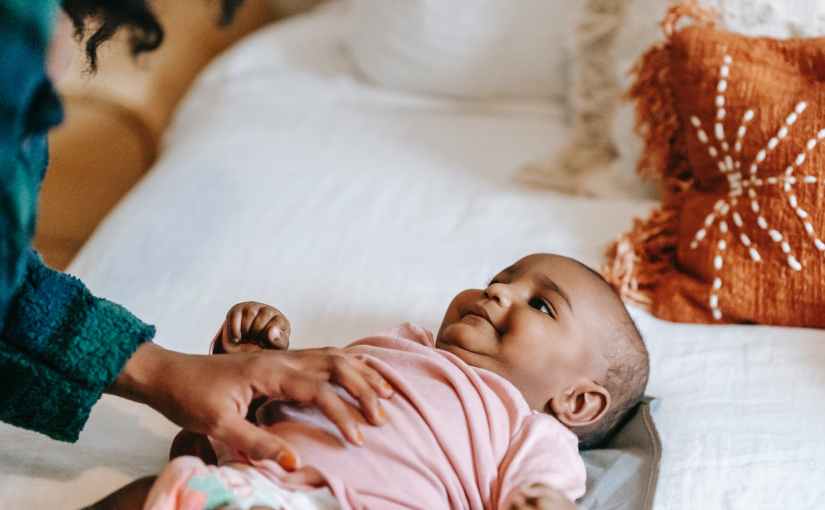

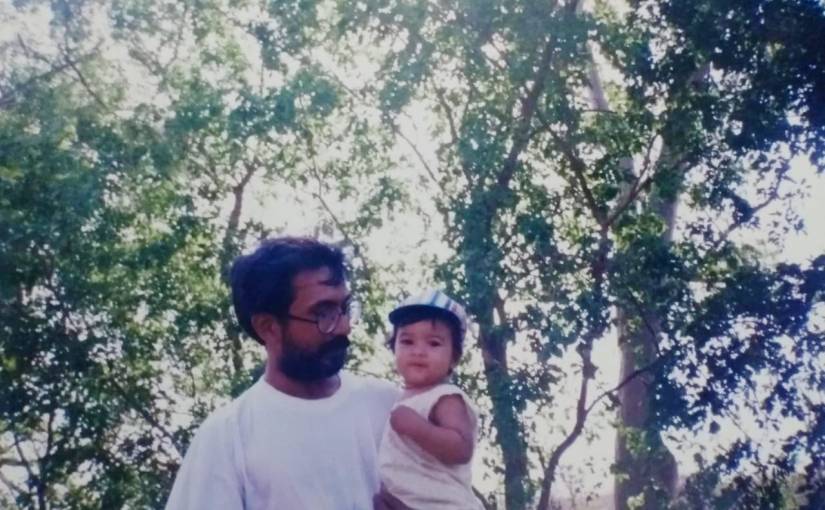


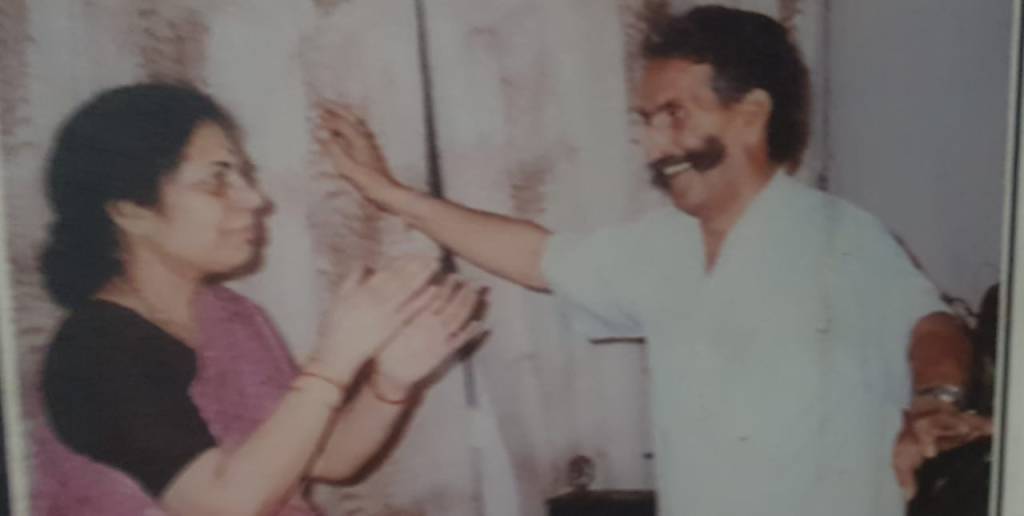














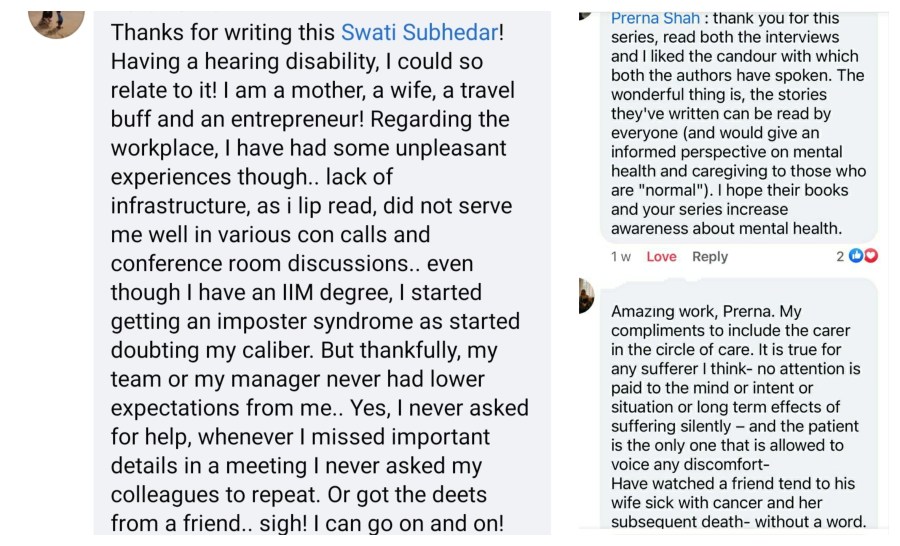






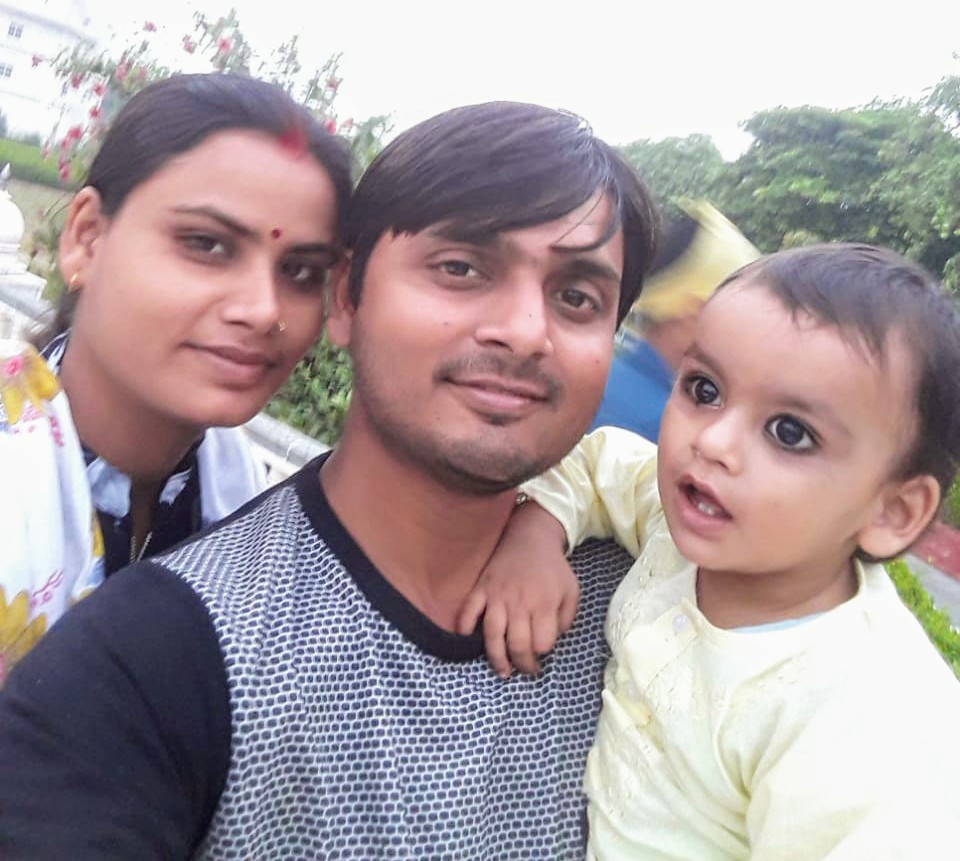
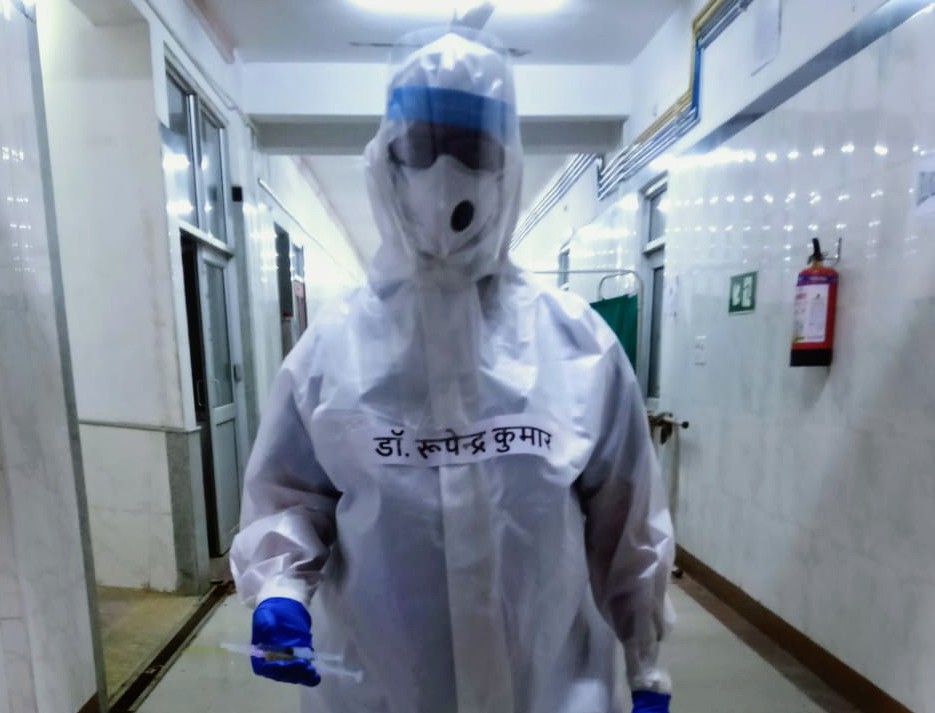






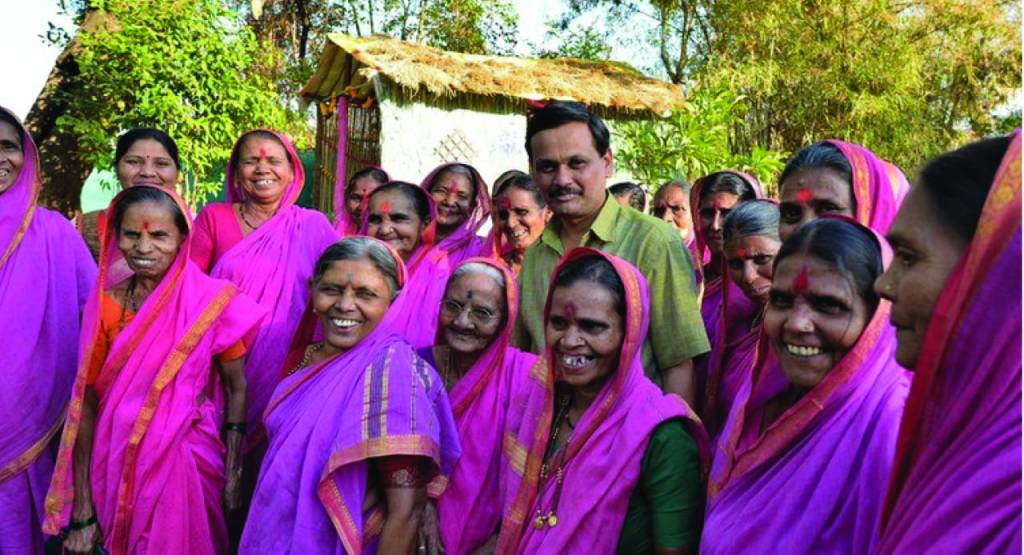








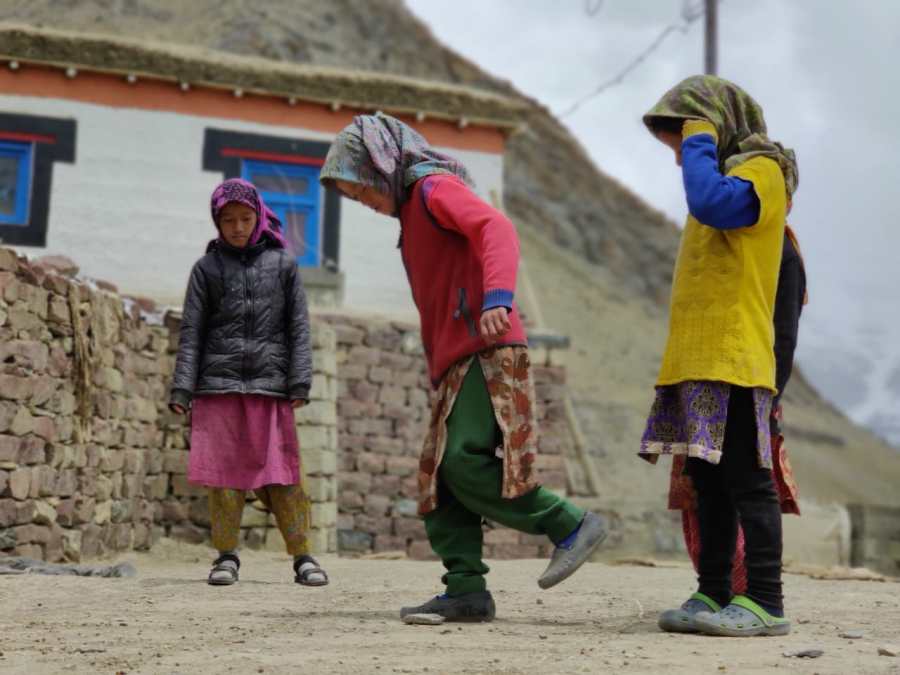

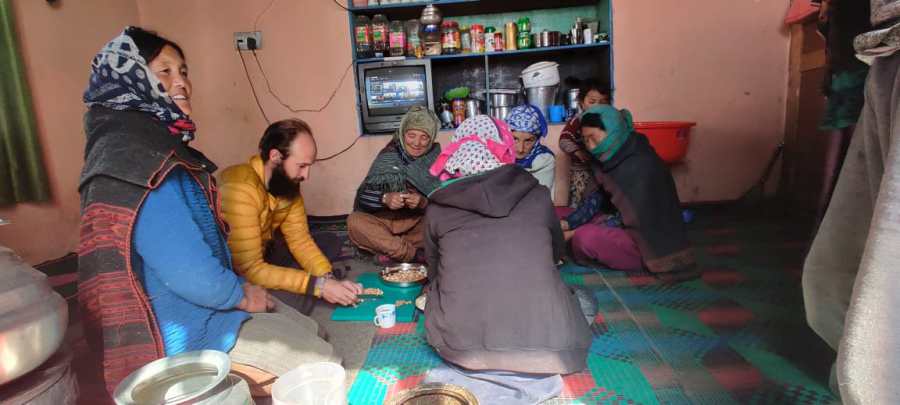




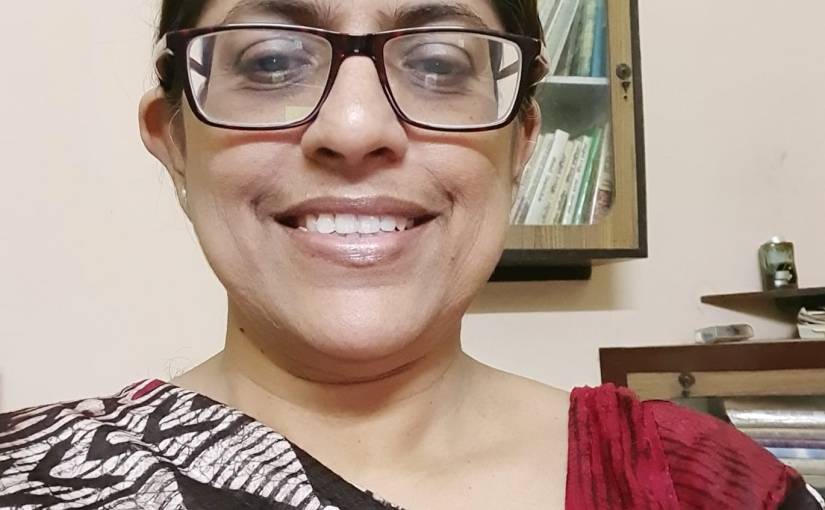

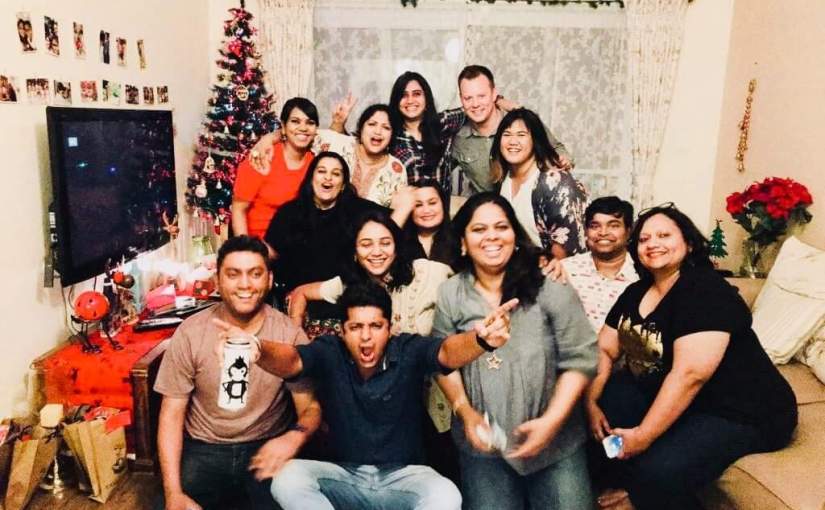


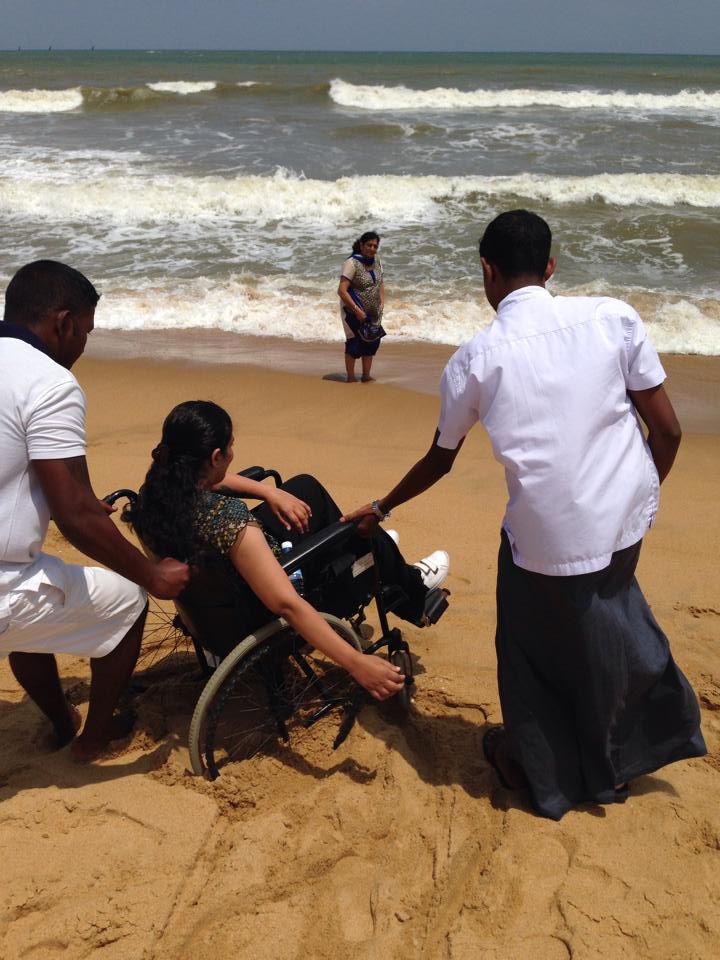








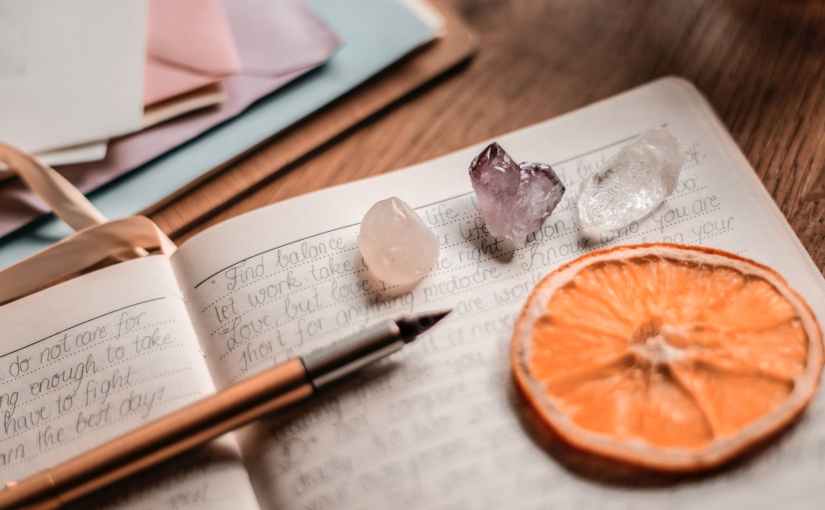
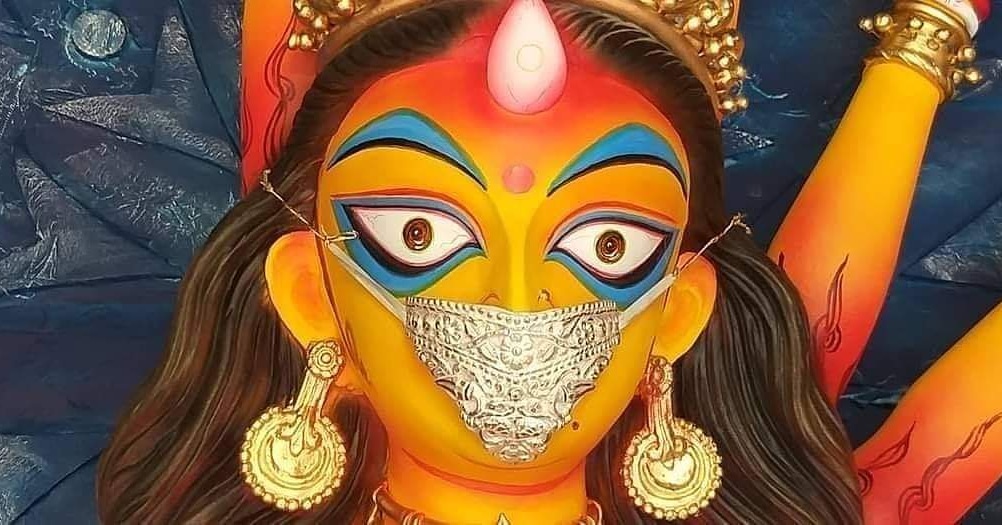


 The Good Story Project